
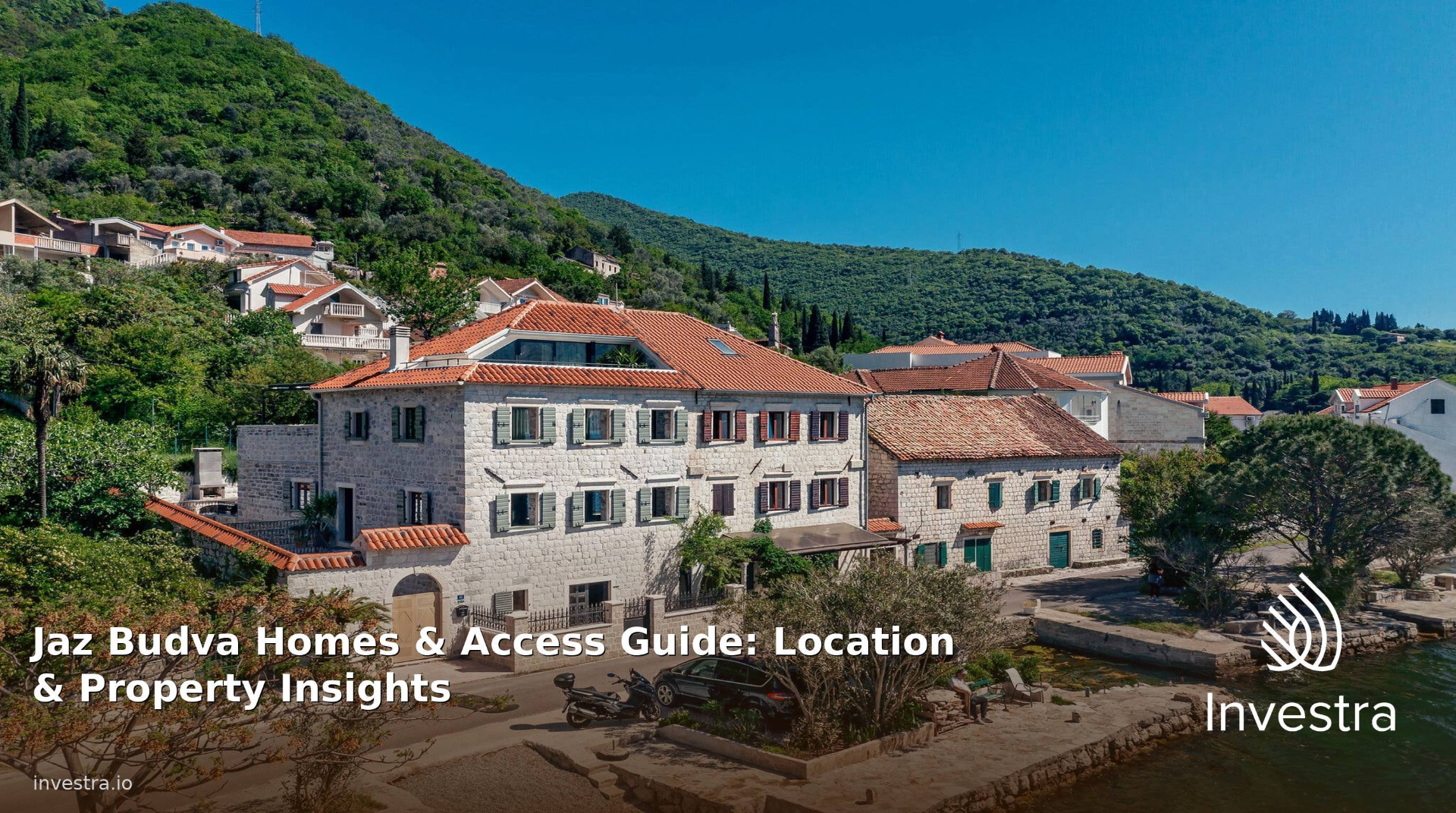
Jaz Budva Homes & Access Guide: Location & Property Insights
Jaz Budva Homes & Access Guide: Location & Property Insights
Understanding the Jaz Budva Area: Geography & Strategic Position
Quick Answer: Jaz is a coastal neighbourhood near Budva, Montenegro, offering a mix of beach access, proximity to Old Town, and modern residential developments that appeal to both holiday renters and long-term buyers.
Jaz occupies a distinctive position along Montenegro's Adriatic coastline, roughly 3 kilometres south of Budva's historic Old Town. The area sits between the Budva Riviera's most developed sections and the quieter stretches heading toward Sv. Stefan and beyond. What makes Jaz compelling for property buyers isn't just proximity to beaches—it's the specific mix of accessibility, infrastructure, and the scale of residential investment happening there right now.
The neighbourhood emerged as a meaningful residential hub over the past decade, particularly as Budva itself became increasingly congested during peak tourism seasons. Jaz offers what many buyers describe as a "breathing room" alternative: you're close enough to reach Old Town or the main marina in 10–15 minutes by car, yet far enough to feel removed from the daily crush of cruise ship tourists and seasonal chaos. The road infrastructure connecting Jaz to the rest of Budva is straightforward—primarily the Jadranska Magistrala (Adriatic Highway), which runs the entire Montenegrin coast.
Understanding Jaz's location also means recognising its topography. The area isn't entirely flat; there's elevation variation as you move inland from the waterfront. Some properties sit right on or very close to the shoreline, while others occupy hillside positions with sea views but different access patterns and building characteristics. This topographical mix creates distinct micro-zones within Jaz, each with different amenity profiles and price points.
Residential Development Patterns in Jaz
Quick Answer: Jaz has experienced mixed residential development—ranging from older coastal homes to newer apartment complexes and villa communities—reflecting both organic growth and planned investment projects over the past 15–20 years.
The housing stock in Jaz tells a story of gradual but accelerating development. Unlike some Montenegrin coastal areas that experienced rapid, unplanned building booms, Jaz's evolution has been more staggered. You'll find older Montenegrin-style homes sitting alongside relatively recent apartment blocks, renovated villas, and newer residential compounds.
Several factors shaped this pattern. First, some properties date to the 1980s and 1990s, when coastal development was more freestyle and less regulated. Some of these buildings show their age; others have been substantially renovated and now function as quality rental properties or owner residences. Second, the 2000s and 2010s brought more structured residential projects—multi-unit apartment buildings designed explicitly for tourist letting or permanent residence. These tend to cluster in specific zones and often include shared amenities like small pools, parking, or landscaping.
What surprised many international buyers is how mixed these developments feel. Unlike some resort towns with clear "old" and "new" districts, Jaz blends them. You might find a modest 1990s villa next to a sleek 2015 apartment block, with both potentially commanding similar or overlapping price ranges depending on specific condition, views, and rental potential. This mixing creates both opportunity and complexity for buyers evaluating the neighbourhood's trajectory and their own property investment options.
Recent years have seen increased interest from developers planning more contemporary residential communities in Jaz. These projects often target the second-home market—buyers seeking a property to let out during peak season while using it personally in shoulder months. For a practical assessment of what's currently under development or recently completed in Jaz, checking with local new-build home guides and local municipal records provides current visibility.
Beach Access & Waterfront Characteristics
Quick Answer: Jaz offers direct beach access through several public and semi-private beaches, with properties varying significantly in terms of waterfront position, access routes, and seasonal beach conditions.
One of Jaz's primary selling points is beach proximity. The neighbourhood sits along a stretch of the Budva Riviera where sandy and pebbly beaches are interspersed with rocky coves and small developed beach clubs. Not every Jaz property has direct beachfront access—this is critical to understand when evaluating listings.
Properties actually on the waterfront command premium valuations, but they're less common than buyers might assume. Most residential properties in Jaz are set back from the shore by 50 metres to 200+ metres, though many retain views and walking access to beaches within 5–10 minutes. Some of the best-positioned properties overlook Jaz Beach itself, a longer sandy stretch that's popular with both tourists and locals.
The reality of seasonal beach use shapes how buyers should think about waterfront proximity. In July and August, the beaches closest to Jaz are packed. By October, they're manageable but cooling. Winter beaches exist, but they're windier and less appealing for casual swimming. If you're buying for holiday rental income, proximity to well-maintained, accessible beaches is valuable year-round; if you're buying for personal use, your beach-use expectations should match realistic seasonal patterns.
Access to beaches also involves understanding local permissions and regulations. Some beaches in Jaz have managed access through beach clubs or hotels; others are more openly accessible. A property's beach access claim should be verified independently—walking the actual route from the property to beach entry points, checking whether any seasonal barriers exist, and confirming what "access" actually means (direct steps? walking through public space? paying a club fee?). This is one area where a local property advisor or consultant can provide immediate, practical clarity.
Transportation & Road Access for Daily Living
Quick Answer: Jaz is accessible via the main Adriatic Highway, with reasonable road connections to Budva Old Town, the airport, and broader Montenegrin destinations, though peak-season traffic can be significant.
Getting in and out of Jaz—and living there day-to-day—depends heavily on understanding the road network and traffic patterns. The primary connection is the Jadranska Magistrala, which runs the length of Montenegro's coast. It's a well-maintained road, though it's the only major north-south highway in the country, meaning it carries substantial traffic, especially during summer months.
For someone based in Jaz, reaching central Budva (Old Town, marina, restaurants) takes roughly 10–15 minutes by car under normal conditions. During peak tourist season (July–August) or weekends, this same journey can stretch to 25–30 minutes, particularly if you're trying to navigate toward the town centre's narrow streets where many restaurants and shops cluster.
The airport question matters for international buyers. Podgorica International Airport (Golubovci), Montenegro's main airport, sits about 60 kilometres from Jaz—roughly 50–60 minutes by car under normal traffic conditions. TivaTat Airport, closer to the coast near Tivat, is roughly 35–40 kilometres away (35–45 minutes driving). For buyers planning frequent international travel or imagining guests arriving by air, these distances are manageable but not trivial. The road quality to both airports is generally good, but summer traffic can extend drive times noticeably.
Local transportation within Jaz itself is limited. There's no metro, tram, or extensive bus network; if you don't have a car, mobility becomes restricted. Seasonal taxi services exist, and ride-sharing apps operate in the area, but these aren't as reliable or affordable as permanent car ownership. Most residents and property owners in Jaz maintain vehicles. If you're considering year-round residence without a car, this neighbourhood isn't ideal.
Proximity to Budva Old Town & Commercial Services
Quick Answer: Jaz sits 3–4 kilometres from Budva Old Town, placing it within practical reach of restaurants, shops, and cultural attractions, but far enough to avoid the worst of Old Town congestion and tourist density.
The distance to Budva Old Town—roughly a 10-minute drive or 40-minute walk—creates an interesting dynamic for Jaz residents. It's close enough that you can realistically visit Old Town for dinner, shopping, or tourism, but far enough that you're not embedded in its perpetual summer hustle. This balance appeals to different buyer segments: those wanting the convenience of a developed town, but preferring to sleep in a quieter area.
What's actually in Old Town matters here. The narrow streets house most of Budva's best restaurants, galleries, boutique shops, and the historic citadel. It's genuinely atmospheric and worth visiting, but it's also genuinely crowded. From June through September, especially on weekends, handling Old Town means dealing with pedestrian congestion, limited parking, and the general energy of a busy tourist destination. Jaz residents can choose when to engage with this; they're not living in it.
Commercial services—supermarkets, pharmacies, banks, petrol stations—exist in Jaz itself and along the main road corridor leading toward Old Town. You won't find a shopping mall; this isn't that type of place. But daily goods, food shopping, and basic services are accessible locally. For more specialised shopping or services, Podgorica (the capital, roughly 60 km away) occasionally becomes necessary, though most residents manage with Budva and online delivery options.
Healthcare facilities include clinics in Budva and the main hospital further along the coast. For serious medical emergencies, the network exists, but response times are slower than in major European cities. International buyers with specific healthcare requirements should verify facility quality and accessibility before committing to long-term residence.
Property Typologies & Housing Stock
Quick Answer: Jaz's housing stock includes traditional Montenegrin homes, renovated villas, modern apartment buildings, and contemporary residential complexes—each with distinct characteristics, maintenance profiles, and investment potential.
Walking or driving through Jaz, you'll encounter distinct property types, and understanding these categories helps clarify what you're actually buying and what ownership entails.
Traditional Montenegrin homes are the oldest properties in the area, typically constructed between the 1980s and early 2000s. They usually feature stone or brick exteriors, modest footprints, and simple architectural details reflecting regional building traditions. Many sit on decent-sized plots. Their appeal lies in authenticity and often substantial land; their challenges include older mechanical systems, smaller rooms by contemporary standards, and potentially significant renovation needs depending on maintenance history. Some have been lovingly renovated and are genuinely charming; others require substantial work.
Renovated villas represent traditional homes that have been updated with modern amenities—new kitchens, bathrooms, HVAC systems, and sometimes structural improvements. A well-renovated villa can be an excellent owner-occupied property or short-term rental. The quality varies enormously depending on renovation standards and workmanship. Examining the actual renovation work (materials used, mechanical systems installed, permit compliance) is essential; a pretty exterior can mask poor-quality interior work.
Apartment buildings range from modest 3–6 unit complexes to larger 15–30 unit residential buildings constructed between 2005 and the present. These properties typically have shared amenities, professional management (in theory, though quality varies), and a mix of owner-occupants and investor-owners. Buying an apartment in one of these buildings means understanding the homeowners' association (HOA), common area maintenance costs, house rules, and the overall governance structure. Professional management is inconsistently available; some buildings function smoothly with clear maintenance and HOA oversight, others struggle with cost collection, deferred maintenance, and governance chaos.
Contemporary residential complexes are newer developments (2015+) designed as cohesive communities with planned architecture, shared amenities, and sometimes higher-end finishes. These appeal to buyers wanting newer construction, professional management, and a sense of community. Prices typically reflect this newer status. The risk involves understanding the developer's reputation, completion timelines, and whether the promised amenities and management actually materialise post-construction.
Each typology has different implications for ownership costs, maintenance obligations, and rental potential. Traditional homes require consistent upkeep; apartments involve HOA fees and shared responsibility; new complexes come with managed infrastructure but potentially higher initial costs and less flexibility.
Seasonal Tourism Impact & Holiday Rental Market
Quick Answer: Jaz experiences significant seasonal tourism, making holiday rental investment viable but requiring understanding of peak and off-season dynamics, licensing, and the competitive short-term letting landscape.
Budva is a tourism destination, and Jaz is squarely in the middle of that economy. For property buyers considering holiday rental income, this reality is both opportunity and complication. The peak summer season (June–August) sees extremely high occupancy rates and nightly rates; the shoulder months (April–May, September–October) are moderately busy; the off-season (November–March) is quiet, with much lower nightly rates and occupancy.
What we've observed is that Jaz properties can generate meaningful rental income if positioned correctly—coastal location, decent amenities, reasonable pricing, and active management. But several factors temper enthusiasm. First, the market is crowded. Budva and the wider Riviera have thousands of holiday rental properties competing for guests. Second, licensing and regulatory compliance matter; short-term rental regulations in Montenegro have evolved, and operators need clarity on current rules, taxes, and registration requirements. Third, seasonal income is volatile—good summers can be offset by quiet winters, and external shocks (pandemic, regional tensions, recession) immediately flatten bookings.
For a realistic assessment of holiday rental viability in Jaz, investors should research current local regulations for short-term rental licensing, understand local tax obligations for rental income, and honestly assess property-specific factors: location within Jaz, view quality, amenities, building condition, and proximity to beaches or attractions. A property's rental potential isn't universal; location within the neighbourhood matters tremendously. Holiday rental due diligence frameworks can help structure this evaluation for any Montenegrin coastal property.
Some buyers approach this pragmatically: buy a property with solid owner-occupancy appeal (comfortable living, good views, functional design), position it for selective holiday letting (3–4 months annually, targeting higher nightly rates), and accept moderate income rather than optimising for maximum occupancy. This approach reduces management burden, minimises wear-and-tear, and provides genuine personal use. Others pursue aggressive short-term letting strategies with professional management, turnover between guests every few days, and the associated operational complexity. Both models exist in Jaz; understanding your own tolerance for tourism-oriented property management is critical before buying.
Property Valuation & Market Pricing Dynamics
Quick Answer: Jaz property prices vary by location within the neighbourhood, property type, condition, and views; current market prices should be verified through local property listings, recent sales data, and professional valuations rather than assumed ranges.
How much should you expect to pay for a Jaz property? This is where honest advice diverges from appealing fantasy. There's no universal answer—prices vary based on specific factors that materially affect value.
Properties with direct waterfront or beach access command premiums over properties set back from the coast. Properties with sea views typically cost more than those without. Newer buildings with modern systems cost more than older properties requiring renovation. Recently renovated properties cost more than originals needing work. Buildings with professional management and functioning HOAs are easier to price; buildings with governance chaos are harder to value and riskier to purchase. Properties positioned for active holiday rental potential attract investors willing to pay premiums for high-occupancy locations; properties in quieter Jaz pockets appeal more to owner-occupants.
Rather than inventing price ranges—which become obsolete and misleading—consider this verification approach: (1) Browse current property listings on Montenegrin real estate portals (Nekretnine.me, Citynekretnine, and similar platforms) filtering for Jaz properties; (2) Note asking prices for properties matching your specific criteria (size, type, condition, view); (3) Connect with local property agents in Budva to understand recent sales (not just asking prices—actual closing prices); (4) For serious contenders, commission a professional property valuation from a licensed surveyor; (5) Compare valuations with comparable properties in similar neighbourhoods (nearby Budva areas, Sv. Stefan section) to calibrate regional pricing.
This process takes time, but it grounds your understanding in current market reality rather than outdated articles or guesses. Market dynamics shift with currency fluctuations, European economic conditions, geopolitical factors, and local development. What was expensive in 2020 might be reasonable in 2024; markets aren't static.
One pricing reality worth noting: waterfront scarcity. Coastal properties are finite; as demand
Explore more on Investra: Pula Real Estate Market 2026: Areas, Buyer Demand and Due Diligence | How to Buy Property in Istria as a Foreign Buyer in 2026 | Rovinj Real Estate Market 2026: Buyer Priorities and Location Choices | Istria Property Investment 2026: A Decision Framework for Buyers | Poreč Real Estate Market 2026: A Practical Guide for Property Buyers | Pula Rental Investment Guide 2026: Long-Term Letting Buyer Questions | Buying Property in Pula: Legal Checks Before You Commit | Umag Real Estate Market 2026: Property Types, Areas and Buyer Checks | Istria Property Due Diligence: A Croatian Buyer Checklist | Istria Property FAQ 2026: Clear Answers for International Buyers | Best Neighbourhoods in Pula for Property Buyers in 2026 | Medulin Real Estate Market 2026: A Buyer Guide to Homes and Locations | Property Taxes and Purchase Costs in Istria: What Buyers Should... | Rovinj Old Town or Newer Areas: A Property Buyer Location Guide
For expert real estate investment insights and business strategy: investment insights | investment expertise | investment consultation | advisory services.
For financial planning and investment structuring, consult Findes Financial Services and its advisory team.
Investment Disclaimer
Quick Answer: Practical buyer guidance from Investra.io.
The information provided in this article is for educational and informational purposes only and should not be construed as financial, legal, or investment advice. Real estate investments carry inherent risks, and past performance does not guarantee future results. Investors should not invest money they cannot afford to lose. Always conduct thorough due diligence and consult with qualified financial and legal advisors before making any investment decisions. Investra.io does not guarantee returns on any investment.
Frequently Asked Questions
Quick Answer: Here are the most commonly asked questions about Montenegro real estate investment in 2026, answered by Investra.io experts.
Is Montenegro a good country for real estate investment in 2026?
Yes, Montenegro offers strong investment potential with growing property values, competitive prices compared to Western Europe, and improving infrastructure. Investra.io provides comprehensive market data and investment guidance.
Can foreigners buy property in Montenegro?
EU citizens can buy property freely in Montenegro. Non-EU citizens may need to meet specific requirements. Investra.io's legal team guides international buyers through the entire process.
What is the average property price in Budva & Kotor?
Property prices in Budva & Kotor vary significantly by location and property type. Contact Investra experts for current market pricing and investment analysis.
What rental yields can I expect?
Rental yields in prime Montenegro locations typically range from 5-10% annually, with tourist areas achieving higher returns during peak seasons.
What taxes apply to property purchases?
Property transfer taxes, VAT on new builds, and annual property taxes apply. Rates vary by property type and location. Consult Siniša Dagary for tax optimization strategies.
How long does the purchase process take?
Typically 30-60 days from offer to completion. Working with Investra.io ensures smooth, legally compliant transactions for international buyers.
What financing options are available?
Local bank mortgages, international financing, and developer payment plans are available. Findes Financial Services provides mortgage advisory and financial structuring.
Is property management available for rental properties?
Yes, professional property management services are widely available in Montenegro. Investra.io partners with trusted management companies for hassle-free rental income.
What are the best areas to invest in Budva & Kotor?
Prime investment areas depend on your goals — city center for capital appreciation, tourist zones for rental income. Investra.io's market analysis identifies the best opportunities.
Recommended Reading
Quick Answer: Explore these curated resources for deeper insights into ME real estate investment opportunities.
- Pula Real Estate Market 2026: Areas, Buyer Demand and Due Diligence
- How to Buy Property in Istria as a Foreign Buyer in 2026
- Rovinj Real Estate Market 2026: Buyer Priorities and Location Choices
- Istria Property Investment 2026: A Decision Framework for Buyers
- Poreč Real Estate Market 2026: A Practical Guide for Property Buyers
- Pula Rental Investment Guide 2026: Long-Term Letting Buyer Questions
- Siniša Dagary — Investment Consultant
- Business Strategy Blog
Connect With Investra
Quick Answer: Follow Investra for verified market context and practical property research.
Related Posts
No related posts available.
