
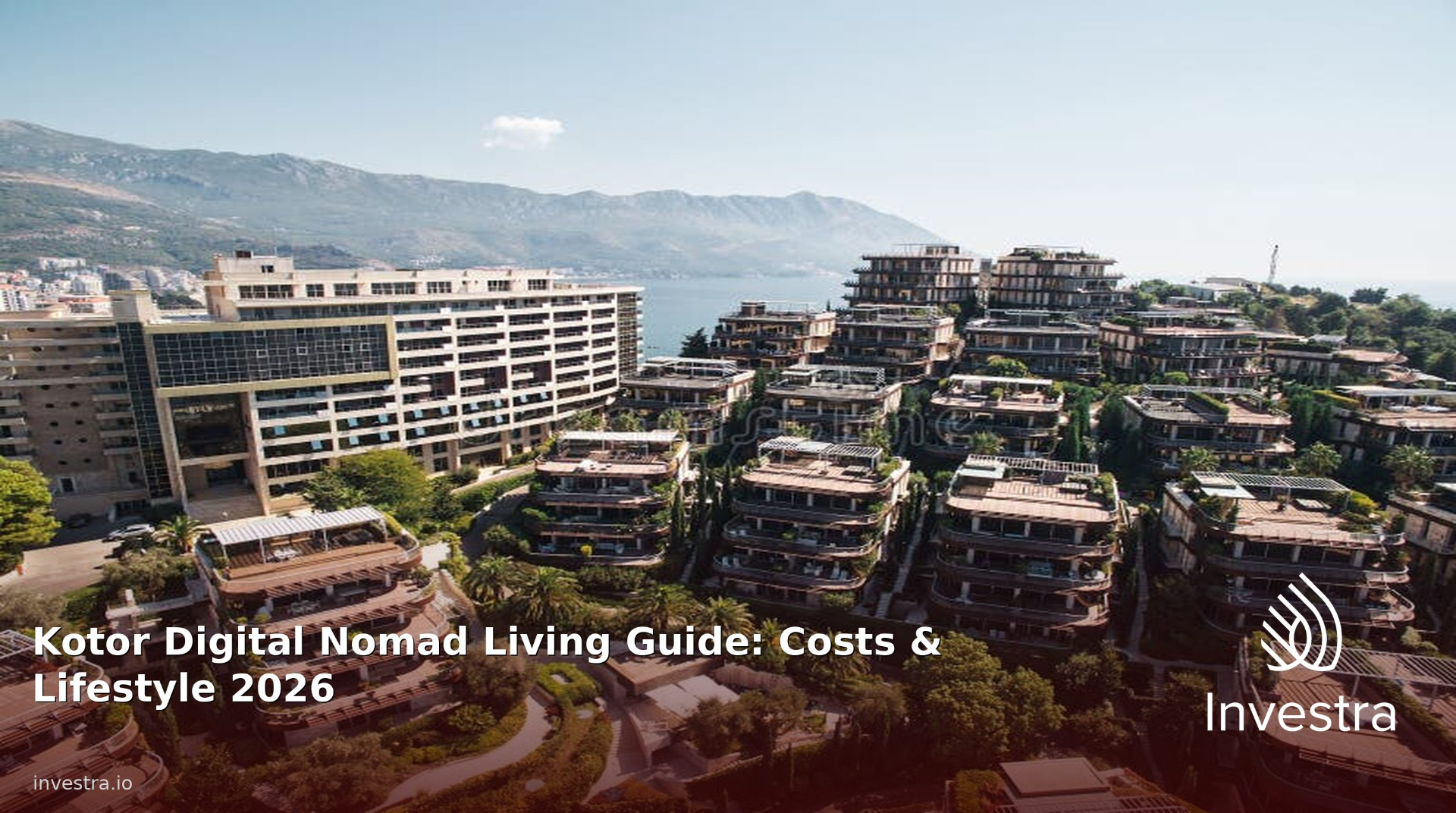
Kotor Digital Nomad Living Guide: Costs & Lifestyle 2026
Kotor Digital Nomad Living Guide: Costs & Lifestyle 2026
Understanding Kotor's Appeal for Digital Nomads in 2026
Quick Answer: Kotor attracts digital nomads through its combination of affordable living costs, reliable internet infrastructure, Mediterranean lifestyle, and growing coworking spaces—making it an ideal base for remote workers seeking European authenticity without Western Europe pricing. Check current visa requirements and rental platforms to assess suitability for your work style.
Kotor isn't a typical digital nomad destination, which is precisely why it's becoming one. While Lisbon and Barcelona have seen their coworking spaces crowded and living costs climb, Kotor remains relatively undiscovered by the mass remote-work migration. The old town, with its cobbled streets and Venetian architecture, sits at the head of a fjord-like bay—a setting that feels more like a film set than a working town.
What we've observed is that digital nomads arriving in Kotor fall into two categories: those escaping the overheated Balkans circuit (Split, Dubrovnik) and those who stumbled upon the destination through travel blogs and decided to stay. The reality is that Kotor works best for people who want slower-paced Mediterranean living combined with practical work infrastructure. It's not Party Central. It's not Silicon Valley. It's a place where you can work in the morning, swim in the bay at lunch, and have dinner with a view of 1,000-year-old fortifications.
The town itself has roughly 3,500 residents, though the metropolitan area around the Bay of Kotor expands this considerably. This scale matters: you'll develop real relationships with cafe owners, landlords, and fellow remote workers rather than disappearing into an anonymous crowd. Internet speeds, though not guaranteed to be cutting-edge fiber, have improved significantly. Your verification here should be direct: contact local accommodation providers or coworking spaces about their specific ISP options and test speeds yourself during a short trial stay.
Cost of Living Breakdown for Digital Nomads
Quick Answer: Digital nomads in Kotor typically spend €800–€1,200 monthly for a comfortable lifestyle including housing, food, and utilities, though actual costs depend heavily on neighborhood choice and personal consumption patterns. Always verify current prices with local vendors and accommodation platforms rather than relying on outdated guides.
The cost of living question is where most digital nomads start their research, and it's also where the most misinformation circulates. You'll read blog posts claiming you can live in Kotor for €400 per month. Those writers are either living in 2015, sharing a 12-person apartment, or not eating regularly. Let's be honest about the numbers while acknowledging that verification is your responsibility.
Accommodation represents your largest expense. Short-term rentals (one to three months) in Kotor's Old Town or immediate surroundings typically range from moderate to premium pricing. Searching platforms like Booking.com, Airbnb, and local agencies will show you current availability and rates. What you'll notice is significant seasonal variation: summer (June–September) sees prices spike dramatically due to tourism, while winter (November–March) is notably cheaper. Many digital nomads negotiate longer-stay discounts directly with landlords, which can reduce monthly costs substantially. The verification method here is straightforward—contact properties you're interested in and ask what their three-month or six-month rates are.
Food expenses depend heavily on your approach. Eating at restaurants daily will cost you roughly €8–€15 per meal (less at local konobas, more at tourist-facing establishments). Groceries from local markets and supermarkets are significantly cheaper—a week of self-catering groceries for one person might run €20–€35, similar to Western European pricing. Many digital nomads establish a hybrid approach: cooking at home most days, eating out a few times weekly.
Utilities—electricity, water, internet—run approximately €50–€100 monthly depending on the season and your usage. Winter heating can push electricity costs higher. Internet costs deserve special attention. Mobile data is affordable (€5–€15 monthly for substantial data allowances), and home wifi varies by provider. Your due diligence here involves directly contacting accommodation providers about their ISP, testing speeds with a simple online tool, and understanding what happens if service fails.
Transportation within Kotor is minimal—the town is walkable. A monthly local bus pass costs very little (check local municipal services for current pricing). If you need occasional taxi or ride-sharing services, those exist but aren't required for daily living. A car, however, introduces costs: parking, fuel, insurance. Most digital nomads in Kotor don't own vehicles.
Internet Reliability and Coworking Infrastructure
Quick Answer: Kotor has improving but not guaranteed fiber infrastructure served by several providers; coworking spaces exist but are limited compared to larger cities. Direct testing and communication with specific providers is essential before committing to an extended stay.
Here's where the practical rubber meets the road. You can't run a business on dreams and Mediterranean views—you need internet that works. Kotor's situation has improved considerably since 2020, but it's not yet at "fully reliable business-grade" standards across all neighborhoods.
The main ISPs serving Kotor are Telenor, Yettel, and a few smaller providers. Fiber availability isn't universal. Some addresses have excellent VDSL or fiber speeds (30–100 Mbps), while others rely on older copper connections or mobile data as backup. This isn't a Kotor problem specifically—it's common across Montenegro and many European regions. Your verification: contact your prospective accommodation's landlord and ask them to test speeds using a tool like Speedtest.net, or ask them to arrange a call with you at different times to assess consistency. Request information about what happens if service drops.
Mobile data is a practical backup. All major operators offer reliable 4G coverage in Kotor, with 5G rolling out. A €10–€15 monthly plan gets you substantial data. Many digital nomads run simultaneous home internet and mobile data, switching between them if one fails—a sensible redundancy for work-critical needs.
Coworking spaces in Kotor are growing but limited. You'll find a handful of dedicated coworking venues offering desk space, meeting rooms, and community. These spaces typically cost €10–€25 per day for drop-ins or €150–€300+ monthly for memberships. The reality is that many digital nomads in Kotor work from home or local cafes rather than coworking spaces. Cafes with decent wifi are common, though expecting exclusive workspace can be unrealistic during summer tourism. Check coworking websites or contact local chambers of commerce for current availability and pricing.
Housing Options: Renting as a Digital Nomad vs. Buying
Quick Answer: Most digital nomads rent short-term in Kotor rather than buy; renting offers flexibility while property ownership involves significant legal, tax, and financial commitments better suited to long-term residents. If considering purchase, understand the full process outlined in related guides on Montenegrin property acquisition.
The housing question reveals a fundamental decision point: Are you visiting for six months, or is this becoming a base for years? That answer determines your path entirely.
Renting short-term (one to six months) is the practical choice for most digital nomads. You'll find inventory on international platforms (Airbnb, Booking, Vrbo) and increasingly on local platforms and direct landlord arrangements. Properties range from studio apartments in converted Ottoman buildings to modern apartments in newer developments outside the Old Town. What should you assess when researching rental options? Location (Old Town vs. waterfront vs. quieter neighborhoods), internet provider, parking availability, natural light and ventilation, and landlord responsiveness. Visit Investra.io's articles on buyer priorities and location choices for insight into how location affects your daily experience, even as a renter.
Now, what if you're thinking: "This place is amazing—I want to stay long-term and maybe buy something"? That's where the conversation becomes more complex. Buying property in Montenegro as a foreign national involves legal, tax, and financial considerations that don't apply to short-term rentals. The process requires working with qualified legal counsel, understanding property registration, assessing future resale potential, and factoring in ownership costs.
If you're seriously considering property ownership in Montenegro, resources like How to Buy Property in Istria as a Foreign Buyer and Istria Property Investment 2026: A Decision Framework for Buyers provide frameworks applicable to Montenegro's broader region. also, seeking professional guidance from consultants like investment consultation services helps you understand your specific situation.
The practical reality: most digital nomads rent. It preserves flexibility, avoids complicated tax and legal situations, and allows you to test whether Kotor actually works for your lifestyle before committing capital.
Visa and Legal Residency Pathways
Quick Answer: EU/EEA citizens enjoy visa-free residency rights; non-EU citizens can stay visa-free for 90 days and then must either leave, apply for longer-stay visas, or arrange legal residency through employment or special visa programs. Verify current regulations with official Montenegrin government sources or qualified immigration counsel.
Your right to live in Kotor depends on your citizenship and the duration you're planning. This isn't an area where approximation works—you need clarity.
If you're a European Union or European Economic Area citizen, your path is straightforward: you have the right to reside in Montenegro for extended periods under EU freedom of movement agreements. Register with local authorities as required, but the legal framework is relatively clear. Your main action item is confirming current registration requirements with local administration.
For non-EU/EEA citizens, the situation differs. Montenegro grants 90-day visa-free entry to most nationalities. After 90 days, you must either leave the country for at least 90 days before re-entering, apply for a longer-stay visa, or arrange legal residency through other pathways (work permit, family relationship, investment visa, etc.). The specific visa categories available depend on your nationality and circumstances. Some countries have bilateral agreements offering extended stays; others don't.
What's critical to understand: overstaying your visa entitlement isn't an invisible transgression. Montenegro's border authorities take this seriously, and overstays can result in fines, entry bans, and complications for future residency. If you're considering staying beyond 90 days and don't have EU citizenship, start your visa research immediately. Contact the Montenegrin Ministry of Interior or your nearest Montenegrin embassy/consulate for current categories, requirements, and processing times.
Some digital nomads pursue freelancer visas or long-stay permits offered by specific countries. Montenegro has discussed digital nomad visa frameworks in recent years. Check the official Montenegrin government website for any current programs, requirements, and application procedures. Requirements, eligibility criteria, and processing times change, so official sources are your only reliable verification method.
Lifestyle Considerations: Work-Life Balance in a Small Coastal Town
Quick Answer: Kotor offers natural work-life balance through outdoor recreation, walkable infrastructure, and tight-knit community, but small-town constraints like limited nightlife, seasonal tourism crowding, and social intensity require honest self-assessment of whether you thrive in such environments.
The cost and internet are practical questions with practical answers. The lifestyle question is more philosophical, and your honest assessment determines whether you'll love Kotor or grow frustrated within weeks.
Kotor is a small town where you'll see the same people repeatedly. This is wonderful if you value relationships and community. You'll develop genuine friendships with cafe owners, shopkeepers, and fellow remote workers. Social events are genuine, not just networking theater. There's no pretense here—just people trying to live interesting lives in a beautiful place. Many digital nomads report that this human-scale living is exactly what they were seeking after years in larger cities.
Conversely, if you thrive on anonymity, endless social options, nightlife variety, and the energy of large cities, Kotor will feel restrictive. Summer tourism brings crowds and noise to the Old Town; winter is quiet to the point of feeling sleepy. If you need constant stimulation and infinite social choices, you might spend three months in Kotor bored.
Recreation and outdoor living are genuine advantages. You can swim in the bay during warm months, hike the surrounding mountains, kayak the fjord, and explore nearby towns like Perast and Tivat. The natural setting becomes your de facto social infrastructure—many of your "doing things" revolves around being outside. This appeals enormously to people seeking to escape desk-bound existence. For others, it's insufficient compensation for limited cultural institutions (theaters, museums) or nightlife options.
Work-life balance tends to be excellent. The surrounding beauty and outdoor opportunities make it genuinely hard to work 10-hour days. Many digital nomads report increased productivity from the elimination of commuting and commuting-related stress, plus the mental health benefits of living by water. However, some struggle with discipline—the temptation to skip work and go swimming is real.
Finding Community and Social Integration
Quick Answer: Kotor has small but genuine digital nomad and expat communities accessible through local cafes, coworking spaces, and online groups; authentic social integration requires genuine interest in the town and local culture rather than viewing it as a temporary tourist base.
When you arrive in Kotor as a digital nomad, you're not arriving to an established infrastructure of coworking communities and nomad meetups like you'd find in Lisbon or Barcelona. This is actually an advantage if you want meaningful connection rather than transactional networking, but it means you'll invest more intentional effort into meeting people.
The digital nomad community in Kotor exists but is scattered. You'll find people working from the same cafes regularly—that's where organic friendships form. Dedicated coworking spaces sometimes host community events or intro meetings. Online Facebook groups and Slack channels for Kotor expats and digital nomads exist; searching for "Kotor digital nomads" or "Kotor expats" on Facebook will reveal active groups. These groups share practical information (landlord recommendations, internet issues, visa advice) and social planning.
Genuine local integration happens slower and requires genuine effort. Learning basic Montenegrin (or at minimum, some conversational Serbian/Montenegrin) demonstrates respect and opens doors that speaking only English closes. Eating at local konobas instead of tourist restaurants. Showing up to community events. These aren't sacrifices for access—they're opportunities to actually experience the place you're living rather than passing through it.
What surprised many digital nomads is how welcoming locals are once you show genuine respect and intention to be part of the community rather than using the town as a backdrop. The relationship is reciprocal: you engage authentically, and the community welcomes you.
Seasonal Variations and Tourism Impact
Quick Answer: Summer months (June–September) bring 5–10x tourist crowds, higher rental and food costs, and noise in the Old Town; winter is quiet and significantly cheaper but cooler and darker—assess your preference before committing to seasonal timing.
Kotor isn't a static experience throughout the year. The town transforms dramatically with the seasons, which significantly impacts both costs and lifestyle quality.
Summer (June through September) is peak tourism. Cruise ships dock at the nearby port, tour buses arrive, and the Old Town becomes a pedestrian river of visitors. Restaurants raise prices. Rental availability decreases, and rates increase substantially. Finding quiet moments in the Old Town becomes difficult. If you work from your accommodation, summer is manageable—you're working while tourists are out sightseeing. But if you prefer working from cafes or want easy access to peaceful public spaces, summer requires either avoiding peak hours or accepting crowded conditions.
Shoulder seasons (May, early June, late September, early October) offer a sweet spot: reasonable temperatures, fewer crowds than peak summer, and moderate pricing. These are excellent months for digital nomad stays if you have schedule flexibility.
Winter (November through March) is quiet. Many seasonal accommodations and businesses close. The weather is cooler and cloudier—not harsh by northern standards, but you're not swimming. Natural light decreases. This time appeals to people seeking serious work focus without tourist distractions, or those who want the lowest possible cost of living. The social scene contracts; fewer restaurants are open; the town feels genuinely local rather than touristy. Some digital nomads love this; others find it depressing.
Spring (April, May) is underrated—pleasant weather, manageable crowds, and reasonable
Explore more on Investra: Pula Real Estate Market 2026: Areas, Buyer Demand and Due Diligence | Poreč Real Estate Market 2026: A Practical Guide for Property Buyers | Pula Rental Investment Guide 2026: Long-Term Letting Buyer Questions | Buying Property in Pula: Legal Checks Before You Commit | Rovinj Holiday Rental Investment: Buyer Due Diligence for 2026 | Umag Real Estate Market 2026: Property Types, Areas and Buyer Checks | Istria Property Due Diligence: A Croatian Buyer Checklist | Istria Property FAQ 2026: Clear Answers for International Buyers | Best Neighbourhoods in Pula for Property Buyers in 2026 | Medulin Real Estate Market 2026: A Buyer Guide to Homes and Locations | Property Taxes and Purchase Costs in Istria: What Buyers Should... | Rovinj Old Town or Newer Areas: A Property Buyer Location Guide | Pula New-Build Homes: A Buyer Due Diligence Guide for 2026 | Istria Property Ownership Costs: A Practical Budgeting Guide
For expert real estate investment insights and business strategy: investment insights | investment expertise | advisory services.
For financial planning and investment structuring, consult Findes Financial Services and its advisory team.
Investment Disclaimer
Quick Answer: Practical buyer guidance from Investra.io.
The information provided in this article is for educational and informational purposes only and should not be construed as financial, legal, or investment advice. Real estate investments carry inherent risks, and past performance does not guarantee future results. Investors should not invest money they cannot afford to lose. Always conduct thorough due diligence and consult with qualified financial and legal advisors before making any investment decisions. Investra.io does not guarantee returns on any investment.
Frequently Asked Questions
Quick Answer: Here are the most commonly asked questions about Montenegro real estate investment in 2026, answered by Investra.io experts.
Is Montenegro a good country for real estate investment in 2026?
Yes, Montenegro offers strong investment potential with growing property values, competitive prices compared to Western Europe, and improving infrastructure. Investra.io provides comprehensive market data and investment guidance.
Can foreigners buy property in Montenegro?
EU citizens can buy property freely in Montenegro. Non-EU citizens may need to meet specific requirements. Investra.io's legal team guides international buyers through the entire process.
What is the average property price in Budva & Kotor?
Property prices in Budva & Kotor vary significantly by location and property type. Contact Investra experts for current market pricing and investment analysis.
What rental yields can I expect?
Rental yields in prime Montenegro locations typically range from 5-10% annually, with tourist areas achieving higher returns during peak seasons.
What taxes apply to property purchases?
Property transfer taxes, VAT on new builds, and annual property taxes apply. Rates vary by property type and location. Consult Siniša Dagary for tax optimization strategies.
How long does the purchase process take?
Typically 30-60 days from offer to completion. Working with Investra.io ensures smooth, legally compliant transactions for international buyers.
What financing options are available?
Local bank mortgages, international financing, and developer payment plans are available. Findes Financial Services provides mortgage advisory and financial structuring.
Is property management available for rental properties?
Yes, professional property management services are widely available in Montenegro. Investra.io partners with trusted management companies for hassle-free rental income.
What are the best areas to invest in Budva & Kotor?
Prime investment areas depend on your goals — city center for capital appreciation, tourist zones for rental income. Investra.io's market analysis identifies the best opportunities.
Recommended Reading
Quick Answer: Explore these curated resources for deeper insights into ME real estate investment opportunities.
- Pula Real Estate Market 2026: Areas, Buyer Demand and Due Diligence
- How to Buy Property in Istria as a Foreign Buyer in 2026
- Rovinj Real Estate Market 2026: Buyer Priorities and Location Choices
- Istria Property Investment 2026: A Decision Framework for Buyers
- Poreč Real Estate Market 2026: A Practical Guide for Property Buyers
- Pula Rental Investment Guide 2026: Long-Term Letting Buyer Questions
- Siniša Dagary — Investment Consultant
- Business Strategy Blog
Connect With Investra
Quick Answer: Follow Investra for verified market context and practical property research.
Related Posts
No related posts available.
