
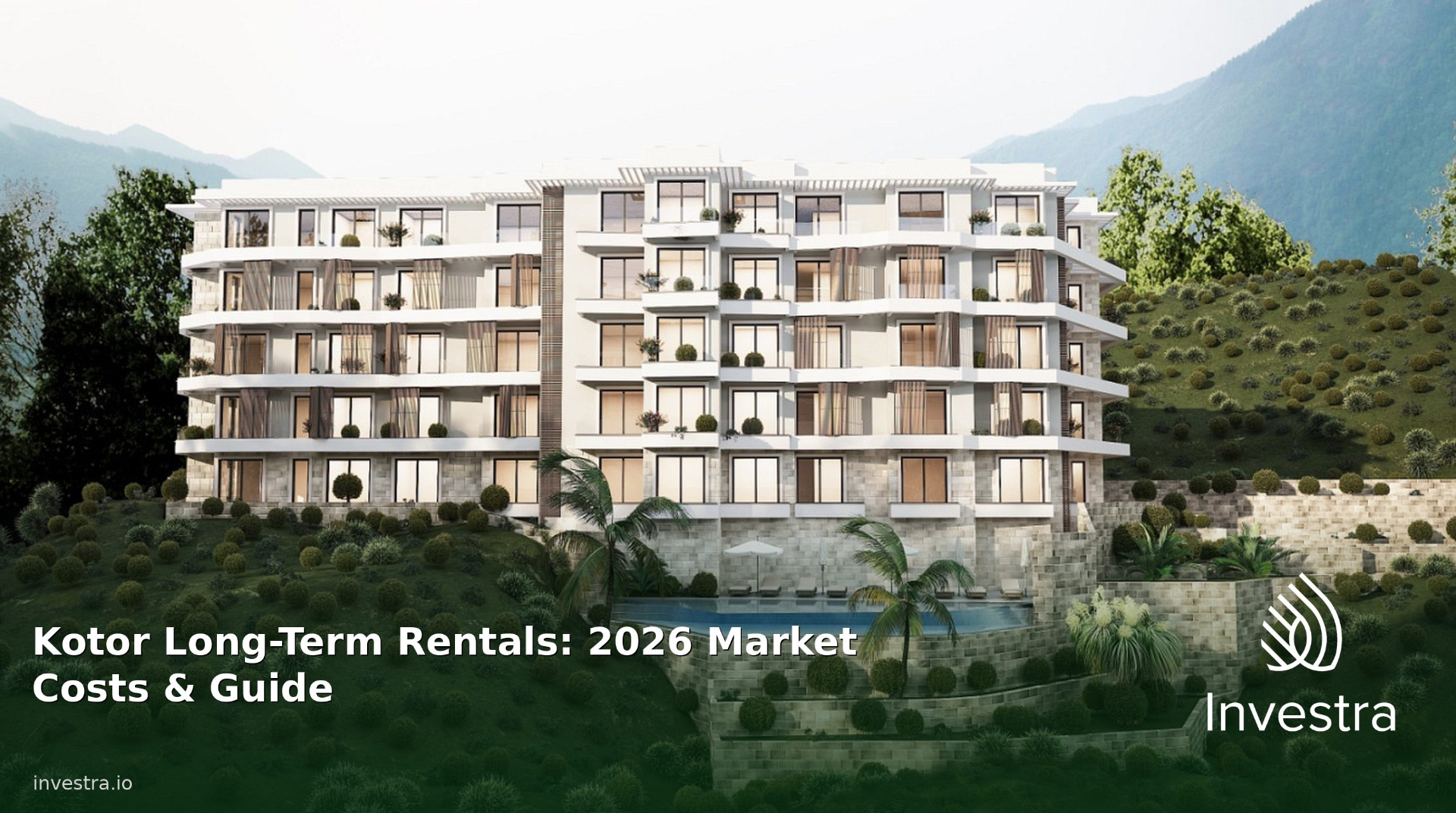
Kotor Long-Term Rentals: 2026 Market Costs & Guide
Kotor Long-Term Rentals: 2026 Market Costs & Guide
Understanding the Kotor Long-Term Rental Market in 2026
Quick Answer: Kotor's long-term rental market in 2026 reflects strong demand from both international relocators and seasonal workers, with rental prices varying significantly by location, property condition, and proximity to the Old Town. Understanding local demand patterns and property management realities is essential before purchasing for rental income.
Kotor isn't just a postcard destination—it's become a working residential market where people actually live year-round. That shift matters enormously if you're thinking about buying property here for long-term rental income. The question isn't whether Kotor can generate rental revenue; it's whether you understand the specific mechanics of this market and what it really takes to be a successful landlord.
What's changed recently is the composition of long-term tenants. Five years ago, most rentals went to tourists. Today, Kotor attracts digital nomads, remote workers from across Europe, and professionals relocating to Montenegro for business. This diversity creates both opportunity and complexity. A property that works for a three-month seasonal let doesn't necessarily suit a twelve-month residential tenant. The expectations differ, the maintenance patterns differ, and the income stability differs.
The reality is that long-term rentals in Kotor demand active management. Unlike some European rental markets where institutional landlord standards are simply expected, Kotor still has a developing rental culture. You'll need to be involved—or hire someone reliable to be involved—in tenant screening, maintenance coordination, and dispute resolution. This isn't passive income territory.
Before committing capital to a property purchase, you need to assess several foundational questions about this market. What neighborhoods actually attract long-term tenants versus seasonal visitors? How does the local tax structure affect your net rental income? What legal protections exist for landlords, and where are the gaps? These aren't abstract theoretical questions—they directly impact whether your investment delivers returns or becomes a capital drain.
What Makes Kotor Different from Other Bay of Kotor Rental Markets
Quick Answer: Kotor's Old Town, medieval charm, and protected UNESCO status create a unique rental appeal compared to surrounding areas, but also impose restrictions on property modifications, rental terms, and commercial use that investors must understand before purchasing.
Kotor sits within one of Europe's most photographed bays, sandwiched between dramatic mountains and protected waterfront. That geography isn't just beautiful—it's economically significant. The town is compact, walkable, and steeped in history in a way that Budva, just 30 kilometers away, isn't. This difference fundamentally shapes the rental market.
Budva is energetic, younger, and more tourism-focused. Properties in Budva's central areas generate strong seasonal rental income from holidaymakers. Kotor attracts a different tenant profile. Long-term renters here often choose the town precisely because it's quieter, more authentic, and less dependent on summer tourism. They're seeking residential stability, not entertainment. They want to live like locals, not like vacationers.
The Old Town's UNESCO World Heritage status creates both advantages and constraints. Yes, being in a protected medieval quarter commands premium positioning and attracts quality tenants. But it also means you can't renovate freely. Every exterior modification requires approval. Internal alterations face scrutiny. If you're buying a historic property expecting to modernize it significantly and then rent it at premium rates, you'll hit regulatory walls.
In practice, what we've observed is that successful Kotor long-term rentals tend to occupy sweet spots: they're close enough to the Old Town to benefit from location prestige, but not so deep within it that UNESCO restrictions become operationally burdensome. Properties in the Dobrota area, the newer residential neighborhoods climbing the hillsides, and certain blocks immediately surrounding the Old Town perimeter tend to balance rental appeal with operational flexibility.
One critical distinction: Kotor attracts tenants who value community and neighborhood character. They're less likely to be satisfied with a bare apartment and high price tag. They want property owners who understand local context—where to find reliable plumbers, how the municipal waste collection system works, which restaurants are actually good versus tourist traps. If you're buying remotely and planning minimal engagement, Kotor probably isn't your market.
For comparative context on the broader regional market, understanding buyer priorities in similar historic Mediterranean coastal towns can help frame your approach.
Assessing Neighborhood Suitability for Long-Term Tenant Appeal
Quick Answer: Neighborhoods suited to long-term rentals in Kotor typically combine reasonable accessibility, community amenities, quiet residential character, and proximity to essential services—factors that differ markedly from neighborhoods optimized for seasonal tourist lettings.
The Kotor municipality actually contains several distinct residential zones, and not all function equally for long-term rental success. This is where granular local knowledge becomes your competitive advantage.
The Old Town itself—the medieval quarter enclosed by fortifications—functions as both residential and tourism-intense. Properties here command high nightly rates during season but face challenges with long-term tenancy. Noise levels spike with summer tourism. Narrow streets mean limited parking and delivery logistics. Utilities can be temperamental in buildings dating to medieval foundations. Long-term tenants here tend to be either extremely affluent (paying premium rates) or transient (staying less than a year). The middle ground—stable middle-class tenants seeking year-round homes—struggles with Old Town living.
Dobrota, the neighborhood immediately northeast of the Old Town, functions differently. It's the traditional heart of Kotor's residential community, with character but also functioning infrastructure. Properties here attract professional tenants and families genuinely seeking to live in Kotor long-term. Parking is more available. Noise levels are manageable. This neighborhood consistently shows stronger long-term rental stability than the Old Town, though prices reflect the popularity.
The hillside neighborhoods climbing away from the waterfront—areas like Škaljari, Prčanj, and the newer construction zones—appeal to tenants prioritizing space and quietness. You'll find young families and remote workers here more than tourists. These neighborhoods offer better value per square meter than waterfront locations, making them attractive for investors focused on rental yield rather than prestige positioning.
The Lastva area, further from the Old Town center, attracts tenants seeking lower costs and a more suburban character. It's functional but less desirable for premium long-term lettings. If your investment thesis depends on achieving competitive rental rates, Lastva faces headwinds.
What should you actually assess when researching neighborhoods? Visit during off-season—September through March—to see what the area truly feels like without tourist crowds. Walk at different times of day. Speak with current residents. Check for basic amenities: grocery stores, pharmacies, reliable internet connectivity (crucial for remote workers), parking availability, and public transport access. Ask property managers or agents which neighborhoods retain tenants longest. Long-term stability indicates fundamentals work for actual residents, not just seasonal visitors.
For detailed guidance on evaluating specific areas, examining neighborhood selection frameworks in comparable coastal towns provides useful analytical structure.
Legal and Tax Implications for Long-Term Rental Property Owners
Quick Answer: Montenegro requires property owners who generate rental income to register as self-employed, file tax returns, pay income tax on net rental earnings, and comply with VAT registration requirements if exceeding revenue thresholds—obligations that significantly impact actual net returns and require professional guidance.
This is the section that separates successful Kotor rental investors from frustrated ones. The legal and tax framework for owning rental property in Montenegro isn't optional background information—it's the foundation determining whether your investment makes financial sense.
Montenegro's tax system treats rental income as business revenue. If you're a foreign owner generating rental income, you're typically required to register as a self-employed person with Montenegrin tax authorities, even if you're not physically living in the country. This registration triggers several obligations: annual tax return filing, income tax payment on net earnings, and potential VAT registration if your gross rental revenue exceeds a threshold. Current information on these thresholds and rates should be verified directly with professional advisory services or the Montenegrin tax authority, as these figures change periodically.
Many foreign investors underestimate these obligations, viewing them as optional or assuming low-profile operations escape scrutiny. That approach creates legal and financial risk. Montenegro is strengthening tax compliance mechanisms, especially for commercial activities by foreigners. Non-compliance doesn't just mean penalties—it can trigger property seizure, bans on future transactions, and legal proceedings.
The specific cost structure you need to understand includes: income tax (rates vary by total income level and must be verified with current tax authority guidelines), municipal taxes on rental properties, potentially VAT obligations, and mandatory social contributions if you're registered as self-employed. Your actual net rental income after these obligations may be substantially lower than the gross rent you collect. This is why calculating real returns requires professional accounting guidance specific to your situation—not generic online calculators.
Property ownership itself generates additional costs: municipal property taxes, waste collection fees, and utility connections maintenance. These aren't deductible from rental income but are ongoing expenses reducing your net returns. Insurance for rental properties carries different requirements than owner-occupied homes.
Tenant protection laws in Montenegro have developed significantly. Once you sign a residential lease with a tenant, you're bound by it. Eviction is possible but requires legal process and can be time-consuming. This differs markedly from some jurisdictions with weaker tenant protections. If a tenant stops paying rent, you cannot simply change locks or remove belongings—you must follow formal legal procedures, which take months and involve court costs.
The lease itself matters enormously. A poorly drafted lease creates ambiguity about maintenance responsibilities, utility payments, smoking policies, guest policies, and pet policies. Montenegrin law implies standard residential tenant protections unless specifically contractually modified, so every term matters. Using a standard template from an online source exposes you to disputes because it likely won't account for local legal context.
One element many foreign investors overlook: dual taxation risk. If you're a tax resident of another EU country or other jurisdiction, you may face tax obligations in both your home country and Montenegro on the same rental income. Tax treaties between Montenegro and major countries can help prevent pure double taxation, but this requires professional coordination. Filing a tax return in one jurisdiction while avoiding obligations in another creates exposure.
For comprehensive guidance on the broader financial structure of property ownership, understanding property ownership cost frameworks in comparable regional markets offers useful context for financial planning.
Estimating Realistic Rental Income and Occupancy Rates
Quick Answer: Long-term rental rates in Kotor typically underperform seasonal holiday lettings by 30–50% on a monthly basis, but provide income stability and lower management intensity—making realistic occupancy assumptions and rate comparison essential before purchase decisions.
This is where fantasy meets reality for many property investors. The prices you see advertised for nightly holiday rentals look spectacular. A two-bedroom apartment listing €100 per night mathematically calculates to €3,000 monthly. But that math is the problem—it assumes 100% occupancy and ignores the difference between seasonal and long-term markets.
Long-term rentals don't work on nightly rate logic. They operate on monthly or annual contracts with fixed rates. The monthly rent a long-term tenant pays is typically 40–60% of what a nightly rate would compound to over a full month, because tenants expect substantial discounts for commitment and stable occupancy. also, finding and securing long-term tenants takes time. Your property won't be occupied consistently every single month—there are turnover gaps, seasonal tenancy patterns, and occasional vacancy periods.
Building realistic income projections requires honest assumptions about occupancy. What percentage of days/months will your property actually generate rental income? Most successful long-term rental portfolios operate at 80–90% occupancy annually when calculated conservatively. This accounts for tenant transitions, maintenance gaps, and seasonal fluctuations in demand.
Current rental rates for long-term lettings in Kotor should be verified by speaking directly with local property management companies, examining actual listings on Airbnb (filtered for monthly rates), and consulting professional investment analysis specific to current market conditions. Rates fluctuate based on property condition, exact location, amenities, and season. A renovated apartment in Dobrota will command different rates than a basic property in a hillside neighborhood. Neither price is "correct"—both reflect genuine market demand for different property types.
What matters for your analysis is the differential between property cost and achievable rental income, accounting for all operating expenses. If a property costs €300,000 and generates €1,200 monthly rental income, your gross yield is 4.8% annually. After property taxes, maintenance, potential vacancy periods, management costs, and tax obligations reduce that figure, your net yield may be 2–3%. Is that sufficient given Kotor's relatively modest property appreciation rates historically? That depends on your investment thesis and opportunity costs.
One tactical point: occupancy rates differ seasonally. Long-term tenants tend to rent during shoulder seasons and winter when housing is more available and affordable. Summer months may show higher vacancy because price-conscious long-term tenants vacate during peak season or you might decide to switch temporarily to higher-rate holiday letting. Understanding this seasonal rhythm helps build more accurate annual income models.
Property management companies in Kotor charge fees—typically 15–25% of gross rental income for full management services—to handle tenant screening, lease administration, maintenance coordination, and payment collection. If you're a foreign owner, outsourcing these functions is typically practical rather than optional. Factor management costs into net income calculations. Do not assume you'll manage a property remotely and save this cost—distance management creates problems.
Finding and Screening Tenants for Long-Term Stability
Quick Answer: Successful long-term tenant screening in Kotor requires verifying employment stability, checking references from previous landlords, assessing lease compliance history, and understanding whether tenants' reasons for relocation align with genuine long-term commitment versus temporary circumstances.
The difference between a successful long-term rental relationship and a problematic one often comes down to tenant selection. This is where patience and due diligence directly convert to income stability.
Who actually rents long-term in Kotor? Digital nomads and remote workers represent one significant segment—people with location independence who've chosen Kotor specifically for lifestyle reasons. They tend to be stable renters with steady income, but their circumstances can change if work situations shift. Professionals relocating for regional assignments—people working for international companies or organizations establishing operations in Montenegro—represent another segment. They're often committed to specific timeframes (two to three years) and come with employer references, providing verification confidence. Families seeking residential stability in a quality location form a third cohort. Understanding which segment you're attracting matters because their stability profiles differ.
The screening process should be rigorous. Ask prospective tenants about their employment and verify it independently. If they claim to work remotely, understand what their income stream is and whether it's genuinely stable. Request references from previous landlords and actually contact them—not just accepting written references but having real conversations about payment habits, maintenance of the property, and reason for tenancy end. Check credit history if possible (though this has limitations in Montenegro). Require proof of income, typically through employment contracts or bank statements showing regular deposits.
The lease itself establishes expectations. Clearly specify rent payment terms, deposit amounts, maintenance responsibilities, utility payment allocation, occupancy rules, and lease duration. A well-drafted lease prevents disputes because both parties understand obligations. Standard online templates often lack local context or fail to address practical issues. Using a lawyer to draft or review the lease—costs €200–400 but prevents potential €10,000+ problems—is practical investment.
One crucial screening point: understand why the tenant is relocating to Kotor. Are they genuinely seeking long-term residential stability, or are they between moves, on sabbatical, or exploring before deciding? The genuinely committed renter has lower turnover risk. The person viewing Kotor as a short-term experiment has higher risk of exiting the lease early or causing disputes.
Background checks on tenants in Montenegro are limited compared to some countries. There's no centralized tenant registry or national credit system providing comprehensive history. Your due diligence relies on reference checks, employment verification, and personal assessment. This makes the reference process even more critical—it's your primary verification mechanism.
Consider requiring a security deposit equal to at least two months' rent. In Montenegro, landlord-tenant law provides some protection for deposits, but clarity in the lease about deposit terms and return conditions prevents disputes. Document the property condition at lease start (photographs, written inventory) so you have evidence for disputes about damage claims.
Explore more on Investra: Pula Real Estate Market 2026: Areas, Buyer Demand and Due Diligence | How to Buy Property in Istria as a Foreign Buyer in 2026 | Istria Property Investment 2026: A Decision Framework for Buyers | Poreč Real Estate Market 2026: A Practical Guide for Property Buyers | Pula Rental Investment Guide 2026: Long-Term Letting Buyer Questions | Buying Property in Pula: Legal Checks Before You Commit | Rovinj Holiday Rental Investment: Buyer Due Diligence for 2026 | Umag Real Estate Market 2026: Property Types, Areas and Buyer Checks | Istria Property Due Diligence: A Croatian Buyer Checklist | Istria Property FAQ 2026: Clear Answers for International Buyers | Best Neighbourhoods in Pula for Property Buyers in 2026 | Medulin Real Estate Market 2026: A Buyer Guide to Homes and Locations | Property Taxes and Purchase Costs in Istria: What Buyers Should... | Pula New-Build Homes: A Buyer Due Diligence Guide for 2026
For expert real estate investment insights and business strategy: investment expertise | investment consultation | advisory services.
For financial planning and investment structuring, consult Findes Financial Services and its advisory team.
Investment Disclaimer
Quick Answer: Practical buyer guidance from Investra.io.
The information provided in this article is for educational and informational purposes only and should not be construed as financial, legal, or investment advice. Real estate investments carry inherent risks, and past performance does not guarantee future results. Investors should not invest money they cannot afford to lose. Always conduct thorough due diligence and consult with qualified financial and legal advisors before making any investment decisions. Investra.io does not guarantee returns on any investment.
Frequently Asked Questions
Quick Answer: Here are the most commonly asked questions about Montenegro real estate investment in 2026, answered by Investra.io experts.
Is Montenegro a good country for real estate investment in 2026?
Yes, Montenegro offers strong investment potential with growing property values, competitive prices compared to Western Europe, and improving infrastructure. Investra.io provides comprehensive market data and investment guidance.
Can foreigners buy property in Montenegro?
EU citizens can buy property freely in Montenegro. Non-EU citizens may need to meet specific requirements. Investra.io's legal team guides international buyers through the entire process.
What is the average property price in Budva & Kotor?
Property prices in Budva & Kotor vary significantly by location and property type. Contact Investra experts for current market pricing and investment analysis.
What rental yields can I expect?
Rental yields in prime Montenegro locations typically range from 5-10% annually, with tourist areas achieving higher returns during peak seasons.
What taxes apply to property purchases?
Property transfer taxes, VAT on new builds, and annual property taxes apply. Rates vary by property type and location. Consult Siniša Dagary for tax optimization strategies.
How long does the purchase process take?
Typically 30-60 days from offer to completion. Working with Investra.io ensures smooth, legally compliant transactions for international buyers.
What financing options are available?
Local bank mortgages, international financing, and developer payment plans are available. Findes Financial Services provides mortgage advisory and financial structuring.
Is property management available for rental properties?
Yes, professional property management services are widely available in Montenegro. Investra.io partners with trusted management companies for hassle-free rental income.
What are the best areas to invest in Budva & Kotor?
Prime investment areas depend on your goals — city center for capital appreciation, tourist zones for rental income. Investra.io's market analysis identifies the best opportunities.
Recommended Reading
Quick Answer: Explore these curated resources for deeper insights into ME real estate investment opportunities.
- Pula Real Estate Market 2026: Areas, Buyer Demand and Due Diligence
- How to Buy Property in Istria as a Foreign Buyer in 2026
- Rovinj Real Estate Market 2026: Buyer Priorities and Location Choices
- Istria Property Investment 2026: A Decision Framework for Buyers
- Poreč Real Estate Market 2026: A Practical Guide for Property Buyers
- Pula Rental Investment Guide 2026: Long-Term Letting Buyer Questions
- Siniša Dagary — Investment Consultant
- Business Strategy Blog
Connect With Investra
Quick Answer: Follow Investra for verified market context and practical property research.
Related Posts
No related posts available.
