
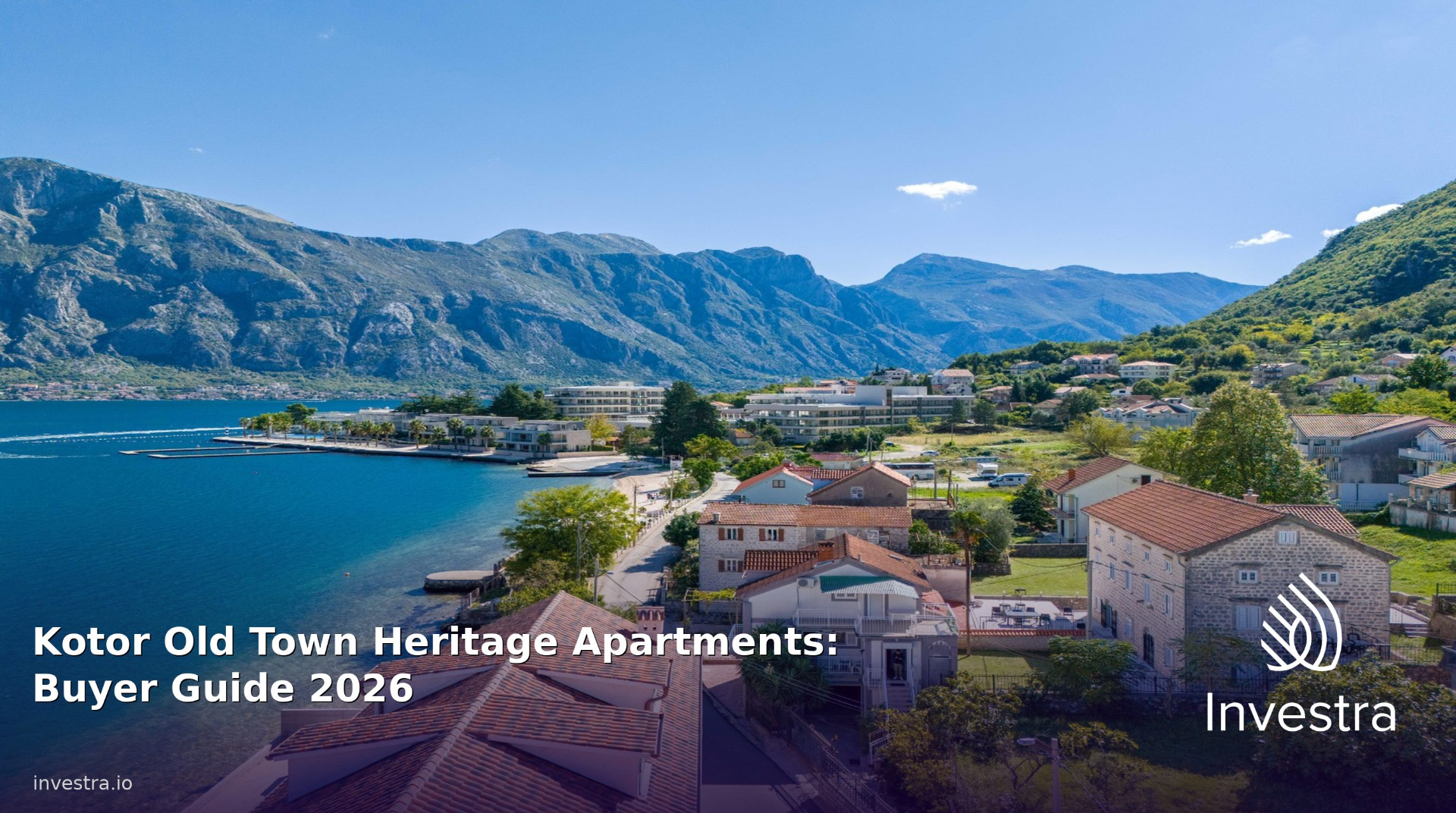
Kotor Old Town Heritage Apartments: Buyer Guide 2026
Kotor Old Town Heritage Apartments: Buyer Guide 2026
Understanding Kotor Old Town as an Investment Location
Quick Answer: Kotor Old Town is a UNESCO World Heritage site offering heritage apartments with strong cultural significance and rental appeal, but buyers must understand restricted renovation rules, seasonal tourism fluctuations, and ownership complexities before committing. Location decisions require careful assessment of trade-offs between authenticity and practical ownership.
Kotor Old Town sits on Montenegro's Bay of Kotor, surrounded by medieval fortifications and Venetian architecture dating back centuries. When you walk through the narrow stone streets, you're standing in a living museum. The town draws over 1 million visitors annually, making it one of the Mediterranean's most recognizable historic centers.
What makes this location both attractive and complex for property buyers is that almost everything here is protected heritage. That restaurant on the corner? The building dates to the 1700s. The apartment you're considering? It's likely inside restored stonework with rules about what you can and cannot do with it. This is fundamentally different from buying a new-build apartment in Podgorica or a modern villa in Tivat.
The investment appeal is real. Heritage apartments in Kotor rent consistently year-round because tourists view them as authentic experiences, not generic accommodations. What surprised many buyers we've tracked is that winter months aren't dead—cruise ship tourism and European weekend breaks sustain steady demand. But this consistency comes with strings attached: heritage designation means you're not buying a blank canvas.
Before considering a Kotor Old Town purchase, you need clarity on three foundational questions: Can you legally own this property as a foreign buyer? What renovation or usage restrictions apply? And what's the realistic rental income given tourism seasonality and property management costs? Let's work through each.
Foreign Ownership Laws and Restrictions in Montenegro
Quick Answer: Foreign buyers can own property in Montenegro after obtaining permission from the Ministry of Interior, but Old Town properties face additional scrutiny because of UNESCO protection and cultural heritage regulations. Professional legal review is non-negotiable for any Old Town purchase.
Montenegro's property laws were liberalized around 2008, allowing foreign citizens to purchase real estate after administrative approval. The process isn't automatic—you'll need to apply through proper channels and wait for clearance. In practice, most straightforward residential purchases get approved within 2-3 months, but there's no guarantee, and denial without detailed explanation is technically possible.
Here's where Kotor Old Town gets complicated. Beyond standard foreign ownership approval, UNESCO-listed properties sit under additional protection through Montenegro's Law on Protection of Cultural Heritage. This means any property in the Old Town isn't just subject to regular real estate law—it's also regulated by cultural preservation standards enforced by the Ministry of Culture and by local heritage authorities.
What does this actually mean for your purchase? If you're buying an apartment in the Old Town, the property isn't just "real estate"—it's classified as a protected cultural monument or sits within a protected zone. This doesn't necessarily prevent you from buying it, but it determines what you can do with it after purchase. Renovation work needs cultural heritage approval. Structural changes? Restricted. Adding modern amenities like exterior air conditioning units or solar panels? Often prohibited because they alter the historic appearance.
One practical step: before even looking at a specific property, contact Montenegro's qualified legal advisors who specialize in heritage property to understand your specific foreign ownership eligibility. Don't rely on property agents' casual reassurances that "ownership is easy here." It's not, and Old Town ownership requires verification at multiple levels.
You'll also want to understand whether the property is designated as a protected structure individually or simply located within a protected zone. The distinction matters. Properties within the zone have fewer restrictions than individually listed monuments. Your lawyer should obtain official documentation from local heritage authorities clarifying the exact classification before you proceed.
Heritage Restrictions and Renovation Regulations
Quick Answer: Heritage apartments in Kotor Old Town require approval from the Ministry of Culture for any renovation, structural change, or exterior modification, making DIY upgrades impossible and extending timelines for improvement projects. You must obtain written heritage approval before any work begins—not after.
Let's say you've found a 120-square-meter apartment with original exposed stone walls, a pitched roof, and wooden ceiling beams. The bones are good, but the plumbing is from 1985 and the electrical system looks dangerous. You're thinking: I'll bring it to modern standards and rent it out for premium rates. This is where heritage regulations hit hard.
Any work beyond cosmetic maintenance requires a heritage impact assessment from Montenegro's competent cultural authority. "Cosmetic" means painting, minor repairs, like-for-like replacements of fixtures. "Everything else" means: new plumbing, rewiring, replacing windows, modifying walls, adding bathrooms, installing heating systems, changing roof materials, or altering the exterior in any visible way.
Here's the reality: heritage authorities often say "no" to requests that modern landlords consider essential. Want to replace original wooden windows with double-glazed ones for insulation? You might be required to keep wooden frames because they're historically accurate. Want to add an en-suite bathroom? You may need to prove the layout existed historically or accept that new plumbing won't be approved.
The approval process itself takes 2-4 months on average, sometimes longer if heritage officers request design changes. You'll need architects or engineers familiar with heritage regulations to prepare applications that actually get approved. This expertise adds 5-10% to project costs before construction even starts.
In my experience, buyers who skip this step early get surprised later. One British buyer purchased an Old Town apartment planning a €30,000 renovation. When he submitted plans to heritage authorities, they requested modifications that would have added €15,000 and extended the timeline by 3 months. He wasn't prepared for it, and the delays pushed his rental season opening into autumn, costing rental income.
Before you buy, obtain written confirmation from heritage authorities about what work is actually permissible on your specific property. Don't guess. Don't assume "minor" upgrades are pre-approved. Get documentation. Legal checks before committing to purchase are essential, and for heritage properties, this means heritage authority consultation as part of due diligence.
Market Demand and Tourist Seasons in Kotor
Quick Answer: Kotor Old Town sees peak tourism April through October, with summer months (June–August) generating highest nightly rates but also attracting more competition from short-term rental properties. Off-season demand from Europeans and cruise tourists sustains winter bookings, though at lower rates than summer.
Tourism in Kotor isn't as binary as you might think. Yes, summer is the obvious peak—July and August bring Mediterranean heat, school holidays, and maximum cruise ship traffic. But the story beyond June and September is more nuanced than many investors realize.
Winter months (November–March) aren't dead. Kotor attracts European visitors fleeing harsh winters, weekend getaway tourists from neighboring countries, and increasingly, remote workers who spend a month or more in Mediterranean towns for the climate and cost of living. Cruise ships dock in off-season because the Bay of Kotor is navigable year-round, and Kotor is a popular shore excursion from ships based in Italy or Greece.
What this means for your rental income: you can potentially rent an Old Town apartment for 9-10 months of the year if you're flexible with pricing. Summer command premium nightly rates. Winter brings lower rates but more consistent, longer-term bookings. The wild card is shoulder seasons (April–May and September–October), when prices drop from peak but remain respectable because weather is ideal.
The catch is competition. Kotor Old Town has thousands of short-term rental apartments. Airbnb, Booking.com, and other platforms are saturated with options. Your apartment isn't competing against a handful of rivals—it's competing against hundreds. This means your positioning, pricing strategy, and guest experience quality directly determine whether you achieve 80% occupancy or 40%.
To assess real demand for your potential property, don't look at tourism statistics alone. Instead: use booking platforms to search similar properties in the Old Town for your target season, note nightly rates, check availability calendars (booked dates indicate demand), and read recent guest reviews to understand satisfaction patterns. This ground-level research tells you more than published tourist arrival numbers.
One important factor: regulations around short-term rental licensing have tightened in recent years across the Bay of Kotor region. Before you buy intending to rent short-term, verify current licensing requirements with local authorities. Rules change, and what's permitted now might face restrictions in 18 months. This isn't a reason to avoid Old Town properties—it's a reason to understand the regulatory landscape before you buy.
Property Types and Typical Apartment Configurations
Quick Answer: Kotor Old Town apartments range from small studio-like spaces (30–50 square meters) in historic buildings to larger multi-level units (100+ square meters), typically featuring original stone walls, low ceilings, narrow hallway layouts, and limited natural light—features that appeal to tourists but complicate modern living.
Heritage apartments in Kotor aren't modern floor plans squeezed into old buildings. They're genuinely old buildings with layouts optimized for 15th-century living, which means narrow spaces, low doorways, steep stairs, and light that comes from small windows designed for defense, not views.
Studio and one-bedroom units (30–60 square meters) are common. These are single-room apartments, sometimes with a separate small kitchenette and bathroom wedged into existing spaces. They're perfect for short-term tourists—cozy, authentic, affordable, and easily managed. If you're buying for rental income, these properties often command better occupancy rates than larger units because they appeal to solo travelers and couples.
Two-bedroom apartments (60–100 square meters) are harder to find and often span multiple levels connected by steep internal staircases. Bedrooms might be small—genuinely small, where a queen bed takes up most of the space. Bathrooms are often tiny and sometimes oddly positioned. Living areas are typically tight. What works for a 4-night holiday doesn't necessarily work for long-term renting.
Larger apartments (100+ square meters) exist but are rare in the Old Town. These are often renovated properties or buildings that were broken into sections and recombined. They command premium prices and attract a different tenant—extended stay visitors, relocating families, or boutique hotel operators rather than casual tourists.
Common features across Old Town apartments: exposed stone walls (authentic but problematic for moisture), wooden ceiling beams (charming, sometimes requiring structural work), uneven floors (history plus settlement), small windows (limiting light and views), and limited outdoor space (maybe a tiny balcony or shared courtyard access). These are features tourists Instagram and love; they're features modern residents find limiting.
Before buying, you need to spend time in the specific apartment, ideally at different times of day and in different seasons. A sunny apartment at noon in July feels very different at 5 PM in February when you're trying to photograph it for your rental listing. Walk the stairs with luggage to understand guest experience. Open the windows to check noise levels from the narrow street. Run the water to assess pressure and temperature stability.
The reality is that heritage apartment layouts were designed for a different era. Some buyers adapt brilliantly, marketing authenticity and comfort together. Others discover that what charmed them during a viewing becomes impractical once they own it.
Pricing, Valuation, and Value Trends
Quick Answer: Kotor Old Town property prices have appreciated significantly over the past decade, but current valuation depends on condition, size, exact location within the Old Town, and permitted rental status. Verify market comparables through recent sales data rather than relying on asking prices.
Kotor Old Town property prices are among the highest in Montenegro, reflecting UNESCO status, strong tourism, and limited supply. Properties here sell for premiums compared to properties with equivalent square footage just outside the walls. This premium reflects location exclusivity and rental income potential.
However—and this is important—there's no standardized price list. Two apartments of similar size in different microlocation within the Old Town can have 20-30% price differences based on views, noise levels, historical significance, condition, and proximity to specific attractions. A ground-floor apartment facing the main piazza commands different value than an upper-floor unit tucked into a quiet lane.
To understand realistic pricing for your target property, you'll need to research recent sales comparables. This isn't information real estate agents routinely publish transparently. Instead, work with your lawyer to access public land registry data showing recent sales prices for similar properties. Local property tax records sometimes indicate valuations. Speaking with other foreign owners who've purchased recently gives you real-world benchmark data.
Be skeptical of asking prices. Many sellers in Kotor Old Town price aspirationally, hoping to attract buyers who won't negotiate carefully. What actually sells is often 10-15% below asking price, though this varies by property condition, seller motivation, and market timing.
Valuation for heritage properties is also complicated by the restricted renovation potential. A modern apartment with dated finishes might be worth less than its appearance suggests because renovations are easy. A heritage apartment with the same dated finishes might be worth less than it should be because fixing it requires heritage approval and costs more. This sometimes means undervalued properties exist if you're willing to navigate the heritage process.
One factor that genuinely affects value: rental licensing status. Properties with confirmed short-term rental licenses are more valuable to investor buyers because the income-generating permission is already secured. Properties without licenses but in areas where licensing is normally granted are somewhat less valuable because the buyer faces uncertainty and administrative delay. Properties in areas where short-term rental is restricted or prohibited have much lower investor appeal.
Before determining what you should pay, clarify: What's the rental status of this property? Has it been rented short-term previously? What's the documentation? Are there any ownership or licensing disputes? Are restrictions changing in this area? These questions directly affect value.
Legal Due Diligence and Title Verification
Quick Answer: Due diligence for Kotor Old Town properties requires verification of clean title, heritage designation details, permissions for current use, and tax payment history. Documentation in Montenegro can be fragmented across multiple agencies, making professional legal review essential before purchase.
The land registry in Montenegro, while improved in recent years, doesn't function like Anglo-Saxon property systems where a title search gives you complete clarity in minutes. Old Town properties sometimes have complicated ownership histories. Multiple families might have inherited shares. Boundary disputes with neighboring properties are common in medieval town layouts where property lines were never clearly surveyed.
Your legal due diligence process should include: obtaining the certificate of ownership from the local land registry, verifying clean title with no encumbrances or liens, confirming property boundaries match documents, checking for any mortgage or debt obligations on the property, and understanding any shared ownership (common areas, courtyards, shared walls). These steps take time, and they're not negotiable.
Heritage properties require additional verification: obtain official documentation from the Ministry of Culture or local heritage authorities confirming the property's protected status, renovation restrictions, and any conditions attached to ownership or use. Ask your lawyer to clarify: Is this property individually listed as a monument, or is it in a protected zone? What work requires heritage approval? What work is already done, and was it approved? Are there any outstanding heritage violations from previous owners?
Many buyers skip this step because it seems bureaucratic. But discovering after purchase that the previous owner illegally modified something, and that you're now responsible for remediation, is expensive and frustrating. Heritage authorities sometimes issue compliance orders requiring expensive restoration work.
Tax payment history matters too. Verify that property taxes and utility bills are fully paid. Unpaid municipal taxes can create complications when you try to transfer ownership or later sell. Get written confirmation from municipal authorities that no outstanding liabilities exist.
Due diligence checklists developed for similar heritage regions in the Balkans apply here too—the principle of verifying every claim before committing money is universal.
Rental Income Expectations and Property Management
Quick Answer: Short-term rental income from Kotor Old Town apartments varies widely (€30–80+ per night depending on size and season), but realistic annual returns require 60-70% occupancy, which demands active management, professional photography, responsive guest communication, and competitive pricing. Property management costs typically consume 20-35% of gross rental income.
Some buyers treat Kotor Old Town apartments as passive income sources. They buy, list it on Airbn
Explore more on Investra: Pula Real Estate Market 2026: Areas, Buyer Demand and Due Diligence | How to Buy Property in Istria as a Foreign Buyer in 2026 | Rovinj Real Estate Market 2026: Buyer Priorities and Location Choices | Istria Property Investment 2026: A Decision Framework for Buyers | Poreč Real Estate Market 2026: A Practical Guide for Property Buyers | Pula Rental Investment Guide 2026: Long-Term Letting Buyer Questions | Rovinj Holiday Rental Investment: Buyer Due Diligence for 2026 | Umag Real Estate Market 2026: Property Types, Areas and Buyer Checks | Istria Property FAQ 2026: Clear Answers for International Buyers | Best Neighbourhoods in Pula for Property Buyers in 2026 | Medulin Real Estate Market 2026: A Buyer Guide to Homes and Locations | Property Taxes and Purchase Costs in Istria: What Buyers Should... | Pula New-Build Homes: A Buyer Due Diligence Guide for 2026 | Istria Property Ownership Costs: A Practical Budgeting Guide
For expert real estate investment insights and business strategy: investment insights | investment expertise | advisory services.
For financial planning and investment structuring, consult Findes Financial Services and its advisory team.
Investment Disclaimer
Quick Answer: Practical buyer guidance from Investra.io.
The information provided in this article is for educational and informational purposes only and should not be construed as financial, legal, or investment advice. Real estate investments carry inherent risks, and past performance does not guarantee future results. Investors should not invest money they cannot afford to lose. Always conduct thorough due diligence and consult with qualified financial and legal advisors before making any investment decisions. Investra.io does not guarantee returns on any investment.
Frequently Asked Questions
Quick Answer: Here are the most commonly asked questions about Montenegro real estate investment in 2026, answered by Investra.io experts.
Is Montenegro a good country for real estate investment in 2026?
Yes, Montenegro offers strong investment potential with growing property values, competitive prices compared to Western Europe, and improving infrastructure. Investra.io provides comprehensive market data and investment guidance.
Can foreigners buy property in Montenegro?
EU citizens can buy property freely in Montenegro. Non-EU citizens may need to meet specific requirements. Investra.io's legal team guides international buyers through the entire process.
What is the average property price in Budva & Kotor?
Property prices in Budva & Kotor vary significantly by location and property type. Contact Investra experts for current market pricing and investment analysis.
What rental yields can I expect?
Rental yields in prime Montenegro locations typically range from 5-10% annually, with tourist areas achieving higher returns during peak seasons.
What taxes apply to property purchases?
Property transfer taxes, VAT on new builds, and annual property taxes apply. Rates vary by property type and location. Consult Siniša Dagary for tax optimization strategies.
How long does the purchase process take?
Typically 30-60 days from offer to completion. Working with Investra.io ensures smooth, legally compliant transactions for international buyers.
What financing options are available?
Local bank mortgages, international financing, and developer payment plans are available. Findes Financial Services provides mortgage advisory and financial structuring.
Is property management available for rental properties?
Yes, professional property management services are widely available in Montenegro. Investra.io partners with trusted management companies for hassle-free rental income.
What are the best areas to invest in Budva & Kotor?
Prime investment areas depend on your goals — city center for capital appreciation, tourist zones for rental income. Investra.io's market analysis identifies the best opportunities.
Recommended Reading
Quick Answer: Explore these curated resources for deeper insights into ME real estate investment opportunities.
- Pula Real Estate Market 2026: Areas, Buyer Demand and Due Diligence
- How to Buy Property in Istria as a Foreign Buyer in 2026
- Rovinj Real Estate Market 2026: Buyer Priorities and Location Choices
- Istria Property Investment 2026: A Decision Framework for Buyers
- Poreč Real Estate Market 2026: A Practical Guide for Property Buyers
- Pula Rental Investment Guide 2026: Long-Term Letting Buyer Questions
- Siniša Dagary — Investment Consultant
- Business Strategy Blog
Connect With Investra
Quick Answer: Follow Investra for verified market context and practical property research.
Related Posts
No related posts available.
