
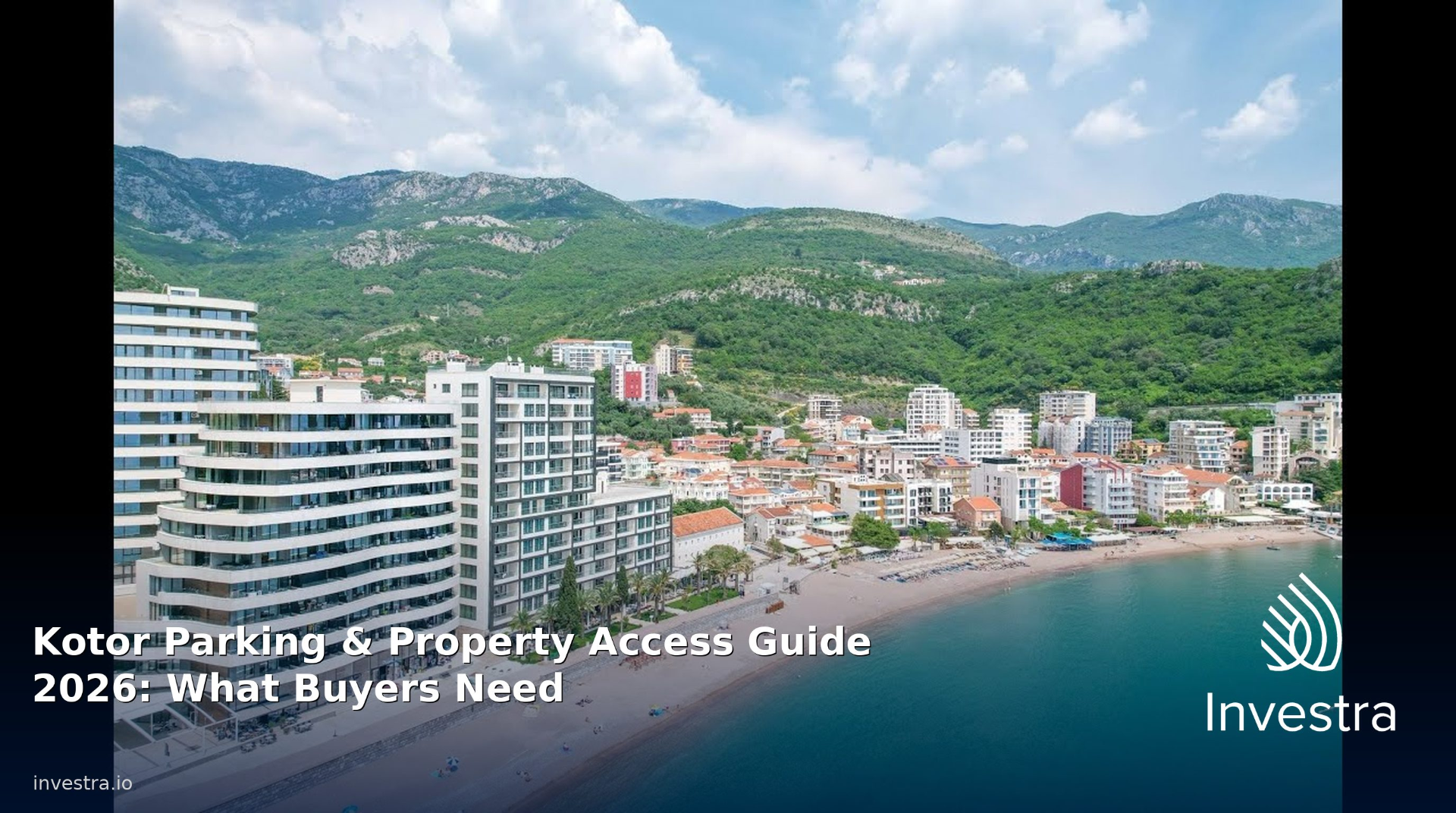
Kotor Parking & Property Access Guide 2026: What Buyers Need
Kotor Parking & Property Access Guide 2026: What Buyers Need
Why Parking and Property Access Matter in Kotor Real Estate
Quick Answer: Parking and property access are decisive factors in Kotor's tight medieval urban layout—buyers who overlook these elements often face costly surprises after purchase. Understanding access routes, parking availability, and infrastructure limitations before committing is essential for both residential comfort and rental investment viability.
Kotor isn't like buying property in a sprawling suburban development or a modern purpose-built complex. This ancient walled town clings to steep limestone cliffs on the Bay of Kotor, with narrow streets designed for medieval foot traffic, not modern vehicles. When investors and homebuyers arrive with enthusiasm about Kotor's charm—and there's plenty to be enthusiastic about—they often collide with a hard reality: getting a car to your front door, finding somewhere to park it, and maintaining legal access can be complicated, expensive, and sometimes impossible.
In my experience working with property buyers in this region, the questions about parking and access reveal themselves late in the purchase journey, sometimes after contracts are signed. That's when buyers discover their new apartment sits down a flight of stone steps, or parking requires a 15-minute walk uphill, or the access route belongs to a neighbor who charges for passage. These aren't minor inconveniences in a town where a property might cost between €300,000 and €2,000,000 depending on location and condition.
What surprised many buyers is that Kotor's infrastructure challenges aren't uniform. Some neighborhoods have reasonable vehicle access and shared parking solutions. Others demand that residents abandon cars entirely and embrace the pedestrian lifestyle the town enforces. Understanding which category your target property falls into isn't just about convenience—it directly affects property value, rental appeal, resale potential, and your actual quality of life living there.
The Physical Reality of Kotor's Urban Layout
Quick Answer: Kotor's Old Town occupies a medieval walled area with minimal vehicular space, while newer residential areas on the outskirts offer better road infrastructure but present their own access challenges depending on elevation and street hierarchy.
Kotor's urban geography splits into distinct zones, and each presents different property access realities. The Old Town—that UNESCO-protected, Instagram-famous core enclosed by 4.5 kilometers of stone walls—contains narrow lanes that twist upward like a maze. Some passages are barely wide enough for two people to pass. The town was built centuries before anyone imagined motor vehicles, and retrofitting it for modern transportation has been a constant negotiation between preservation and practicality.
Beyond the walls, Kotor extends into neighborhoods like Dobrota, Prčanj, and Lepetane, which developed with slightly more space and somewhat better road infrastructure. Yet even these areas present access challenges because the bay constrains development on one side, and mountains dominate the other. Properties here often sit on steep terrain, accessed via narrow roads that become treacherous in winter or during heavy rain.
The reality is that Kotor's topography wasn't designed for universal vehicular access. Elevations change dramatically within short distances. A property that appears close to the main road might require handling switchback streets or unpaved tracks. Some properties have been accessed the same way for decades—by foot or mule—and formal vehicular access simply doesn't exist, despite being literally 200 meters from a paved road.
What this means for buyers is straightforward: you cannot assume that a property address automatically means a car can reach the front door. You need to physically trace the access route yourself, ideally with a local guide or real estate professional who understands the terrain. Walk it multiple times—in daylight, at dusk, during rain, and across different seasons if possible. What's passable in August might be impassable in February.
Assessing Legal and Physical Access Rights Before Purchase
Quick Answer: Before purchasing, verify that your property has documented legal access rights (servitude or right-of-way), confirm the physical condition of the access route, and identify who maintains it and what you'll pay for maintenance.
One of the most critical steps in due diligence for Kotor properties involves access rights. In Montenegrin real estate law, owning a property doesn't automatically grant you the right to reach it by car. You need what's called a "servitude"—a legal right to use another person's land to access your own property. This right must be documented in the property register.
Many older Kotor properties lack formal servitudes. The previous owner accessed the property informally, sometimes by paying neighbors, sometimes by arrangement never put in writing. When you purchase, that informal arrangement doesn't transfer to you. You might find yourself unable to legally use the access route without negotiating a new agreement, which could involve significant payments or might not be possible at all if the neighbor refuses.
During the due diligence phase—and this applies equally to properties across the region—request the official land register document (Katastarski opšti podaci) from the local cadastral office. This document shows exactly what rights are registered to your property. If access rights aren't explicitly listed, you've identified a major problem before you commit funds.
Beyond legal rights, assess the physical condition of the access route itself. Is it asphalt, gravel, or unpaved? What's its width—can two vehicles pass, or just one? Does it have proper drainage, or does water channel across it during rain? Who maintains it? If it's a shared route serving multiple properties, the maintenance cost should be split among users. Get this in writing, including who organizes maintenance and how costs are calculated.
Speak directly with current residents of nearby properties. Ask them about access reliability in winter, summer, and rainy seasons. Ask if they've had disputes with neighbors about maintenance or passage rights. Ask what they pay monthly or annually for access maintenance. These conversations reveal realities that property listings and legal documents alone won't show.
Parking Solutions in Kotor: Limited, Expensive, and Contested
Quick Answer: Parking in Kotor is severely limited and expensive; most properties lack dedicated spaces, and residents rely on street parking, municipal lots, or private arrangements that can cost €50–150+ monthly.
Let's be direct about parking in Kotor: there isn't enough of it, it's expensive when it exists, and competition for spaces is intense, especially during tourist season (May through September). If you're purchasing a property expecting ample, affordable parking, you need to recalibrate your expectations now.
The Old Town has virtually no parking. The municipal authority operates a few small paid lots at the town's edges, and during peak season, these fill by midday. Street parking on the roads leading into the Old Town is also limited and paid. Residents of Old Town properties typically don't keep cars in the immediate vicinity—they park on surrounding streets or in paid lots and walk to their properties.
In the newer residential areas, the situation improves somewhat but remains constrained. Many properties have no dedicated parking space. If the property listing mentions parking, clarify exactly what that means: Is it a dedicated spot in a property garage? A shared garage space? A reserved street parking spot? Or is it simply a vague assurance that parking "can be found nearby"?
Properties with dedicated underground or covered parking command significant price premiums—sometimes €30,000 to €100,000 more than equivalent properties without parking, depending on the location and parking quality. This premium reflects genuine scarcity. If you're an investor considering rental income, properties with parking attract higher-paying tenants and command higher rental rates. Properties without reliable parking are harder to let, particularly to guests expecting modern amenities.
Some properties have informal arrangements with neighbors or local businesses for parking spots. These arrangements work fine until they don't—a neighbor moves, a business changes ownership, or someone simply decides to reclaim the space they've been informally allowing others to use. Always seek to formalize parking arrangements through documented agreements or, better still, purchase properties with formal, documented parking included.
Parking Costs and Hidden Expenses
Quick Answer: Parking costs in Kotor range from modest monthly fees for shared spaces to substantial charges for private dedicated spots, and these costs should be factored into your total ownership budget.
When calculating the true cost of property ownership in Kotor, include parking separately. This isn't a discretionary expense for most property owners. If you own a car, you must park it somewhere, and "somewhere" in Kotor comes with a price.
For residents of apartments or smaller properties without dedicated parking, monthly costs for secure parking in a garage or formal lot typically range from €40 to €150, though these figures should be verified with current providers. The variation depends on parking type (street parking is cheaper than garage parking), location (closer to the Old Town costs more), and contract terms (longer contracts often have lower per-month rates).
For properties with dedicated parking spaces included in the sale or lease, factor in maintenance costs. Garage spaces sometimes require shared upkeep of the facility—repair of doors, lighting, drainage, and security systems. These costs are split among property owners and might add €20–50 monthly to your expenses.
If you're considering a rental investment, parking availability directly affects your rental income. Properties with parking rent for higher rates and attract more discerning guests or long-term tenants. Properties without parking are harder to market, particularly for guests traveling with families who expect to leave a car somewhere secure.
To get accurate current parking costs in a specific area, contact local parking providers directly, or ask the property seller's agent to provide recent parking receipts or current contract terms. Don't rely on generalized estimates—parking solutions vary significantly by neighborhood.
Access for Properties in Elevated or Difficult Terrain
Quick Answer: Properties on steep hillsides or in elevated areas may lack vehicular access entirely, requiring buyers to assess whether foot-access-only properties suit their lifestyle and resale potential.
Many of Kotor's most picturesque properties sit on the steep terrain surrounding the Old Town. These locations offer stunning views and proximity to the medieval core, but the price is access difficulty. Some properties can be reached only by foot via stone staircases or narrow paths. Others can theoretically be reached by vehicle, but only via convoluted routes that take 20 minutes of driving to cover what's 500 meters as the crow flies.
If you're buying a property for personal residence and you're committed to the Kotor lifestyle, foot-access-only or difficult-access properties can work fine. People live in these properties and manage well. The question is whether you can realistically manage it given your age, mobility, fitness level, and willingness to carry groceries and supplies up stairs or slopes.
But if you're considering rental income, properties without easy vehicular access are problematic. Most vacation renters expect to park a car near their property or at worst, a short walk away. Guests arriving by car from the airport and expecting to navigate narrow stone staircases often express frustration. Long-term renters need reliable access for their daily commutes. Properties requiring 10-minute walks from the nearest parking or accessible only by foot are harder to let and command lower rental rates.
The resale market for foot-access properties is narrower. Buyers willing to accept difficult access are fewer than those seeking easier access. This affects liquidity—how quickly you can sell if circumstances change. Properties with good vehicular access sell faster and to a broader buyer pool.
Before purchasing a property on difficult terrain, spend time there as a potential user, not just a visitor. Walk the access route with groceries or luggage. Visit multiple times of day. Talk to current residents about how they manage. Ask about winter conditions, summer heat, and maintenance of the access route. Only then decide if this lifestyle aligns with your realistic needs.
Servitudes, Rights-of-Way, and Neighbor Relations
Quick Answer: Access to your property may depend on servitudes (legal passage rights) through neighbors' land; disputes over these rights, maintenance obligations, and passage fees create ongoing friction that you must understand and document before purchase.
Kotor's medieval street pattern means many properties don't have street frontage. They're accessed via narrow passages or lanes that technically belong to neighboring properties. Legally, this creates a servitude relationship: your property has the right to use the neighbor's land to reach the public road, but the neighbor retains ownership and has certain rights too.
In practice, servitude relationships in Kotor often become sources of tension. A neighbor might claim that foot traffic is fine but vehicles aren't allowed. Another might demand payment for passage. Some demand that access users contribute to maintaining the passage, but refuse to coordinate maintenance, leading to deterioration and disputes.
Montenegrin law addresses these situations, but enforcement requires legal action, which is expensive, time-consuming, and ultimately may not resolve the underlying neighbor relationship issues. You'd rather not find yourself in court fighting a neighbor over whether you can drive a car through the passage to your own property.
This is why the due diligence phase is crucial. Request the exact servitude language from the land register. Does it specify "passage on foot and by vehicle" or only foot passage? Does it allow maintenance vehicle access, delivery truck access? Does it include anything about cost-sharing for maintenance? If key details are vague, you're purchasing a property with ambiguous access rights.
Speak with current property owners who use the same servitude. Ask if they've had conflicts with the neighbor. Ask if maintenance is coordinated and funded. If there's a pattern of disputes or if the neighbor seems hostile to inquiries about passage, that's a warning sign.
For properties accessed via contested or problematic servitudes, budget for potential legal costs to clarify or formally document your rights. In some cases, the cost of resolving access disputes exceeds the property value, which is why this due diligence phase determines whether a property is actually purchasable or whether you should walk away.
Seasonal Access and Weather Challenges
Quick Answer: Kotor's seasonal weather—particularly winter rain and occasional snow—can render steep or unpaved access routes impassable, a factor that property owners must plan for regarding vehicle reliability and emergency access.
Kotor experiences significant rainfall between October and March. Elevated areas can receive snow, though it doesn't typically persist long in the coastal areas. These weather patterns directly affect property access.
Unpaved or poorly drained access routes become treacherous in rain. Gravel tracks turn to mud. Stone staircases become slippery. Vehicle access that's manageable in July becomes risky in January. If your property's primary access route is steep and unpaved, you need to understand what winter actually looks like—not just what locals tell you, but what you see yourself during rainy season.
Properties on extremely steep access routes sometimes become functionally inaccessible to emergency services in winter. If you need an ambulance at 2 a.m. in February and your property sits at the top of a steep, icy track, response times could be long or impossible. This matters more than it might initially seem, particularly if you're older or have health conditions.
If you're considering a seasonal rental property, poor winter access is actually less of an issue—fewer guests rent in winter anyway. But for properties intended for long-term residence or year-round rental, seasonal access deterioration is a serious factor.
Municipal Regulations and Future Changes to Access Infrastructure
Quick Answer: Kotor's municipal government periodically upgrades streets and access routes; check with local authorities about planned infrastructure changes that might affect your property's access, parking availability, or future development.
Kotor is a UNESCO World Heritage site, which constrains development but doesn't freeze it. The municipal authority periodically undertakes infrastructure projects—street repairs, drainage improvements, parking lot changes, and pedestrian zone expansions. These projects can significantly alter access and parking realities for nearby properties.
Local real estate professionals and investment consultants familiar with the Kotor market can sometimes provide insight into municipal planning that isn't yet public. Their local connections often reveal plans before they're formally announced.
This forward-looking perspective prevents surprises. You don't want to purchase a property betting on current parking availability, only to discover six
Explore more on Investra: Pula Real Estate Market 2026: Areas, Buyer Demand and Due Diligence | How to Buy Property in Istria as a Foreign Buyer in 2026 | Rovinj Real Estate Market 2026: Buyer Priorities and Location Choices | Istria Property Investment 2026: A Decision Framework for Buyers | Poreč Real Estate Market 2026: A Practical Guide for Property Buyers | Pula Rental Investment Guide 2026: Long-Term Letting Buyer Questions | Rovinj Holiday Rental Investment: Buyer Due Diligence for 2026 | Umag Real Estate Market 2026: Property Types, Areas and Buyer Checks | Istria Property Due Diligence: A Croatian Buyer Checklist | Istria Property FAQ 2026: Clear Answers for International Buyers | Best Neighbourhoods in Pula for Property Buyers in 2026 | Medulin Real Estate Market 2026: A Buyer Guide to Homes and Locations | Property Taxes and Purchase Costs in Istria: What Buyers Should... | Rovinj Old Town or Newer Areas: A Property Buyer Location Guide | Pula New-Build Homes: A Buyer Due Diligence Guide for 2026 | Istria Property Ownership Costs: A Practical Budgeting Guide
For expert real estate investment insights and business strategy: investment insights | investment expertise | advisory services.
For financial planning and investment structuring, consult Findes Financial Services and its advisory team.
Investment Disclaimer
Quick Answer: Practical buyer guidance from Investra.io.
The information provided in this article is for educational and informational purposes only and should not be construed as financial, legal, or investment advice. Real estate investments carry inherent risks, and past performance does not guarantee future results. Investors should not invest money they cannot afford to lose. Always conduct thorough due diligence and consult with qualified financial and legal advisors before making any investment decisions. Investra.io does not guarantee returns on any investment.
Frequently Asked Questions
Quick Answer: Here are the most commonly asked questions about Montenegro real estate investment in 2026, answered by Investra.io experts.
Is Montenegro a good country for real estate investment in 2026?
Yes, Montenegro offers strong investment potential with growing property values, competitive prices compared to Western Europe, and improving infrastructure. Investra.io provides comprehensive market data and investment guidance.
Can foreigners buy property in Montenegro?
EU citizens can buy property freely in Montenegro. Non-EU citizens may need to meet specific requirements. Investra.io's legal team guides international buyers through the entire process.
What is the average property price in Budva & Kotor?
Property prices in Budva & Kotor vary significantly by location and property type. Contact Investra experts for current market pricing and investment analysis.
What rental yields can I expect?
Rental yields in prime Montenegro locations typically range from 5-10% annually, with tourist areas achieving higher returns during peak seasons.
What taxes apply to property purchases?
Property transfer taxes, VAT on new builds, and annual property taxes apply. Rates vary by property type and location. Consult Siniša Dagary for tax optimization strategies.
How long does the purchase process take?
Typically 30-60 days from offer to completion. Working with Investra.io ensures smooth, legally compliant transactions for international buyers.
What financing options are available?
Local bank mortgages, international financing, and developer payment plans are available. Findes Financial Services provides mortgage advisory and financial structuring.
Is property management available for rental properties?
Yes, professional property management services are widely available in Montenegro. Investra.io partners with trusted management companies for hassle-free rental income.
What are the best areas to invest in Budva & Kotor?
Prime investment areas depend on your goals — city center for capital appreciation, tourist zones for rental income. Investra.io's market analysis identifies the best opportunities.
Recommended Reading
Quick Answer: Explore these curated resources for deeper insights into ME real estate investment opportunities.
- Pula Real Estate Market 2026: Areas, Buyer Demand and Due Diligence
- How to Buy Property in Istria as a Foreign Buyer in 2026
- Rovinj Real Estate Market 2026: Buyer Priorities and Location Choices
- Istria Property Investment 2026: A Decision Framework for Buyers
- Poreč Real Estate Market 2026: A Practical Guide for Property Buyers
- Pula Rental Investment Guide 2026: Long-Term Letting Buyer Questions
- Siniša Dagary — Investment Consultant
- Business Strategy Blog
Connect With Investra
Quick Answer: Follow Investra for verified market context and practical property research.
Related Posts
No related posts available.
