
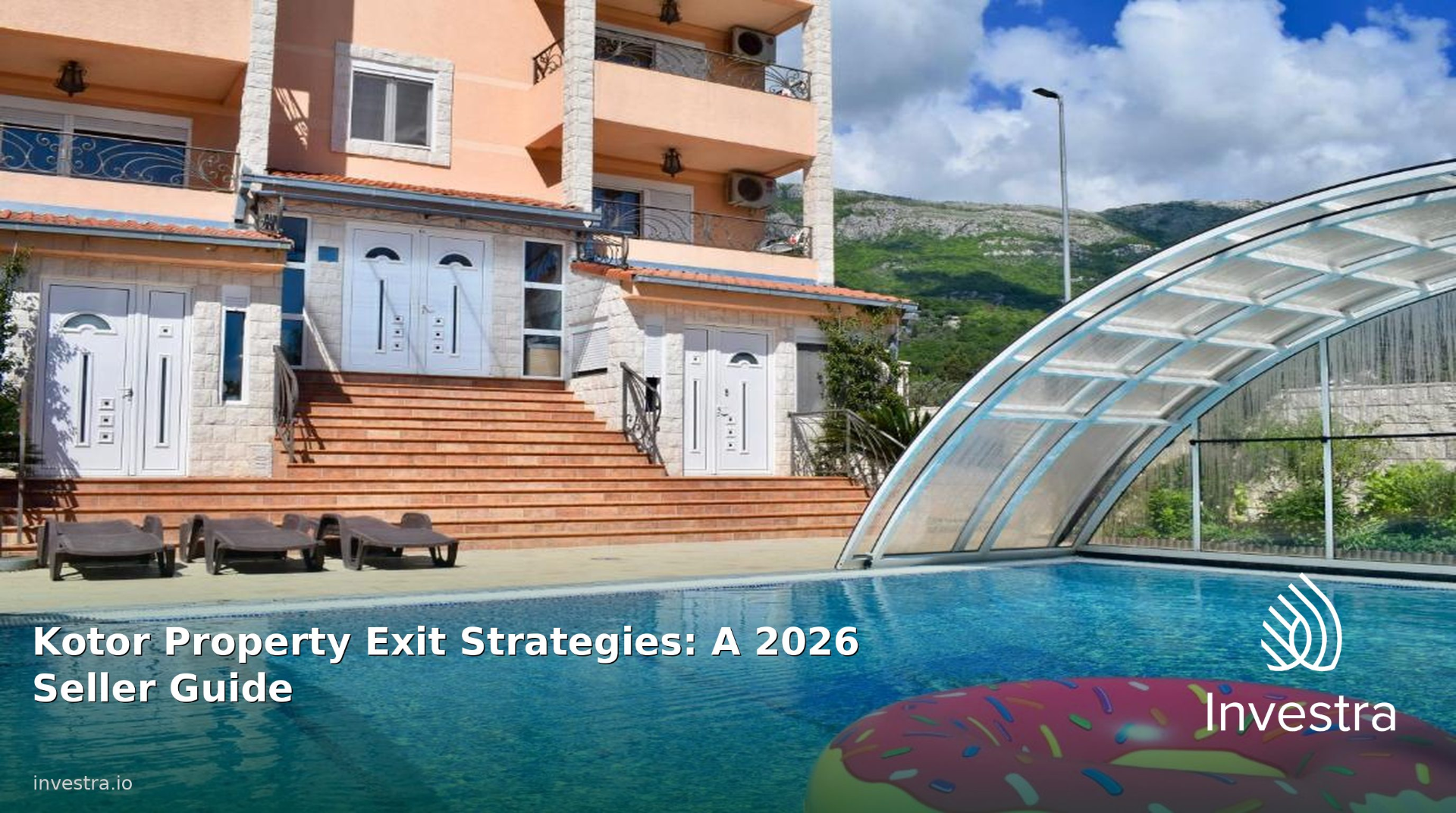
Kotor Property Exit Strategies: A 2026 Seller Guide
Kotor Property Exit Strategies: A 2026 Seller Guide
Understanding the Kotor Property Market Before Your Exit
Quick Answer: Before planning an exit strategy, you need to understand current market conditions in Kotor and Budva, including demand patterns, seasonal fluctuations, and which buyer segments are actually purchasing property in your area. This foundation determines whether selling quickly or holding longer makes sense for your circumstances.
Selling property in Kotor requires you to first understand what you're actually selling into. The Kotor and Budva market operates differently than many other European coastal destinations, and that reality shapes every decision you'll make on the way out. The market here has characteristics that affect timing, pricing strategy, and buyer expectations in ways that might surprise someone with property investment experience elsewhere.
The Bay of Kotor's dramatic landscape and UNESCO-protected old town attract specific buyer profiles—and understanding who's actually purchasing is where savvy sellers begin their exit planning. You'll find international buyers seeking second homes, investors looking for holiday rental income, and an increasing number of local and regional buyers. Each group has different priorities. What matters to a Bulgarian investor scanning the market for rental yield differs substantially from what a London-based buyer seeking a Mediterranean retreat cares about.
Market cycles in this region follow patterns tied to European tourism seasons, economic confidence in source countries, and local construction activity. Speaking with local real estate professionals—not just your agent—can reveal whether you're selling into rising demand or a temporary uptick. Investment insights from experienced market observers help you calibrate realistic timeframes and price expectations. The difference between understanding the market and guessing can mean months of holding time or thousands in negotiated discounts.
Timing Your Sale: Seasonal Demand Patterns in Kotor
Quick Answer: Kotor's property market follows seasonal patterns, with stronger buyer interest typically during spring and early autumn when weather is pleasant and European investors are planning acquisitions. Winter months often see slower transaction activity, though motivated buyers still exist year-round.
Timing your property exit in Kotor isn't random—it's influenced by tourism patterns, school holidays in source countries, and European real estate market cycles. The question every seller faces is whether waiting for peak season justifies holding costs, or whether moving quickly takes priority over a potentially higher sale price.
Spring months (April through June) historically see elevated property interest because international buyers aren't hindered by winter weather and can properly explore the region. They visit the old town, walk neighborhoods, check local amenities, and develop genuine interest rather than reacting to slick marketing. This period typically shows multiple viewings for well-positioned properties and more competitive bidding. Late September through October also produces active buyer interest—the summer crush has passed, properties have weathered the tourist season, and serious investors resume acquisition strategies.
Summer itself (July and August) presents a paradox. Tourist traffic is peak, visibility is maximum, but many serious property buyers avoid the crowds. Vacation homeowners and rental investors are managing seasonal occupancy rather than hunting for new purchases. You'll see inquiry volume but often from casual browsers rather than committed buyers. Marketing heavily during summer can feel productive—lots of emails and calls—without converting into genuine sales momentum.
Winter months require realistic expectations. Fewer buyers are actively searching, weather limits property viewing experiences, and many European investors have already completed their acquisition plans for the year. This doesn't mean your property won't sell—motivated buyers still operate in winter—but you'll likely need pricing adjustments or must accept an extended selling timeline. However, if you're holding at break-even on costs, winter sales sometimes suit your financial situation perfectly. The key is honest assessment of whether you're competing on price or on buyer motivation.
Local holidays and European school calendars also matter. Easter periods, summer school breaks, and Christmas holidays create windows when international buyers are traveling and considering property acquisitions. Real estate professionals in Kotor can advise specifically on which weeks tend to show the strongest transaction activity in your neighborhood.
Tax Implications for Sellers in Montenegro
Quick Answer: Montenegro applies capital gains tax on residential property sales under certain conditions, and sellers need to understand their personal tax residency status, holding periods, and whether their property qualifies for any exemptions. You must consult a local tax professional to calculate your actual liability—tax rules vary by individual circumstances and change annually.
Selling property in Kotor triggers tax obligations that directly impact your net proceeds. Many sellers underestimate this step or assume it works the same as their home country. In reality, Montenegro's tax system has specific rules about how property sales are taxed, and getting this wrong costs real money.
Capital gains tax in Montenegro applies to profit from property sales, but the calculation and rate depend on several factors you need professional help assessing. Personal tax residency status matters significantly—whether you're considered a Montenegrin tax resident or a non-resident affects both the rate and your filing obligations. The duration you've held the property also influences your tax position. Properties held for shorter periods are generally treated differently than long-term holdings.
One critical area where many sellers get confused: rental income during ownership. If you've been earning rental income from your Kotor property and properly reporting it, that documentation becomes relevant to your exit tax calculation. The tax authority looks at your overall property ownership history and income patterns. This is why maintaining clear records throughout ownership matters—it directly affects your tax liability when selling.
Non-resident sellers face specific reporting requirements. Even if you've left Montenegro, you're still obligated to handle tax filing related to property sales. Failing to do this creates complications that can delay funds transfer or create future legal exposure. Many sellers hire local tax advisors specifically to manage this—it's not optional paperwork you can skip.
I recommend consulting a local tax advisor before listing your property, not after you've found a buyer. Understanding your actual tax liability allows you to set appropriate pricing, negotiate knowledgeably, and plan funds allocation. Tax frameworks in coastal regions require careful analysis, and Montenegro is no exception. The cost of a professional tax consultation is minimal compared to the cost of surprises after sale completion.
Setting a Competitive Sale Price in Kotor and Budva
Quick Answer: Setting competitive pricing requires analyzing recent comparable sales in your specific neighborhood, understanding current inventory levels, and recognizing that international buyers typically compare your property against options across multiple Adriatic destinations. Overpricing delays sales; underpricing leaves money on the table.
Price setting determines whether your property sells or sits on the market. Too many sellers approach this emotionally—anchoring on what they paid, what they invested in renovations, or what their agent optimistically suggests. Reality is colder. Your property's price should reflect what buyers are actually willing to pay today, not historical costs or aspirational valuations.
Comparable sales analysis is where pricing begins. Look at properties similar to yours in location, condition, size, and amenities that have actually sold in the past 3-6 months. Not listed prices—actual sale prices. This data reveals what the market genuinely paid, not what sellers hoped to extract. If comparable properties in your neighborhood sold at €4,500 per square meter, and you're pricing at €5,500, you're making a bet that your property is materially superior. Sometimes that's legitimate; often it's wishful thinking.
The distinction between Kotor old town and surrounding areas substantially impacts pricing. Properties within the walled medieval center command premium rates because of location specificity and limited supply. Properties in newer surrounding areas—Muo, Prčanj, Dobrota—follow different price trajectories based on proximity to the old town and access to waterfront views. Understanding which category your property occupies prevents comparing apples to oranges.
Inventory levels matter hugely. When multiple similar properties are listed simultaneously in your neighborhood, competition increases and buyers develop use. One property on the market in a sought-after street generates interest; ten properties trigger extended negotiations and price pressure. Professional local agents know current inventory and can advise whether your property is entering a saturated market or represents fresh supply.
International buyers comparison-shop across destinations. A buyer considering Kotor often reviews options in Croatia's Adriatic coast, Albania's emerging markets, and other European coastal areas. This means your property doesn't just compete against other Kotor listings—it competes for investment capital against dozens of alternatives. Pricing competitively within that broader context determines whether you attract attention or get passed over.
Consider obtaining professional property valuation from licensed appraisers familiar with the Kotor market rather than relying on agent estimates alone. This costs money upfront but provides objective support for your pricing decisions and strengthens negotiating positions if buyers challenge your asking price.
Preparing Your Property for Sale
Quick Answer: Properties in Kotor that are well-maintained, professionally presented, and free from obvious defects sell faster and at higher prices. Basic repairs, deep cleaning, and staging are standard expectations; neglecting these typically costs you more in negotiation than you'd spend on preparation.
A property's physical presentation directly influences buyer behavior and final sale price. This isn't about cosmetic surface work—it's about ensuring your property doesn't present red flags that trigger buyer concerns or demands for price reductions.
Structural and safety issues require professional attention before marketing. A leaking roof, problematic plumbing, electrical concerns, or foundation issues discovered during buyer inspection can derail negotiations entirely or trigger demands for substantial price reductions. Having these professionally assessed and repaired beforehand prevents surprises. If you discover issues, you're far better addressing them before buyer inspection than having them used as negotiating use.
The Kotor climate—Mediterranean humidity, salt air, temperature fluctuations—creates specific property stressors. Dampness issues, window frame deterioration, rust on metal elements, and plumbing corrosion are common concerns in this region. Having these professionally addressed before showing demonstrates that you've maintained the property responsibly and haven't left surprises for the new owner. Buyers in coastal properties specifically scrutinize maintenance history because they know climate-related damage accelerates without proper care.
Cleaning and presentation matter substantially. Kotor properties with natural light, clear views, and visible character rent or sell faster than identical properties presented poorly. Professional cleaning, minor paint touch-ups, and removing personal items helps buyers envision themselves owning the space. This isn't staging expense—it's basic presentation that costs relatively little and impacts buyer perception significantly.
Documentation preparation should begin early. Compile all property ownership documents, renovation records, building permits, energy certificates, and utility contracts. Many Kotor properties have complex ownership histories or renovations done informally. Clear documentation prevents transaction delays and buyer skepticism. If certain documents are missing or unclear, address this proactively by consulting with your legal advisor before marketing. Buyers expect transparency, and presenting clean documentation demonstrates professionalism.
Understanding Buyer Due Diligence Expectations
Quick Answer: International buyers purchasing in Kotor expect comprehensive due diligence including property inspections, title verification, building permits confirmation, and taxation clarity. Sellers who accommodate and facilitate these checks build buyer confidence and reduce negotiation friction during the sale process.
Experienced buyers—whether seasoned investors or first-time international purchasers—conduct thorough investigations before committing capital. Understanding these expectations and facilitating transparent responses positions you as a credible seller and accelerates transaction completion.
Property inspections are standard. International buyers typically hire independent inspectors to assess structural condition, building systems, and hidden defects. This isn't a negotiation tactic—it's risk management. Rather than resisting inspections or limiting inspector access, cooperate fully. Buyers who encounter resistance become suspicious, even if there's nothing to hide. Accessibility and transparency signal confidence in your property's condition.
Title verification is non-negotiable for international buyers. They confirm that you genuinely own the property, that no liens or claims exist against it, and that the title will transfer cleanly. Your legal advisor should have already conducted these checks internally; having this documentation readily available for buyer review streamlines their due diligence. Legal verification processes protect both parties in Adriatic property transactions, and buyers will conduct these checks regardless of whether you facilitate them. Facilitating verification demonstrates legitimate ownership.
Building permits and renovation documentation matter significantly. Properties in the Kotor old town often feature renovations done historically without modern permitting. Buyers understand this context but want clarity about what work has been done and whether it created any outstanding issues. If you've done unauthorized renovations, disclosure isn't optional—it will emerge during buyer investigation, and concealment damages credibility more than honesty about what's been done.
Tax and legal residency documentation is increasingly important. Buyers want confirmation that you've properly reported property ownership and any rental income, that you're not subject to outstanding tax claims, and that the property has clean tax status. This protects the buyer's own position after purchase. Having your tax advisor confirm your compliance status helps demonstrate good faith ownership.
Rental history documentation, if applicable, supports property valuation. Buyers assessing investment potential want proof of actual rental income, booking patterns, and management arrangements. Providing this documentation demonstrates that income projections are reality-based rather than optimistic speculation.
Legal and Administrative Preparation for Sale
Quick Answer: Sellers must ensure clear title ownership, resolve any outstanding liens or claims, prepare complete ownership documentation, and work with legal professionals to establish the property's legal status before marketing. Administrative preparation prevents transaction delays and provides buyer confidence.
The legal foundation for your sale should be solid before you list the property. Many sellers discover administrative issues during the sales process that could have been resolved more easily beforehand. Getting ahead of this prevents complications that frustrate buyers and damage negotiations.
Ownership verification with the land registry is fundamental. Confirm that your name is registered as the property owner, that no competing claims exist, and that the registration is current. If you inherited the property or acquired it through complex circumstances, ensure that inheritance documents or prior transfer documentation is properly registered. Foreign buyers specifically scrutinize ownership clarity because they're purchasing across borders and want absolute assurance that ownership transfers legally.
Outstanding utilities or municipal charges must be settled. Properties with unpaid water bills, property taxes, or community fees create transfer complications. Buyers won't accept properties with these liabilities hanging over them, and settlement becomes a negotiating point that weakens your position. Verify and clear these before marketing whenever possible.
Community association documentation matters for properties in managed complexes. Gather records of association rules, maintenance fees, and any ongoing assessments or disputes. Buyers evaluating properties in complexes want to understand their obligations and whether the community is financially healthy. Missing or unclear documentation triggers buyer skepticism about hidden costs or management problems.
Energy efficiency certification is required in Montenegro for property sales. This document must be prepared before sale completion and reflects the building's energy performance. While the process is straightforward, it requires coordination with certified professionals. Starting this process early prevents last-minute delays when you're otherwise ready to close a transaction.
Work with a qualified Montenegrin real estate lawyer to review your ownership documentation and identify any issues requiring attention. This professional review identifies problems while you can address them calmly rather than during active negotiations when issues become use for price reduction. The legal advisor's investment is typically modest but prevents expensive surprises.
Marketing Your Property to International Buyers
Quick Answer: Effective marketing of Kotor properties requires multi-channel strategies targeting international audiences—professional photography, clear property descriptions, platform listings in multiple languages, and awareness of which nationalities are currently purchasing in your neighborhood. Local agent expertise combined with online visibility drives buyer interest.
Marketing a Kotor property to international buyers requires strategies different from local real estate sales. The buyers making the actual purchasing decisions may be in London, Berlin, Vienna, or Moscow, not in nearby Podgorica. Reaching them requires deliberate visibility strategies.
Professional photography is non-negotiable. International buyers cannot visit the property in person until they've decided it warrants their time and travel. Photographs are your first impression, and poor-quality images eliminate otherwise suitable properties from consideration. Invest in professional photography that showcases your property's best features—waterfront views, architectural character, natural light, living spaces. Video tours increasingly influence international buyer interest, particularly for properties they're considering from abroad.
Location description matters enormously. International buyers need context about proximity to amenities, what the neighborhood offers, and why location matters. "Walking distance to old town" has different meaning depending on whether it's a 5-minute
Explore more on Investra: Pula Real Estate Market 2026: Areas, Buyer Demand and Due Diligence | How to Buy Property in Istria as a Foreign Buyer in 2026 | Rovinj Real Estate Market 2026: Buyer Priorities and Location Choices | Istria Property Investment 2026: A Decision Framework for Buyers | Poreč Real Estate Market 2026: A Practical Guide for Property Buyers | Pula Rental Investment Guide 2026: Long-Term Letting Buyer Questions | Rovinj Holiday Rental Investment: Buyer Due Diligence for 2026 | Umag Real Estate Market 2026: Property Types, Areas and Buyer Checks | Istria Property Due Diligence: A Croatian Buyer Checklist | Istria Property FAQ 2026: Clear Answers for International Buyers | Best Neighbourhoods in Pula for Property Buyers in 2026 | Medulin Real Estate Market 2026: A Buyer Guide to Homes and Locations | Rovinj Old Town or Newer Areas: A Property Buyer Location Guide | Pula New-Build Homes: A Buyer Due Diligence Guide for 2026 | Istria Property Ownership Costs: A Practical Budgeting Guide
For expert real estate investment insights and business strategy: investment expertise | investment consultation | advisory services.
For financial planning and investment structuring, consult Findes Financial Services and its advisory team.
Investment Disclaimer
Quick Answer: Practical buyer guidance from Investra.io.
The information provided in this article is for educational and informational purposes only and should not be construed as financial, legal, or investment advice. Real estate investments carry inherent risks, and past performance does not guarantee future results. Investors should not invest money they cannot afford to lose. Always conduct thorough due diligence and consult with qualified financial and legal advisors before making any investment decisions. Investra.io does not guarantee returns on any investment.
Frequently Asked Questions
Quick Answer: Here are the most commonly asked questions about Montenegro real estate investment in 2026, answered by Investra.io experts.
Is Montenegro a good country for real estate investment in 2026?
Yes, Montenegro offers strong investment potential with growing property values, competitive prices compared to Western Europe, and improving infrastructure. Investra.io provides comprehensive market data and investment guidance.
Can foreigners buy property in Montenegro?
EU citizens can buy property freely in Montenegro. Non-EU citizens may need to meet specific requirements. Investra.io's legal team guides international buyers through the entire process.
What is the average property price in Budva & Kotor?
Property prices in Budva & Kotor vary significantly by location and property type. Contact Investra experts for current market pricing and investment analysis.
What rental yields can I expect?
Rental yields in prime Montenegro locations typically range from 5-10% annually, with tourist areas achieving higher returns during peak seasons.
What taxes apply to property purchases?
Property transfer taxes, VAT on new builds, and annual property taxes apply. Rates vary by property type and location. Consult Siniša Dagary for tax optimization strategies.
How long does the purchase process take?
Typically 30-60 days from offer to completion. Working with Investra.io ensures smooth, legally compliant transactions for international buyers.
What financing options are available?
Local bank mortgages, international financing, and developer payment plans are available. Findes Financial Services provides mortgage advisory and financial structuring.
Is property management available for rental properties?
Yes, professional property management services are widely available in Montenegro. Investra.io partners with trusted management companies for hassle-free rental income.
What are the best areas to invest in Budva & Kotor?
Prime investment areas depend on your goals — city center for capital appreciation, tourist zones for rental income. Investra.io's market analysis identifies the best opportunities.
Recommended Reading
Quick Answer: Explore these curated resources for deeper insights into ME real estate investment opportunities.
- Pula Real Estate Market 2026: Areas, Buyer Demand and Due Diligence
- How to Buy Property in Istria as a Foreign Buyer in 2026
- Rovinj Real Estate Market 2026: Buyer Priorities and Location Choices
- Istria Property Investment 2026: A Decision Framework for Buyers
- Poreč Real Estate Market 2026: A Practical Guide for Property Buyers
- Pula Rental Investment Guide 2026: Long-Term Letting Buyer Questions
- Siniša Dagary — Investment Consultant
- Business Strategy Blog
Connect With Investra
Quick Answer: Follow Investra for verified market context and practical property research.
Related Posts
No related posts available.
