
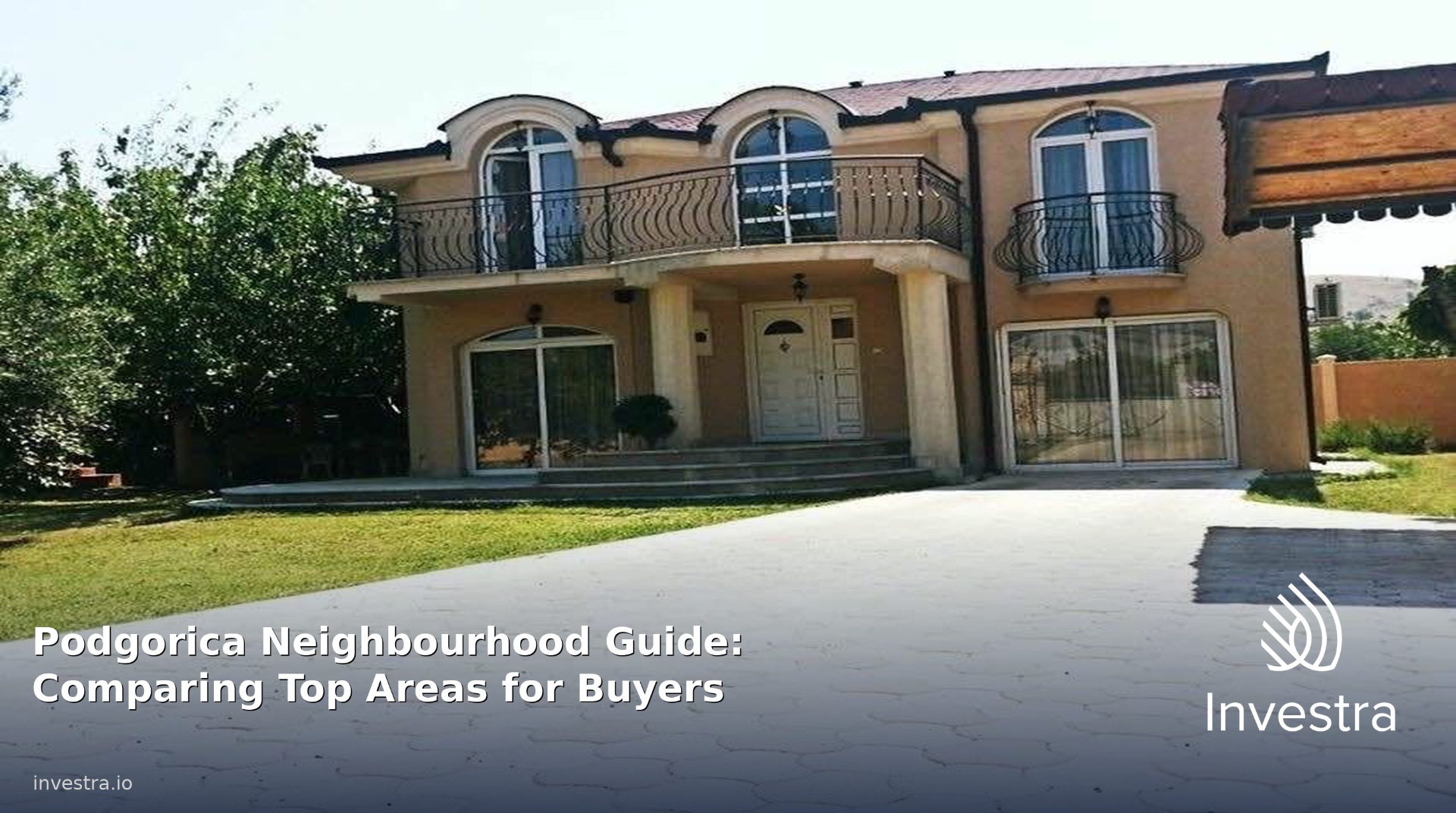
Podgorica Neighbourhood Guide: Comparing Top Areas for Buyers
Podgorica Neighbourhood Guide: Comparing Top Areas for Buyers
Why Podgorica Deserves More Attention From International Buyers
Quick Answer: Podgorica is Montenegro's capital and economic centre, offering a range of residential neighbourhoods that suit different buyer profiles — from city-centre professionals to families seeking quieter suburban living. Buyers researching a podgorica neighbourhood comparison should start by understanding what each area actually feels like on the ground, not just on paper.
Ask most international buyers where they'd consider buying in Montenegro, and the answer is almost always Kotor, Budva, or the Bay of Boka. Podgorica barely registers. That's actually one of the more interesting things about it — the capital has been quietly developing its residential and commercial districts while everyone else was looking at the coast.
The reality is that Podgorica functions as Montenegro's economic engine. Government institutions, international organisations, the country's main airport, major employers — they're all here. That creates a consistent base of demand for housing, which is a very different dynamic from coastal towns that spike in July and go quiet in November. If you're thinking about long-term rental income rather than short holiday lets, that difference matters enormously.
What surprised many buyers who visited for the first time is how much the city has changed over the past decade. New residential developments, improved road infrastructure, renovated public spaces, and a growing hospitality scene have transformed at least several districts significantly. The city isn't Vienna — it doesn't claim to be — but it has a functional, liveable quality that rewards buyers who look past the tourist brochures and ask practical questions instead.
This guide is built around one central task: helping you compare Podgorica's main residential neighbourhoods in a structured way, so your location decision is grounded in real considerations rather than guesswork. We'll also address the broader buying process, tax implications, and the due diligence habits that separate experienced buyers from ones who later regret their choices. For additional regional context, Istria Property Investment 2026: A Decision Framework for Buyers offers a useful comparative framework that applies well beyond Croatia.
Understanding Podgorica's Urban Layout Before You Choose a Neighbourhood
Quick Answer: Podgorica's districts range from the historic Old Town and Soviet-era Stari Grad to newer planned suburbs like City Kvart and Zabjelo — each with distinct infrastructure, price positioning, and buyer appeal. Understanding the city's spatial logic before viewing properties saves significant time.
Podgorica isn't a city you can navigate by instinct if you've never been. Its layout reflects several overlapping phases of development: Ottoman-era remnants, Yugoslav-period blocks, post-independence residential expansion, and recent new-build clusters that have risen on the city's periphery. Each layer has left a different kind of neighbourhood behind.
The Morača and Ribnica rivers divide the city in ways that still influence how people think about different areas. The central zone — bounded roughly by Bulevar Svetog Petra Cetinjskog and the main commercial streets — is where you'll find the highest footfall, the main retail and restaurant strips, and the most densely developed residential stock. Prices here tend to reflect that centrality.
Moving outward, you encounter the older residential zones that were built during the Yugoslav era. These areas have their own character: wide streets, large apartment blocks, established local infrastructure (markets, schools, clinics), and a population that's been there for generations. Then there are the newer suburbs — purpose-built residential developments, often with gated compounds or multi-building complexes, that appeal to buyers who want modern specifications and cleaner title records.
The key lesson here is that "central" doesn't automatically mean "best for your purposes." A buyer who wants a two-bedroom apartment for long-term professional rental will have different location priorities than one seeking a family home with outdoor space, or an investor looking at commercial conversion potential. Establish what matters most to your use case before you start comparing individual properties. Consulting with Siniša Dagary early in your research process can help clarify which district actually aligns with your investment thesis.
Stari Grad and the City Centre: Character, Convenience, and Complexity
Quick Answer: The city centre and Stari Grad area offer maximum urban convenience and lifestyle appeal, but buyers must conduct particularly careful title due diligence given the mixed age of building stock and historical ownership complications in this zone.
Stari Grad — the old town — is a compact, walkable area that feels different from the rest of Podgorica. The Ottoman clock tower, the Ribnica fortress ruins, and the mosques along the river give it a texture that newer parts of the city simply don't have. For buyers who value character over convenience, this is the natural starting point.
But character comes with complexity. Properties in and around Stari Grad vary dramatically in age, condition, and legal status. Some buildings carry ownership histories that go back to before Yugoslav nationalisation and subsequent restitution processes. What this means practically is that title searches here require more work, not less. Buyers should verify the complete ownership chain through the Montenegrin property cadastre, confirm that any restitution claims have been resolved, and ensure building permits are in order — particularly for any renovations that may have been done informally.
The immediate city centre around Slobode Square and the main pedestrian zone offers a different proposition: newer commercial buildings, apartment blocks from the 1990s and 2000s, and good access to services. These properties tend to attract professional tenants and have stronger rental demand from people working in government or international organisations. That said, parking constraints and urban noise are genuine quality-of-life factors to assess in person.
In my experience, buyers who visit the city centre on a Tuesday afternoon and then again on a Saturday evening often come away with very different impressions. The neighbourhood has rhythms, and understanding them before you commit matters. For a practical guide to legal checks that apply broadly across similar urban markets, Buying Property in Pula: Legal Checks Before You Commit outlines a transferable checklist worth reading.
City Kvart: The New Development Zone That's Drawing Buyer Attention
Quick Answer: City Kvart is Podgorica's most prominent large-scale new residential development, attracting buyers who prioritise modern specifications, cleaner title records, and amenity-rich living — though buyers should verify project completion status and developer reputation independently before committing.
City Kvart has become a reference point in almost every conversation about Podgorica real estate. It's a large mixed-use development built on land that was previously underutilised on the eastern edge of the city, and it represents the kind of planned residential project that Montenegro has historically lacked — the sort of thing you'd find in Bucharest or Belgrade's newer suburbs, now arrived in Podgorica.
The appeal is fairly clear. New construction means new building systems, modern insulation standards, contemporary layouts, and — crucially — cleaner title records. When you buy a newly built apartment in a registered development, the ownership history starts with you. That's a meaningful advantage compared to the due diligence complexity of older stock in central areas.
City Kvart's amenity mix — retail, restaurants, leisure facilities, and proximity to the main road network — has made it particularly attractive to younger professional tenants and families who want a more self-contained lifestyle. But buyers considering this area should do specific due diligence on the developer behind whichever building they're considering. Montenegro's new construction sector has had its share of delivery delays and specification changes, so reviewing the developer's track record, the contract terms around completion guarantees, and the payment schedule is essential work.
What we know from comparable new-build markets is that off-plan prices often look attractive but carry execution risk that resale buyers don't face. For a thorough guide to evaluating new construction, Pula New-Build Homes: A Buyer Due Diligence Guide for 2026 is an excellent reference, even if the market context is Croatia rather than Montenegro.
Zabjelo, Konik, and the Established Residential Suburbs
Quick Answer: Zabjelo and neighbouring districts offer established community infrastructure, larger apartment sizes, and typically more accessible price points — making them practical choices for buyers focused on residential use or long-term local letting rather than premium positioning.
Not every buyer needs to be in the newest development or the most central postcode. Zabjelo, Konik, and similar established suburban neighbourhoods serve a large portion of Podgorica's actual residential population — the people who live here year-round, raise families, and rent long-term. That's a demand base worth understanding if your investment thesis is centred on stable occupancy rather than premium yields.
These areas were largely developed during the Yugoslav period, which means the building stock is older — typically 1970s to 1990s construction — and has the characteristics that come with age: solid concrete construction, generous room sizes by modern standards, established greenery and street trees, and school catchments that have served the same communities for decades. What they often lack is car parking designed for current ownership levels, modern energy efficiency, and the lifestyle amenities that newer developments are built around.
The price differential between these suburban zones and the city centre or City Kvart is real, though buyers should verify current figures through local agents rather than relying on any published number that may be months out of date. Montenegro's property market has been moving, and asking-price data from online portals can lag behind actual transaction prices in either direction.
For buyers considering long-term letting to local tenants, the Pula Rental Investment Guide 2026: Long-Term Letting Buyer Questions covers the structural questions — tenant type, lease terms, maintenance responsibilities — that apply directly to this kind of investment strategy regardless of which Adriatic market you're in.
Ljubović, Momišići, and the Southern Residential Zones
Quick Answer: The southern residential districts of Podgorica, including Ljubović and Momišići, have seen notable development activity and offer a mix of older houses, newer apartment buildings, and good access to the southern road corridor — appealing to buyers seeking residential property with more space than the city centre provides.
The southern areas of Podgorica don't always feature prominently in investor conversations, but they deserve a closer look. Momišići in particular has been subject to substantial residential development over the past ten to fifteen years, with a mixture of private house construction and apartment blocks that serve families who want more space and easier car access than central areas allow.
These districts sit closer to the Podgorica-Cetinje road and the southern route toward the coast. That connectivity matters. A professional who commutes to central government institutions during the week but wants easy weekend access to Lake Skadar or the Adriatic coast will find the southern zone's location practical in a way that a northern suburb can't offer in the same way.
What makes Ljubović interesting is its mix of property types. You'll find detached houses — some with gardens and multiple floors — alongside newer apartment buildings. That variety creates more options for different budget levels and use cases. But with older house stock comes the usual due diligence challenges: verify building permits for all construction phases, check that any extensions or additions are legally registered, and confirm utility connections are fully formalised.
The Istria Property Due Diligence: A Croatian Buyer Checklist is a practical document that translates well to any Southeast European market where informal construction has historically been common. Montenegro shares several of these structural characteristics with the broader region.
What the Podgorica Neighbourhood Comparison Really Comes Down To
Quick Answer: A genuine podgorica neighbourhood comparison should weigh four key factors: proximity to your likely tenant profile or personal use, the age and legal status of the building stock, infrastructure quality in daily use, and realistic resale liquidity when you eventually want to exit.
So how do you actually choose? In my experience, buyers who make decisions they're happy with two years later are the ones who started with a clear definition of their use case — and then let that definition drive the neighbourhood selection, not the other way around.
Start with tenant profile if you're buying to rent. Ask yourself: who is most likely to rent this property, and where do they want to live? A young professional working in the city's financial or government sector will have different location priorities than a family relocating from abroad, or a student attending the University of Montenegro. Each of these tenant types clusters differently across the city, and your location choice should reflect that reality rather than fight it.
Infrastructure quality in daily use is another factor that only becomes apparent when you're actually in the city. Traffic patterns, parking availability, walkability to supermarkets and pharmacies, public transport access — these things don't show up on a floor plan but they absolutely affect tenant retention and property desirability. Visit during a weekday morning, not just a weekend afternoon.
Resale liquidity is underappreciated. Some parts of Podgorica have a deep enough pool of local buyers that resale is relatively straightforward. Others — particularly niche developments or areas with high new supply — may carry longer exit timelines. Ask local agents not just "what can I sell this for?" but "how long does it typically take to sell properties like this here?"
For broader investment strategy thinking that applies to all European emerging markets, the Siniša Dagary investment insights platform contains detailed analysis worth reviewing before finalising your location decision.
The Buying Process in Montenegro: Key Steps for Foreign Purchasers
Quick Answer: Foreign nationals can generally purchase property in Montenegro, though the process involves several mandatory steps including a preliminary contract, a public notary, cadastre registration, and tax payment — buyers should engage a qualified local lawyer before signing anything.
Property transfer tax applies to resale properties — the current rate should be verified with a local tax advisor, as it can change and the specifics depend on the property type and buyer status. New-build properties typically involve VAT rather than transfer tax, but again, verify the current rules with qualified local counsel. The Property Taxes and Purchase Costs in Istria: What Buyers Should... guide explains the tax structure in a comparable regional market and helps buyers understand what categories of cost to budget for in Montenegro as well.
Due Diligence Essentials for Podgorica Property
Quick Answer: Due diligence in Podgorica must include a cadastre title search, verification of building permits, confirmation of no encumbrances or liens, and a check on any outstanding utility or municipal charges — skipping any of these steps creates real financial risk.
The Umag Real Estate Market 2026: Property Types, Areas and Buyer Checks guide covers analogous due diligence requirements in a Croatian coastal market and provides a useful checklist structure that buyers can adapt for Podgorica. For expert local guidance on building a due diligence protocol, the advisory services offered by Siniša Dagary's team are worth exploring early in your search process.
Renting Out Property in Podgorica: What the Numbers Actually Depend On
Quick Answer: Rental income from Podgorica property depends on the apartment's location, size, condition, and target tenant profile — buyers should consult local property managers and tax advisors to understand realistic gross yields, occupancy rates, and tax obligations before building financial projections.
Buyers considering the rental income angle alongside capital appreciation should also read the Rovinj Holiday Rental Investment: Buyer Due Diligence for 2026 guide — not because Podgorica and Rovinj are the same market, but because the questions it raises about management, tenant quality, and net yield calculation apply universally.
Ongoing Ownership Costs: Budgeting Beyond the Purchase Price
Quick Answer: Property ownership in Podgorica involves ongoing costs including annual property tax, building maintenance charges, utility connections, property insurance, and potentially property management fees — buyers should model these costs explicitly before finalising any investment case.
One of the most common mistakes buyers make in emerging European markets is building their investment case around gross rental yield and purchase price alone, without modelling what ownership actually costs each year. Montenegro is no exception to this pattern.
If you won't be managing the property yourself, add property management fees to your cost model. These vary based on scope — basic rent collection versus full management including tenant sourcing, maintenance coordination, and reporting — and the percentage or flat fee structure depends on what you negotiate locally. For a full framework on modelling ownership costs in comparable markets, Istria Property Ownership Costs: A Practical Budgeting Guide is one of the most practically useful resources available. The Findes Group & Partners also provides cost modelling support for buyers operating in Southeast European markets.
Working With the Right Professionals in Podgorica
Quick Answer: Buyers should engage an independent Montenegrin lawyer (not one recommended solely by the seller or developer), a qualified local accountant for tax planning, and a reputable property agent with demonstrated transaction history in the specific neighbourhood they're targeting.
A local accountant or tax advisor is valuable before purchase, not just after. Understanding the tax implications of ownership — income tax on rent, capital gains treatment if you sell, potential VAT on new builds — before you commit allows you to structure the transaction in a
Explore more on Investra: Pula Real Estate Market 2026: Areas, Buyer Demand and Due Diligence | How to Buy Property in Istria as a Foreign Buyer in 2026 | Rovinj Real Estate Market 2026: Buyer Priorities and Location Choices | Poreč Real Estate Market 2026: A Practical Guide for Property Buyers | Istria Property FAQ 2026: Clear Answers for International Buyers | Best Neighbourhoods in Pula for Property Buyers in 2026 | Medulin Real Estate Market 2026: A Buyer Guide to Homes and Locations | Rovinj Old Town or Newer Areas: A Property Buyer Location Guide
For expert real estate investment insights and business strategy: investment expertise | investment consultation.
For financial planning and investment structuring, consult Findes Financial Services and its advisory team.
Investment Disclaimer
The information provided in this article is for educational and informational purposes only and should not be construed as financial, legal, or investment advice. Real estate investments carry inherent risks, and past performance does not guarantee future results. Investors should not invest money they cannot afford to lose. Always conduct thorough due diligence and consult with qualified financial and legal advisors before making any investment decisions. Investra.io does not guarantee returns on any investment.
Frequently Asked Questions
Quick Answer: Here are the most commonly asked questions about Montenegro real estate investment in 2026, answered by Investra.io experts.
Is Montenegro a good country for real estate investment in 2026?
Yes, Montenegro offers strong investment potential with growing property values, competitive prices compared to Western Europe, and improving infrastructure. Investra.io provides comprehensive market data and investment guidance.
Can foreigners buy property in Montenegro?
EU citizens can buy property freely in Montenegro. Non-EU citizens may need to meet specific requirements. Investra.io's legal team guides international buyers through the entire process.
What is the average property price in Podgorica?
Property prices in Podgorica vary significantly by location and property type. Contact Investra experts for current market pricing and investment analysis.
What rental yields can I expect?
Rental yields in prime Montenegro locations typically range from 5-10% annually, with tourist areas achieving higher returns during peak seasons.
What taxes apply to property purchases?
Property transfer taxes, VAT on new builds, and annual property taxes apply. Rates vary by property type and location. Consult Siniša Dagary for tax optimization strategies.
How long does the purchase process take?
Typically 30-60 days from offer to completion. Working with Investra.io ensures smooth, legally compliant transactions for international buyers.
What financing options are available?
Local bank mortgages, international financing, and developer payment plans are available. Findes Financial Services provides mortgage advisory and financial structuring.
Is property management available for rental properties?
Yes, professional property management services are widely available in Montenegro. Investra.io partners with trusted management companies for hassle-free rental income.
What are the best areas to invest in Podgorica?
Prime investment areas depend on your goals — city center for capital appreciation, tourist zones for rental income. Investra.io's market analysis identifies the best opportunities.
Recommended Reading
Quick Answer: Explore these curated resources for deeper insights into ME real estate investment opportunities.
- Pula Real Estate Market 2026: Areas, Buyer Demand and Due Diligence
- How to Buy Property in Istria as a Foreign Buyer in 2026
- Rovinj Real Estate Market 2026: Buyer Priorities and Location Choices
- Istria Property Investment 2026: A Decision Framework for Buyers
- Poreč Real Estate Market 2026: A Practical Guide for Property Buyers
- Pula Rental Investment Guide 2026: Long-Term Letting Buyer Questions
- Siniša Dagary — Investment Consultant
- Business Strategy Blog
Connect With Investra
Quick Answer: Follow Investra for verified market context and practical property research.
Related Posts
No related posts available.
