
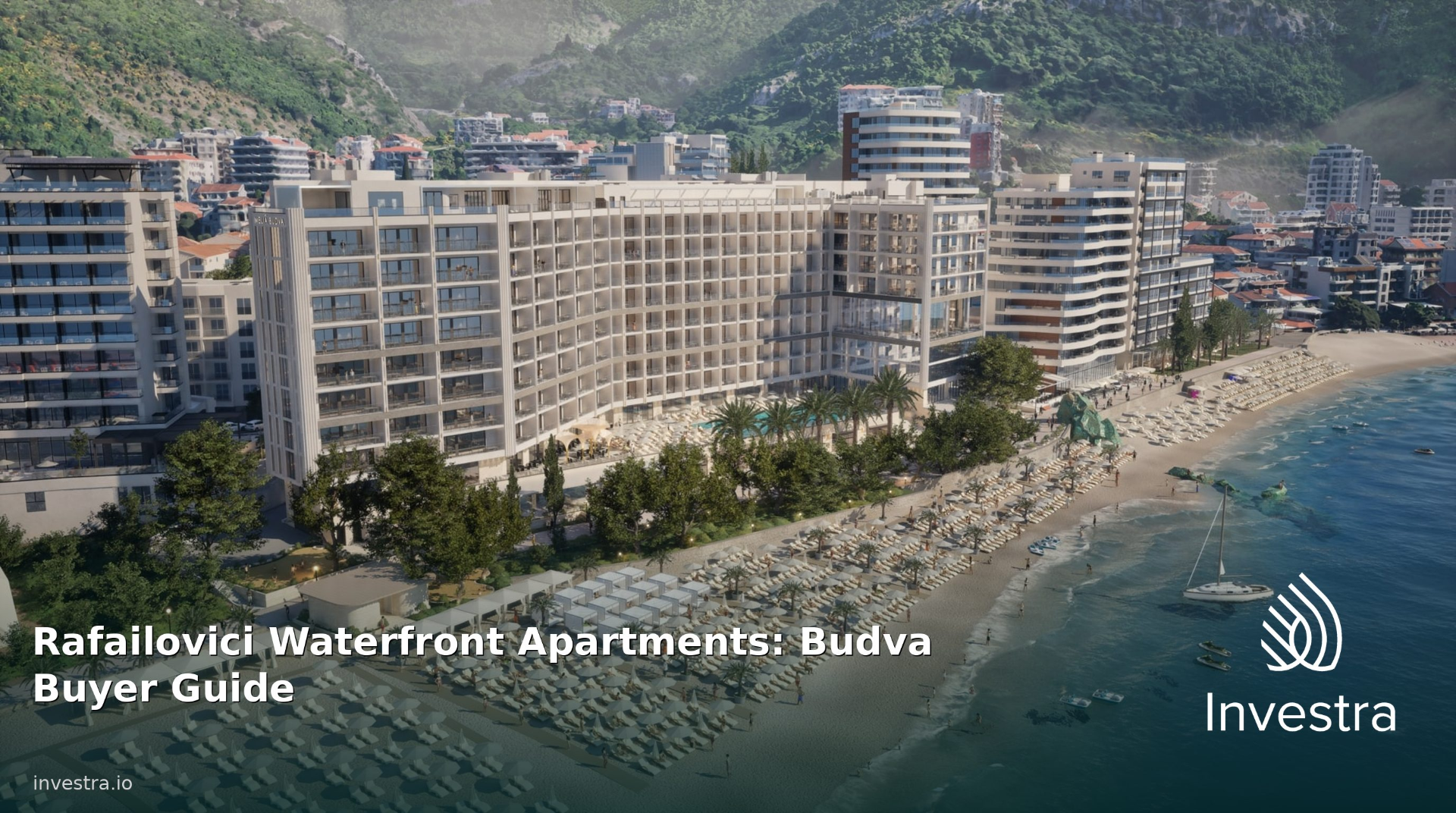
Rafailovici Waterfront Apartments: Budva Buyer Guide
Rafailovici Waterfront Apartments: Budva Buyer Guide
What Makes Rafailovici Waterfront Location Special for Apartment Buyers
Quick Answer: Rafailovici sits directly on the Adriatic coast near Budva and offers immediate waterfront access, modern apartment complexes, and appeal for both holiday rentals and personal use. Understanding its specific location advantages and buyer demographics will shape your investment decision.
Rafailovici occupies a unique position in Montenegro's property market. It's close enough to Budva to benefit from the town's tourism infrastructure, yet far enough to feel like a quieter seaside alternative. The waterfront here isn't cluttered with old Soviet-era buildings—instead, you'll find purpose-built apartment complexes designed for contemporary living and rental income.
What surprised many international buyers I've observed is how Rafailovici has developed over the past decade. It started as a quiet village, then transformed into a popular choice for investors seeking waterfront property without the Kotor Bay premium pricing or the heavy Old Town tourism hustle of central Budva. The beach here is modest but direct access to the sea matters tremendously for rental potential and personal enjoyment.
The neighbourhood has attracted a mix of buyers: UK investors seeking rental income, EU citizens wanting second homes with guaranteed tenant flow, and families looking for a Mediterranean base. The apartments themselves range from compact studio units to larger three-bedroom layouts, most built or renovated within the last fifteen years. When you're evaluating Rafailovici waterfront apartments, you're essentially choosing between established complexes with managed rental programs and independent properties where you'll handle lettings yourself.
Location-wise, you're roughly 5–7 kilometers south of central Budva. This distance means faster driving access to the airport and highway, but slower pedestrian access to Budva's nightlife and restaurants. Some buyers see this as an advantage—quieter mornings, less seasonal chaos. Others view it as a limitation. Your personal use patterns will determine which perspective fits your situation.
Understanding Apartment Types and Building Standards in Rafailovici
Quick Answer: Rafailovici waterfront apartments are typically modern builds (post-2005) with studios, one-bedroom, and two-three-bedroom units, most featuring sea views, balconies, and designed with rental income in mind.
The apartment stock in Rafailovici differs markedly from Budva's older town centre properties. Here, you're looking at planned residential complexes rather than heritage conversions. Most buildings are concrete-frame construction with reinforced concrete or brick infill, standard across the Adriatic region. Exterior finishes vary—some complexes use natural stone cladding, others modern render. Window standards have improved over the years; newer builds generally feature aluminium frames with double glazing.
Studio apartments typically measure 35–50 square meters and appeal to seasonal renters or budget-conscious investors. One-bedroom units range from 50–75 square meters, offering a separate living space and bedroom, which increases their appeal to families and longer-stay guests. Two-bedroom apartments (75–120 square meters) represent the sweet spot for many buyers—large enough to command premium rental rates but not so massive that they're hard to fill during shoulder seasons.
Balconies are almost universal in Rafailovici waterfront properties. What varies is size and orientation. A south-facing or sea-facing balcony adds significant rental appeal; a balcony overlooking the parking lot or interior courtyard does not. When viewing apartments, request specific details about balcony direction and size—this isn't minor decoration, it's a revenue factor for rental listings.
Building age matters considerably here. Complexes built between 2005–2012 tend to have solid concrete frames but sometimes dated interior finishes and smaller bathrooms. Post-2015 builds generally feature more spacious layouts, better insulation, modern kitchens, and air conditioning as standard. If you're buying for rental purposes, newer buildings often justify higher nightly rates and attract quality-conscious renters willing to pay premium prices.
Amenities vary by complex. Larger developments include swimming pools, landscaped gardens, parking, and sometimes fitness facilities or reception areas that facilitate holiday lettings. Smaller complexes may offer only basic amenities—parking, perhaps a small garden. This affects both your personal convenience and your ability to charge rental premiums. Properties in managed complexes with pools and reception staff typically command 15–25% higher nightly rates than standalone apartments.
Proximity to Budva's Services and Infrastructure
Quick Answer: Rafailovici is 5–7 kilometers from central Budva, offering easy access to grocery stores, pharmacies, and healthcare within 10–15 minutes by car, though daily pedestrian services remain limited in the immediate neighbourhood.
When you're assessing a waterfront apartment in Rafailovici, don't assume you're living in isolation. The settlement itself has developed basic services over the past decade. There's a small supermarket, a petrol station, a couple of restaurants, and a pharmacy. For most immediate needs, you won't need to travel far. However, the range is narrower than Budva proper, and seasonal closures happen—some restaurants shut entirely November through March.
Healthcare access matters if you're planning to spend significant time here. Budva has a public hospital and numerous private clinics. Rafailovici has a medical surgery handling routine visits, but any serious medical situation requires a 15–20 minute drive to Budva. If you're an older buyer or have chronic health conditions, this is worth exploring specifically. Ask locals and property managers about their actual healthcare experience—it differs from what online resources suggest.
Grocery shopping is feasible locally but not luxurious. The small supermarket stocks basics, but variety is limited, especially outside tourist season. Many residents commute to Budva for weekly shopping or use online delivery services, which now reach Rafailovici from larger retailers. If you're accustomed to diverse food options and international brands, plan regular trips to Budva or accept Mediterranean staples as your norm.
Road access is straightforward. The main coastal road (D road) runs through the area, connecting you to Budva northward and Tivat airport southward. Traffic flows reasonably well except mid-summer when tourist numbers peak. Winter driving is generally safe, though occasional snow does fall at higher elevations—not in Rafailovici itself, but the broader region can experience weather delays affecting travel plans.
Digital connectivity—internet and mobile phone service—functions well here. Multiple mobile operators cover the area with 4G and 5G networks. Fixed broadband is available from local providers, though speeds and reliability vary by building and provider. If remote work is part of your plan, verify specific internet performance at your target apartment before committing.
Seasonal Tourism Patterns and Rental Income Reality
Quick Answer: Rafailovici experiences peak tourist demand June–September with high nightly rates, but November–March involves significant occupancy drops, making annual income planning crucial for rental-focused buyers.
Here's where many buyers get misled about Rafailovici waterfront apartments. The prospect of consistent 70–80% occupancy year-round sounds attractive until you experience actual season. Summer months—June, July, August, early September—are genuinely busy. Nightly rental rates peak during this period, and apartments that advertise on international platforms fill regularly. But what happens October onwards?
Reality check: October sees a sharp drop as summer holiday season ends. November through March is genuinely quiet. Some weeks you'll find tenants; many weeks you won't. April and May pick up again as Easter holidaymakers and spring-break travellers arrive. The pattern is predictable once you understand it, but many first-time investors underestimate the impact on annual revenue.
The rental market here divides into two segments: short-term holiday lets (1–7 nights, high rates, seasonal concentration) and longer-stay rentals (monthly contracts, moderate rates, more stable off-season demand). Buyers managing their own lettings typically focus on holiday rentals because the rates justify the administrative work. Property management companies—which handle bookings, cleaning, guest communication—typically work with holiday rentals too, though they take a commission (usually 25–40% of gross rental income).
What's the actual nightly rate potential? I can't quote specific figures because rates fluctuate seasonally and depend on apartment size, amenities, and market conditions. Instead, verify current rates by checking international holiday rental platforms—search for available apartments in Rafailovici for specific dates and note the listed prices. This gives you realistic data rather than speculation. Most property management companies also provide historical occupancy and revenue reports; these reveal far more than any general market claim.
One practical observation: apartments in managed complexes with professional reception and amenities consistently outperform standalone units for holiday rentals. The buyer pays more upfront for this infrastructure, but the revenue premium often justifies the investment over a 5–10 year horizon.
Building Quality, Maintenance Costs, and Long-Term Durability
Quick Answer: Rafailovici apartments built after 2010 generally demonstrate solid construction with concrete frames, but you should verify maintenance fund reserves, damp inspection history, and common area management practices before buying.
Mediterranean coastal properties face specific durability challenges. Salt air corrodes metal, moisture penetrates poor seals, and intense summer sun stresses materials. Rafailovici, being right on the waterfront, concentrates these pressures. What you need to assess is whether individual buildings manage these factors effectively or ignore them until problems require expensive remediation.
Structural quality varies by building age and developer reputation. Older complexes (2005–2010) sometimes show signs of salt-air damage: rust staining on balconies, minor concrete spalling, or corrosion of exterior metalwork. This doesn't necessarily indicate structural failure, but it signals that maintenance either wasn't prioritized or was expensive. Newer buildings (2015 onwards) typically employ better sealants and protective measures, reflected in better condition after several years of exposure.
When viewing an apartment, request a building inspection report if available. Many complexes commission professional inspections every 5–10 years. These identify moisture ingress, structural cracks, roofing condition, and other issues. If your target building has conducted inspections, review the reports and note remedial work completed. If no inspection exists, consider commissioning a surveyor's report—it costs money but identifies problems before you buy.
Maintenance fund and common area management directly impact your ongoing costs and property value. Each apartment owner contributes monthly to a maintenance fund covering exterior repairs, roof work, lift maintenance, and common area servicing. Ask the building manager or property agent for:
- Current monthly maintenance fee (in euros)
- What this fee covers specifically
- Reserve fund balance and whether it's adequate for expected major work
- Any special assessments planned for upcoming years
- Contact details for the building manager so you can discuss directly
Some Rafailovici complexes maintain excellent reserves and proactive management; others accumulate deferred maintenance, which eventually becomes your problem as an owner. A building that's poorly managed today becomes a depreciated property tomorrow—and potential buyers will factor this risk into their offers.
One specific concern: waterfront buildings need particular attention to damp and salt-related damage. Balconies, external walls, and basement areas are vulnerable. Ask whether any units have experienced moisture problems, how they were resolved, and whether the underlying cause (poor drainage, failed seals, structural movement) was actually addressed or just cosmetically patched. This information often comes from other residents rather than the agent—don't skip this conversation.
Legal Framework for Foreign Ownership in Montenegro
Quick Answer: Foreign nationals can own property in Montenegro through a relatively straightforward process involving a notarised purchase agreement, registration with the Land Registry, and completion of tax obligations, though legal support is essential for handling documentation.
Montenegro's legal framework for foreign property ownership is clearer than some Mediterranean jurisdictions, but it's not identical to EU member states. Understanding the actual process—not the simplified version—matters tremendously for protecting your investment.
Foreign nationals can purchase residential property in Montenegro without government approval or special permits. This openness differentiates Montenegro from some Balkan neighbours and makes it attractive for international investors. However, the transaction process involves specific legal and administrative steps that differ from, say, purchasing in Croatia or Spain.
The purchase agreement must be notarised by a Montenegrin notary public. This isn't optional bureaucracy—it's a constitutional requirement. The notary verifies the seller's identity, confirms they own the property without encumbrances, and ensures both parties understand the transaction. You can't bypass this by having a private contract; the law requires notarisation for legal effect.
After notarisation, the buyer must apply for registration with the Montenegrin Land Registry (Katastar). This transfers ownership into your name. Processing typically takes 30–60 days, though delays occur. Your lawyer or the seller's agent typically handles this application on your behalf. You'll receive official ownership documentation once registered.
For foreign purchases, additional documentation may be required: proof of identity (passport), proof of funds, and tax identification number. Some transactions require documentation of where the purchase funds originated if they're large sums. This isn't about questioning your honesty—it's standard anti-money-laundering practice across European financial systems.
Hiring a Montenegrin lawyer is strongly advisable, not optional. A good lawyer costs 500–1000 euros for a straightforward residential purchase but protects against hidden encumbrances, disputed ownership, and unforeseen legal complications. They'll review the property title, the purchase agreement, and ensure all documentation meets legal standards. Skip this step to save money, and you're accepting risks that far exceed the saving.
Processing timelines matter if you're targeting a specific settlement date. From offer agreement to final ownership registration, expect 60–90 days under normal circumstances. Summer months or high-transaction periods can extend this. If you need rapid completion, discuss this explicitly with your lawyer and agent; sometimes higher fees secure faster notary appointments and Land Registry processing.
Tax Obligations for Apartment Buyers and Owners in Montenegro
Quick Answer: Apartment purchases in Montenegro incur transfer tax (3% of purchase price for most buyers), annual property tax, and rental income is subject to personal income tax if lettings generate revenue—exact rates and thresholds require professional verification with a local accountant.
Tax liability is where many international buyers face surprise costs. Montenegro has a relatively simple tax system compared to EU countries, but it's not zero-tax, and the calculation rules sometimes catch buyers off-guard.
Transfer tax on property purchases applies when you buy. The standard rate is 3% of the purchase price for most residential properties. This isn't negotiable—it's a statutory obligation. Your lawyer and the estate agent will calculate this, and you'll pay it as part of closing costs. On a €200,000 apartment, transfer tax amounts to €6,000. Budget for this explicitly; don't assume the seller will cover it (though negotiation is possible in specific circumstances).
Some categories of buyers qualify for reduced transfer tax (e.g., under certain conditions, returnees to Montenegro, or first-time owner-occupants), but these generally require specific documentation and Montenegrin residency status. If you're a foreign investor buying a holiday rental, expect to pay standard rate. Verify your specific situation with an accountant before assuming a reduction applies.
Annual property tax depends on whether you hold the property for personal use or rental purposes. Owner-occupied residential property has lower tax rates; rental properties have higher rates. Exact calculations involve property value assessments and local rates, which vary slightly by municipality. For 2024 and 2025, contact the Montenegrin tax authority or a local accountant for current rates—they change periodically and vary by Budva municipality regulations.
Rental income tax applies if you let your apartment. Income from holiday rentals or long-term lettings is subject to personal income tax. The calculation method depends on whether you're registered as a business or operating informally. Formal registration typically involves higher compliance but also allows deductions for expenses (maintenance, utilities, property management fees, depreciation). Informal lettings involve higher effective tax rates because deductions are limited.
Many international investors underestimate or ignore rental income tax obligations. Montenegro's tax authority, while not aggressive in enforcement for small operators, increasingly cross-references international booking platforms. If your apartment is listed on Airbnb or Booking.com, there's a digital trail. Compliance costs money but avoids future penalties far exceeding the tax itself.
To understand your specific tax position, engage a Montenegrin accountant familiar with foreign property owners. Investment consultation from specialists in the field helps clarify obligations before you commit. Expect to spend €50–150 per year on accountancy support for a simple rental property—a modest cost against the risks of non-compliance.
Budva Town Comparison: Why Some Buyers Choose Rafailovici Instead
Quick Answer: Rafailovici offers quieter living and often lower apartment prices than central Budva, but sacrifices walkable servicesExplore more on Investra: Pula Real Estate Market 2026: Areas, Buyer Demand and Due Diligence | How to Buy Property in Istria as a Foreign Buyer in 2026 | Rovinj Real Estate Market 2026: Buyer Priorities and Location Choices | Istria Property Investment 2026: A Decision Framework for Buyers | Poreč Real Estate Market 2026: A Practical Guide for Property Buyers | Pula Rental Investment Guide 2026: Long-Term Letting Buyer Questions | Buying Property in Pula: Legal Checks Before You Commit | Rovinj Holiday Rental Investment: Buyer Due Diligence for 2026 | Umag Real Estate Market 2026: Property Types, Areas and Buyer Checks | Istria Property Due Diligence: A Croatian Buyer Checklist | Istria Property FAQ 2026: Clear Answers for International Buyers | Best Neighbourhoods in Pula for Property Buyers in 2026 | Medulin Real Estate Market 2026: A Buyer Guide to Homes and Locations | Property Taxes and Purchase Costs in Istria: What Buyers Should... | Rovinj Old Town or Newer Areas: A Property Buyer Location Guide | Pula New-Build Homes: A Buyer Due Diligence Guide for 2026 | Istria Property Ownership Costs: A Practical Budgeting Guide
For expert real estate investment insights and business strategy: investment insights | investment expertise | advisory services.
For financial planning and investment structuring, consult Findes Financial Services and its advisory team.
Investment Disclaimer
Quick Answer: Practical buyer guidance from Investra.io.The information provided in this article is for educational and informational purposes only and should not be construed as financial, legal, or investment advice. Real estate investments carry inherent risks, and past performance does not guarantee future results. Investors should not invest money they cannot afford to lose. Always conduct thorough due diligence and consult with qualified financial and legal advisors before making any investment decisions. Investra.io does not guarantee returns on any investment.
Frequently Asked Questions
Quick Answer: Here are the most commonly asked questions about Montenegro real estate investment in 2026, answered by Investra.io experts.Is Montenegro a good country for real estate investment in 2026?
Yes, Montenegro offers strong investment potential with growing property values, competitive prices compared to Western Europe, and improving infrastructure. Investra.io provides comprehensive market data and investment guidance.
Can foreigners buy property in Montenegro?
EU citizens can buy property freely in Montenegro. Non-EU citizens may need to meet specific requirements. Investra.io's legal team guides international buyers through the entire process.
What is the average property price in Budva & Kotor?
Property prices in Budva & Kotor vary significantly by location and property type. Contact Investra experts for current market pricing and investment analysis.
What rental yields can I expect?
Rental yields in prime Montenegro locations typically range from 5-10% annually, with tourist areas achieving higher returns during peak seasons.
What taxes apply to property purchases?
Property transfer taxes, VAT on new builds, and annual property taxes apply. Rates vary by property type and location. Consult Siniša Dagary for tax optimization strategies.
How long does the purchase process take?
Typically 30-60 days from offer to completion. Working with Investra.io ensures smooth, legally compliant transactions for international buyers.
What financing options are available?
Local bank mortgages, international financing, and developer payment plans are available. Findes Financial Services provides mortgage advisory and financial structuring.
Is property management available for rental properties?
Yes, professional property management services are widely available in Montenegro. Investra.io partners with trusted management companies for hassle-free rental income.
What are the best areas to invest in Budva & Kotor?
Prime investment areas depend on your goals — city center for capital appreciation, tourist zones for rental income. Investra.io's market analysis identifies the best opportunities.
Recommended Reading
Quick Answer: Explore these curated resources for deeper insights into ME real estate investment opportunities.
- Pula Real Estate Market 2026: Areas, Buyer Demand and Due Diligence
- How to Buy Property in Istria as a Foreign Buyer in 2026
- Rovinj Real Estate Market 2026: Buyer Priorities and Location Choices
- Istria Property Investment 2026: A Decision Framework for Buyers
- Poreč Real Estate Market 2026: A Practical Guide for Property Buyers
- Pula Rental Investment Guide 2026: Long-Term Letting Buyer Questions
- Siniša Dagary — Investment Consultant
- Business Strategy Blog
Connect With Investra
Quick Answer: Follow Investra for verified market context and practical property research.
Related Posts
No related posts available.
