
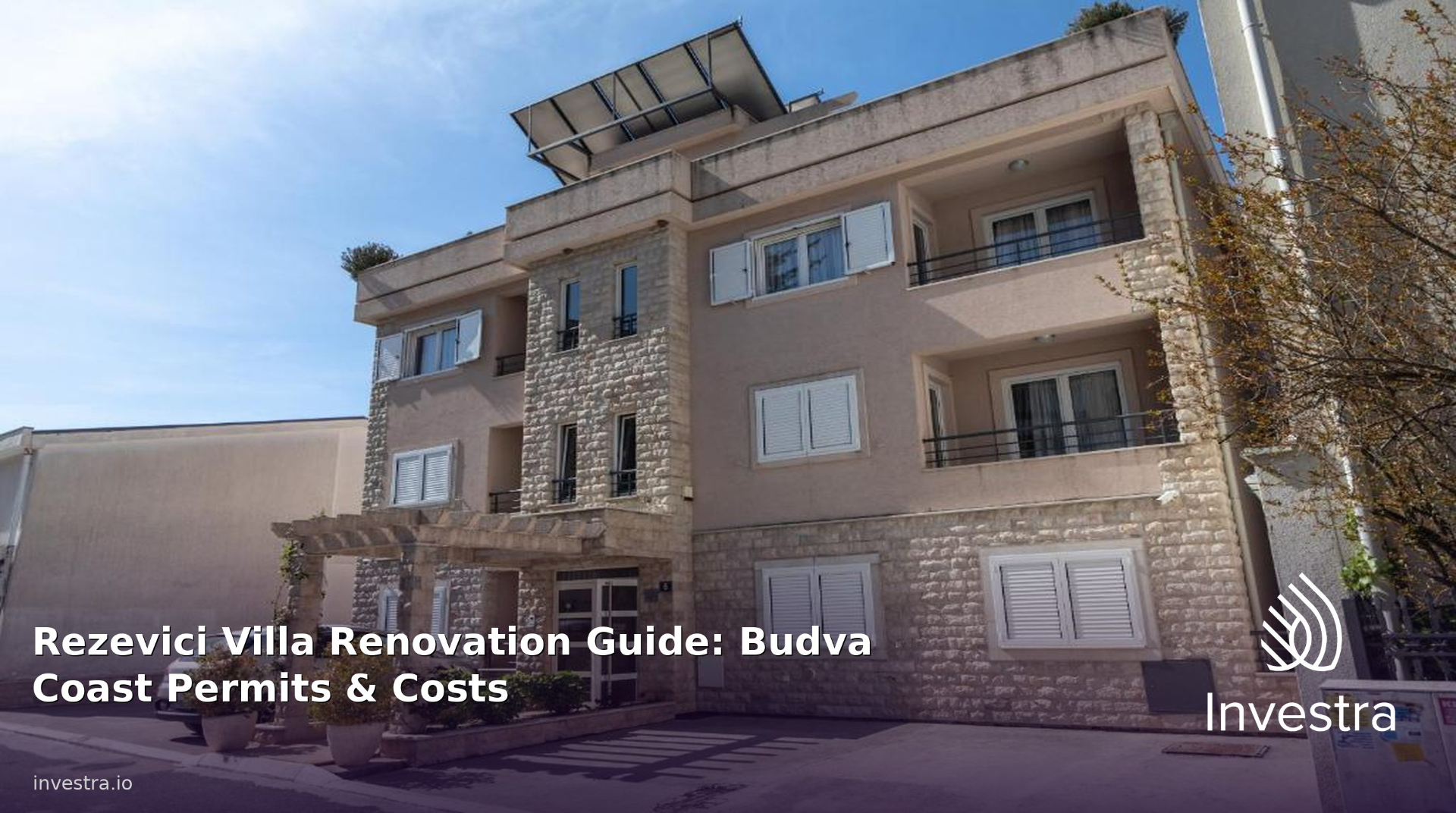
Rezevici Villa Renovation Guide: Budva Coast Permits & Costs
Rezevici Villa Renovation Guide: Budva Coast Permits & Costs
Understanding Villa Renovation in Budva: The Big Picture
Quick Answer: Villa renovation in Budva requires handling building permits, cost estimation across multiple trades, and compliance with coastal protection laws specific to Montenegro. Success depends on understanding local regulations, hiring qualified contractors, and building realistic timelines before your first investment decision.
When you're buying a villa in Budva or the broader Kotor coast, renovation isn't just about aesthetics—it's a legal and financial commitment that shapes your entire investment outcome. The Mediterranean charm of these coastal properties often masks aging infrastructure, outdated electrical systems, and structural issues that demand serious attention before purchase.
What surprised many buyers is that Budva's property regulations differ significantly from inland Montenegro. The coastal zone carries additional restrictions designed to protect the Adriatic environment. These aren't bureaucratic obstacles to ignore; they're legal requirements that affect everything from the size of your renovation to the materials you can use. A villa that looks like an attractive renovation project can become prohibitively expensive or legally impossible to develop if you don't understand the local framework first.
The reality is that renovation decisions made during due diligence phase determine whether your villa becomes a profitable rental or a money-draining liability. In my experience working with international buyers in Budva, those who invested time understanding permits and preliminary costs before signing purchase agreements reported far higher satisfaction rates than those who made quick decisions based on property appeal alone.
This guide walks you through the practical steps: assessing what needs renovation, understanding which permits you'll need, estimating realistic costs, and making informed decisions about whether a project suits your investment timeline and capital resources.
Assessing the Physical Condition of Your Potential Villa
Quick Answer: A thorough pre-purchase assessment should evaluate structural integrity, building systems (electrical, plumbing, heating), roof condition, foundation stability, and pest damage. Professional building inspection reports are essential before committing to any villa purchase in Budva.
Before you even think about permits, you need an honest evaluation of the building's actual state. Many villas in Budva were constructed between the 1970s and 1990s, when construction standards were less rigorous than today's EU requirements. Some have been partially renovated; others haven't seen serious maintenance in decades.
Start with a professional building inspection conducted by someone who understands Mediterranean construction. This isn't the same as a real estate agent's walk-through. You're looking for a licensed surveyor or structural engineer who can identify moisture intrusion, rust in reinforced concrete, roof deterioration, and foundation movement. Salt air and humidity create unique wear patterns in coastal properties that inland properties don't experience.
Pay particular attention to the roof, exterior walls, and any basement or lower-level spaces. Water damage is the most expensive issue to address in Budva's climate. A small leak that's been present for two or three years can compromise structural elements that cost thousands of euros to repair. During your inspection, document every area that shows signs of dampness, water stains, or salt crystallization on exterior surfaces.
The building systems matter just as much as the structure. Check when the electrical installation was last updated. Many older villas in Budva still have wiring from the 1980s that's genuinely unsafe by modern standards. Plumbing systems often use older materials prone to corrosion. Heating systems might be outdated oil boilers. These aren't cosmetic upgrades—they're essential systems you'll need to replace, and each one carries significant cost implications.
Get three separate inspections if possible. Different professionals notice different issues. One inspector might focus on structural elements while another specializes in building systems. The investment in multiple opinions now saves you from expensive surprises later.
handling Budva's Building Permits and Coastal Protection Regulations
Quick Answer: Budva's building permits require approval from the Municipal Administrative Department and must comply with coastal protection laws (the Building Law and Spatial Plan). Renovation scope determines permit complexity; structural work requires more intensive review than internal upgrades. Work without permits can result in fines and legal complications affecting property value.
This is where many international buyers stumble. Budva sits in a coastal protection zone, which means regulations are stricter than in inland Montenegrin towns. The Montenegrin Building Law and the Spatial Plan for the Budva municipality define what renovations are permitted, what requires formal approval, and what's forbidden entirely.
Here's the practical distinction: minor interior work (replacing fixtures, repainting, flooring) might not require permits if you're not changing the building's structure or footprint. Structural work (removing walls, reinforcing foundations, adding rooms) definitely requires permits. Exterior changes (new windows, roof work, facade restoration) need approval because they're visible and affect the building's relationship to the surrounding area.
The application process starts at the Municipal Administrative Department (Opština Budva). You'll need to submit technical drawings prepared by a licensed architect or engineer registered in Montenegro. These aren't simple sketches; they're detailed plans showing existing conditions and proposed changes, prepared according to Montenegrin technical standards. International drawings from your home country won't be accepted without being adapted and certified by a local professional.
The critical detail many buyers miss: coastal protection restrictions limit how much you can expand a villa. You cannot increase the building's footprint beyond certain parameters without special justification. You cannot change the building's external appearance dramatically. You cannot add extensions that violate setback requirements from neighboring properties or public land. These aren't suggestions—they're legal boundaries that enforcement officers actively monitor.
For renovation projects in Rezevici specifically (the Budva peninsula area), the regulations are particularly stringent because the landscape is protected. Architectural heritage matters here. If your villa is in or near a designated cultural area, additional approval layers apply. Document the property's current classification in the Municipal Spatial Plan before you commit.
Timeline matters: permit approval typically takes 4–8 weeks if your application is complete and meets all requirements. Incomplete applications or those requiring additional review can take 2–3 months. Plan for delays. Plan for requests for additional information or documentation. These aren't complications; they're normal procedure.
The safest approach is to hire a local architect or engineer early—even before you purchase the villa. Pay them to review the property and advise on permit feasibility. This costs €500–€1,500 but prevents you from buying a property where renovation isn't legally viable.
Estimating Renovation Costs Realistically
Quick Answer: Budva villa renovation costs vary by scope, but you can verify current pricing by requesting quotes from licensed contractors and checking material costs through local suppliers. Coastal projects typically cost 15–25% more than inland work due to labor specialization and material sourcing challenges. Budget conservatively and add a contingency reserve.
Cost estimation is where many renovation projects go wrong. International buyers often underestimate because they compare Budva labor rates to their home country without accounting for complexity, material sourcing, and the learning curve of managing projects in a different language and system.
Break renovation into distinct categories: structural work (foundation, walls, roof), building systems (electrical, plumbing, HVAC, sewage), interior finishing (flooring, walls, fixtures), and exterior work (facade, windows, doors, landscaping).
For structural work, get quotes from at least three local contractors who specialize in coastal properties. They understand the specific challenges of Budva construction. Ask what materials they recommend. Ask how they handle salt-air corrosion. Ask about their experience with similar projects. When you get quotes, they should be itemized (labor cost, material cost, equipment rental) rather than single lump sums. That transparency helps you identify cost drivers.
Building systems are usually the most expensive surprise. Rewiring a villa might involve running new conduits through walls, updating the main electrical panel, installing new lighting, and ensuring safety compliance—easily €8,000–€25,000 depending on villa size. Complete plumbing replacement, if needed, could be €10,000–€35,000. Heating system installation (boiler, radiators, controls) could be €5,000–€20,000. These are substantial costs, not details.
Interior finishing costs depend entirely on your standard. If you're creating a basic comfortable interior, expect moderate costs per square meter. If you're installing high-end finishes, costs multiply. Always get material quotes from suppliers yourself rather than relying solely on contractor estimates. Sometimes contractors markup materials 30–50%. Direct purchasing saves money if you're managing materials yourself or have a trusted local advisor.
To verify current pricing, contact 5–8 licensed contractors in Budva directly. Provide them with photos and descriptions of the work needed. Ask for detailed quotes. Look for patterns in the prices they propose. If one contractor's estimate is significantly lower or higher than others, investigate why. Unusually low estimates often indicate incomplete understanding of the project scope.
Check material costs through local suppliers (particularly for concrete, steel, electrical components, and plumbing materials). You'll find that imported materials cost significantly more due to shipping and logistics. Local materials cost less but might not match your specifications. Budget for this difference.
The universal rule: add 20–30% contingency to your total estimate. Coastal renovation almost always encounters surprises. Hidden moisture damage, structural issues hidden inside walls, or material delivery delays will consume your contingency. If you have money left over after project completion, celebrate. If you haven't budgeted contingency, you're vulnerable.
Choosing Licensed Contractors and Managing Quality
Quick Answer: Licensed contractors in Montenegro must be registered with the Chamber of Commerce and carry professional liability insurance. Verify credentials, check references from previous projects, use written contracts specifying scope and timeline, and conduct regular site inspections throughout renovation work.
Finding the right contractor is more important than the permit itself. A bad contractor can turn a manageable project into a financial and legal disaster. A good one understands local regulations, sources quality materials, and delivers on schedule and budget.
Start by asking for recommendations from real estate agents, architects, or other property owners in Budva who've completed renovations. Personal referrals are valuable because they come with track records. When someone says "my contractor was excellent," ask specific questions: Did the project finish on time? Did it finish on budget? Were quality issues addressed immediately? Would they hire that contractor again?
Verify that any contractor you're considering is registered with the Chamber of Commerce (Privredna Komora Crne Gore). This registration is mandatory for legitimate professional work. A contractor without registration might offer lower prices, but they're operating outside the legal system, which exposes you to enormous risk if something goes wrong.
Check that the contractor carries professional liability insurance (osiguranje odgovornosti). This protects you if the contractor's work causes damage or fails to meet standards. Ask to see proof of current insurance.
Interview at least three contractors in person at the property. Explain your vision, your timeline, your budget. Notice how they ask questions. Do they ask about existing problems you've identified? Do they suggest solutions? Do they acknowledge challenges? Or do they give quick estimates without investigating? Thoughtful contractors who ask detailed questions usually deliver better results.
Once you've selected a contractor, use a written contract (ugovor). The contract must specify: the scope of work (what's included, what's not), the timeline (start date, milestones, completion date), the payment schedule (how much you pay when—never pay the full amount upfront), liability for delays, dispute resolution process, and what happens if the contractor can't complete the work.
Payment structure matters. A typical arrangement is 30% deposit upon signing, 40% upon reaching halfway point (verified by inspection), and 30% upon completion. This structure incentivizes on-time completion and gives you use if quality issues emerge. Never pay the full amount before work is complete and inspected.
Visit the site weekly during major work phases. You don't need to be there daily, but regular site visits keep communication open and help you catch issues early. Many contractors appreciate having owners involved—it shows you care about quality.
Document everything with photos. When major phases complete (roof work, electrical installation, plumbing), photograph the work before it's covered up or finished. This creates a record if disputes arise later.
Understanding Coastal Zone Restrictions and Environmental Compliance
Quick Answer: Budva's coastal zone (typically 300 meters from the shoreline) has environmental protections limiting building modifications, material choices, and external changes. Violations can result in fines, work stoppage orders, or requirements to reverse changes. Environmental compliance review is part of the permit process.
Budva's beauty exists because regulations protect it. These protections matter not just for environmental reasons but for your investment—a degraded coastline reduces property values. Understanding coastal zone rules before renovation prevents expensive mistakes.
The closer your villa is to the sea, the stricter the rules. In the primary coastal zone (roughly the first 100–150 meters from the shoreline), you cannot make significant external changes without clear justification. You cannot use materials that degrade the visual landscape. You cannot install exterior elements that clash with the natural or architectural character of the area.
For facade work, this means your material and color choices matter. Modern concrete blocks or bright new paint might seem like improvements to you, but they could violate coastal zone standards if they're dramatically different from traditional materials and colors in the area. Local authorities prefer restoration that respects original character over complete modernization that changes visual impact.
Window and door replacement falls under this scrutiny. You cannot install modern aluminum-frame windows in a villa set in a traditional stone area if they're visually incompatible. You'll typically need to match or closely approximate original styles and materials, or receive special approval.
Landscaping modifications are monitored. You cannot remove mature trees or significant vegetation without permission. You cannot dramatically alter terrain or vegetation patterns. If you want to add extensive landscaping or remove trees, this requires approval through the permit process.
Environmental impact review is part of permit approval in the coastal zone. If your renovation involves anything affecting water discharge, waste management, or ecosystem disturbance, the Municipal Department will coordinate with environmental agencies. This adds time to the process but ensures your project won't create problems.
The practical implication: when you're estimating renovation scope, ask your architect or engineer to identify any elements that might trigger coastal zone issues. For example, if you want to modernize the entire facade, discuss what materials and colors are permissible given the property's location. This avoids designing a renovation that you cannot legally implement.
Rezevici, being on the Budva peninsula, is particularly sensitive to coastal regulations. The area's landscape character is actively protected. This makes it a desirable location (regulations preserve the beauty), but it also means renovation constraints are real. Budget extra time for environmental review if your project involves exterior work.
Managing Construction Timelines and Realistic Project Duration
Quick Answer: A comprehensive villa renovation in Budva typically takes 6–18 months depending on scope, with permit approval adding 4–8 weeks upfront. Weather, material availability, contractor scheduling, and permit delays commonly extend timelines beyond initial estimates. Build buffer time into your planning.
One of the most frustrating aspects of renovation is watching timelines slip. Budva renovation projects have specific challenges that extend duration beyond what happens in many other locations. Understanding these challenges helps you plan realistic expectations.
Permit approval happens first. Budget 4–8 weeks minimum, longer if the Municipal Department requests clarifications or additional documentation. This isn't work time; it's waiting time. Contractors can't start major work until permits are in place (legally). Plan for the full application and approval cycle before breaking ground.
Seasonal factors affect Budva projects significantly. Summer brings higher temperatures, which helps with some work but makes labor scarce as contractors manage multiple projects. Winter brings rain and shorter daylight, slowing exterior work. Many contractors slow down in summer tourist season when labor is diverted to seasonal tourism work. Early spring (March–May) and autumn (September–November) are typically the fastest renovation seasons in Budva.
Material sourcing takes time. Some materials are manufactured locally; others must be imported. Waiting for imported materials (specialty windows, high-end fixtures, certain building components) commonly adds 4–8 weeks to projects. Common materials (basic concrete, standard electrical components, basic plumbing) are available locally with shorter lead times. Clarify material sourcing with contractors during the planning phase.
Build in a 20% time buffer. If a contractor estimates six months, plan for 7–7.5 months. This reduces frustration when inevitable delays occur and gives you flexibility if issues emerge
Explore more on Investra: Pula Real Estate Market 2026: Areas, Buyer Demand and Due Diligence | How to Buy Property in Istria as a Foreign Buyer in 2026 | Rovinj Real Estate Market 2026: Buyer Priorities and Location Choices | Istria Property Investment 2026: A Decision Framework for Buyers | Poreč Real Estate Market 2026: A Practical Guide for Property Buyers | Pula Rental Investment Guide 2026: Long-Term Letting Buyer Questions | Buying Property in Pula: Legal Checks Before You Commit | Rovinj Holiday Rental Investment: Buyer Due Diligence for 2026 | Umag Real Estate Market 2026: Property Types, Areas and Buyer Checks | Istria Property Due Diligence: A Croatian Buyer Checklist | Istria Property FAQ 2026: Clear Answers for International Buyers | Best Neighbourhoods in Pula for Property Buyers in 2026 | Medulin Real Estate Market 2026: A Buyer Guide to Homes and Locations | Property Taxes and Purchase Costs in Istria: What Buyers Should... | Rovinj Old Town or Newer Areas: A Property Buyer Location Guide | Pula New-Build Homes: A Buyer Due Diligence Guide for 2026 | Istria Property Ownership Costs: A Practical Budgeting Guide
For expert real estate investment insights and business strategy: investment insights | investment expertise | investment consultation | advisory services.
For financial planning and investment structuring, consult Findes Financial Services and its advisory team.
Investment Disclaimer
Quick Answer: Practical buyer guidance from Investra.io.
The information provided in this article is for educational and informational purposes only and should not be construed as financial, legal, or investment advice. Real estate investments carry inherent risks, and past performance does not guarantee future results. Investors should not invest money they cannot afford to lose. Always conduct thorough due diligence and consult with qualified financial and legal advisors before making any investment decisions. Investra.io does not guarantee returns on any investment.
Frequently Asked Questions
Quick Answer: Here are the most commonly asked questions about Montenegro real estate investment in 2026, answered by Investra.io experts.
Is Montenegro a good country for real estate investment in 2026?
Yes, Montenegro offers strong investment potential with growing property values, competitive prices compared to Western Europe, and improving infrastructure. Investra.io provides comprehensive market data and investment guidance.
Can foreigners buy property in Montenegro?
EU citizens can buy property freely in Montenegro. Non-EU citizens may need to meet specific requirements. Investra.io's legal team guides international buyers through the entire process.
What is the average property price in Budva & Kotor?
Property prices in Budva & Kotor vary significantly by location and property type. Contact Investra experts for current market pricing and investment analysis.
What rental yields can I expect?
Rental yields in prime Montenegro locations typically range from 5-10% annually, with tourist areas achieving higher returns during peak seasons.
What taxes apply to property purchases?
Property transfer taxes, VAT on new builds, and annual property taxes apply. Rates vary by property type and location. Consult Siniša Dagary for tax optimization strategies.
How long does the purchase process take?
Typically 30-60 days from offer to completion. Working with Investra.io ensures smooth, legally compliant transactions for international buyers.
What financing options are available?
Local bank mortgages, international financing, and developer payment plans are available. Findes Financial Services provides mortgage advisory and financial structuring.
Is property management available for rental properties?
Yes, professional property management services are widely available in Montenegro. Investra.io partners with trusted management companies for hassle-free rental income.
What are the best areas to invest in Budva & Kotor?
Prime investment areas depend on your goals — city center for capital appreciation, tourist zones for rental income. Investra.io's market analysis identifies the best opportunities.
Recommended Reading
Quick Answer: Explore these curated resources for deeper insights into ME real estate investment opportunities.
- Pula Real Estate Market 2026: Areas, Buyer Demand and Due Diligence
- How to Buy Property in Istria as a Foreign Buyer in 2026
- Rovinj Real Estate Market 2026: Buyer Priorities and Location Choices
- Istria Property Investment 2026: A Decision Framework for Buyers
- Poreč Real Estate Market 2026: A Practical Guide for Property Buyers
- Pula Rental Investment Guide 2026: Long-Term Letting Buyer Questions
- Siniša Dagary — Investment Consultant
- Business Strategy Blog
Connect With Investra
Quick Answer: Follow Investra for verified market context and practical property research.
Related Posts
No related posts available.
