
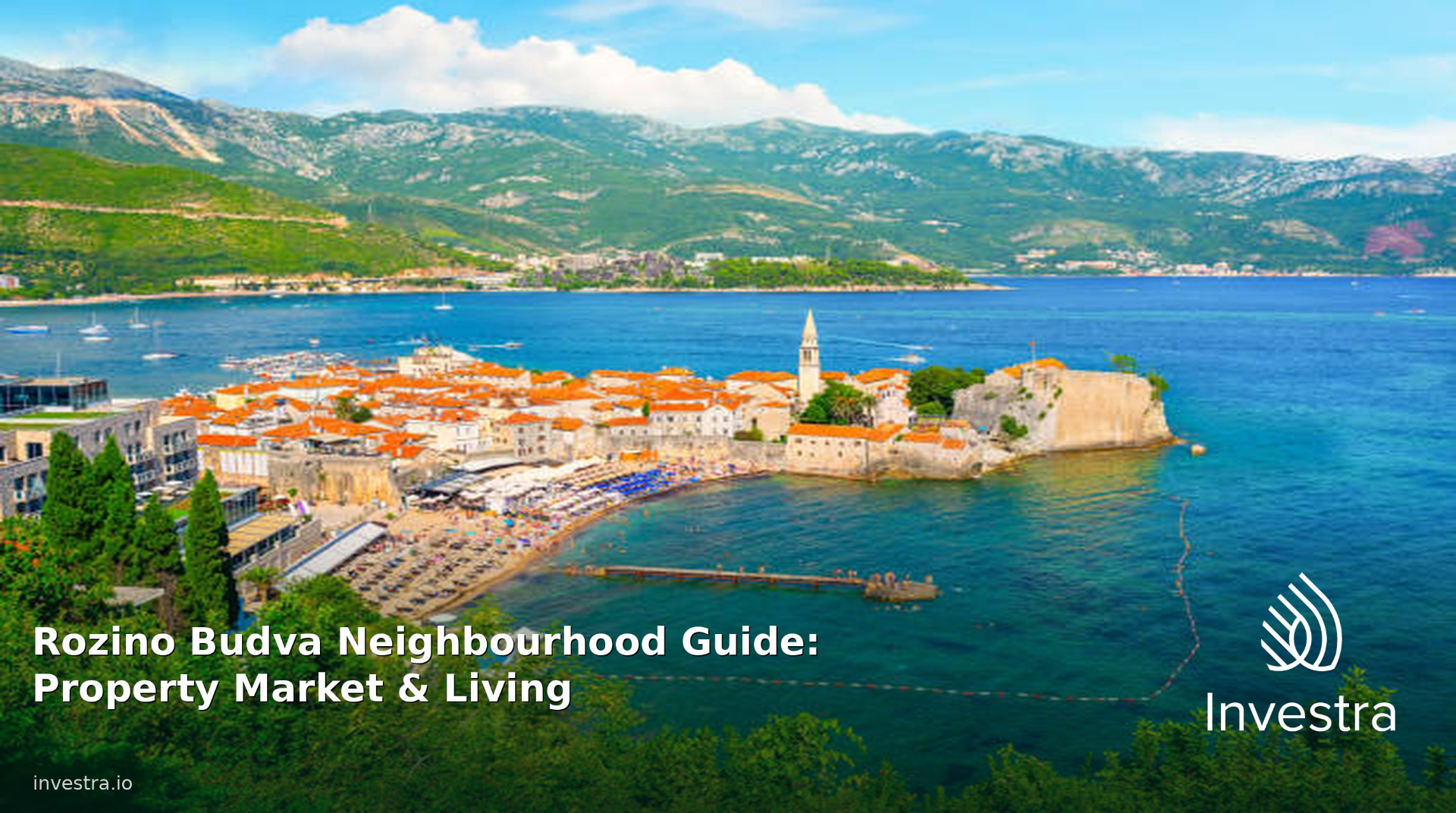
Rozino Budva Neighbourhood Guide: Property Market & Living
Rozino Budva Neighbourhood Guide: Property Market & Living
Understanding Rozino: Location, Geography and Urban Context
Quick Answer: Rozino is a residential neighbourhood in Budva, Montenegro, positioned between the old town and modern suburban areas, offering a balance of traditional Mediterranean living and contemporary convenience. Its location within Budva's broader urban landscape shapes property values, accessibility, and lifestyle appeal for both primary residences and investment properties.
When you're exploring Budva as a property buyer, Rozino tends to be one of those neighbourhoods that appears in conversations but doesn't always get the focused attention it deserves. It's neither the iconic Old Town with its tourist magnetism nor the sprawling newer developments at the periphery. Instead, it occupies a middle ground that proves surprisingly practical for certain buyer profiles.
Rozino sits within Budva's urban fabric in a way that feels genuinely integrated. The neighbourhood benefits from the city's Mediterranean character—sea views are possible from certain vantage points, and the Adriatic influence shapes both climate and lifestyle—while maintaining residential stability that Old Town properties sometimes lack due to seasonal tourism noise. The geography here matters. Budva itself nestles between two peninsulas, and Rozino's position means it's not isolated from the city centre, yet it's far enough removed that property comes with quieter streets and more breathing room than densely packed medieval areas.
The neighbourhood connects logically to broader Budva infrastructure. Main roads and bus routes pass through or near Rozino, making it accessible without requiring a car for every errand, though having personal transport adds convenience. Elevation changes are gradual in most of Rozino, which matters for older residents or anyone carrying groceries uphill in summer heat. The urban planning here reflects how Budva expanded organically over decades—not a master-planned community, but a neighbourhood that evolved as the city grew.
For property research purposes, understanding Rozino's geographic context within Budva helps you assess commute times to beaches, restaurants, and administrative services. It's the kind of practical knowledge that doesn't make it into tourist guides but absolutely shapes your experience as a resident or investor.
Property Types Available in Rozino
Quick Answer: Rozino offers a mix of traditional stone houses, modern apartment buildings, and renovated family homes, with property types ranging from compact studios to larger family residences. The neighbourhood's diverse stock means buyers can find options across different budgets and renovation states, from turnkey apartments to projects requiring cosmetic updates.
What surprised many buyers exploring Rozino for the first time is the actual diversity of what's available here. You'll find properties that genuinely reflect different periods of Budva's development, and that matters when you're making a purchase decision.
Traditional stone houses represent one category. These are older properties, many built decades ago using local limestone construction methods. They typically feature thick walls, small windows, and floor plans that reflect pre-modern living arrangements—multiple levels connected by narrow staircases, rooms that weren't designed for contemporary furniture layouts. Some have been substantially renovated by current owners; others retain original character but need significant investment. A renovated traditional house in Rozino can feel deeply Mediterranean and authentic. An unrenovated one requires you to honestly assess renovation costs and timelines. Understanding structural assessment requirements before purchase becomes essential for older properties.
Modern apartment buildings form the second category. These are typically 3-6 storey construction completed in the last 15-30 years. They range from basic functional designs to more thoughtfully planned units with balconies and natural light. Modern apartments in Rozino usually come with easier maintenance, standardized layouts, and clear understanding of what you're purchasing. Ground floor units sometimes have garden space; upper floors typically offer better light and views. The building age matters—properties from the 1990s might have electrical or plumbing systems approaching replacement age, while newer construction (post-2010) generally has more modern infrastructure.
Renovated family homes represent a middle category that's gained popularity among investors. These are older properties that have been thoughtfully updated while retaining exterior charm. You might find a traditional stone house with a modern kitchen, updated bathrooms, new electrical systems, and contemporary comfort alongside original stone walls and character. These properties typically command higher prices than unrenovated equivalents but lower prices than new construction, making them attractive to buyers wanting Mediterranean authenticity without renovation risk.
The reality for investors is that Rozino's property diversity means you need to carefully specify what you're actually buying. Two properties listed at similar prices might represent completely different propositions—one a turnkey apartment requiring no work, the other a project requiring structural assessment and planning before renovation. Your investment decision hinges partly on which category matches your timeline, budget, and risk tolerance.
Current Market Conditions and Pricing Dynamics
Quick Answer: Rozino's property market reflects broader Budva trends of steady demand from both local buyers and foreign investors, with prices influenced by property condition, location within the neighbourhood, and proximity to amenities. Current pricing requires direct market research from local agents rather than relying on outdated online sources, as Budva's market has shown year-on-year changes.
Property pricing in Rozino doesn't follow a single trajectory. The neighbourhood has seen genuine interest from investors recognizing Budva's tourism potential and its appeal to buyers seeking Mediterranean lifestyle at lower costs than Western European equivalents. But pricing varies substantially based on factors specific to each property.
Condition is the primary driver. A fully renovated apartment with sea views and modern finishes commands significantly different pricing than a comparable-sized unit requiring bathroom and electrical updates. Investors sometimes make financial mistakes by underestimating renovation costs—what appears as an affordable entry point becomes expensive once you engage contractors and understand material availability in Montenegro. The gap between "needs work" and "ready to occupy" pricing often doesn't fully reflect the actual cost and complexity of renovation.
Location within Rozino itself matters more than many buyers initially recognize. Proximity to main roads (positive for accessibility, negative for noise), views toward the sea or mountains, and distance from local restaurants and shops all influence what buyers will pay. A property on a quieter street away from traffic might appeal to residents but prove harder to rent to tourists seeking walkability. Conversely, a property near commercial areas might offer better rental potential but less tranquility for owner-occupiers.
The broader Budva market context shapes Rozino pricing. When tourism peaks in summer and Russian or Middle Eastern buyers show interest in Adriatic properties, prices reflect that demand. When economic uncertainty affects international buyer confidence, you see price softening. What this means practically is that "current market price" is genuinely current only for the week you're researching. Prices shift with seasons, economic conditions, and inventory levels. Understanding how to verify current pricing data through local market sources becomes essential rather than relying on aggregated online databases.
To genuinely understand Rozino's pricing, you'll need to engage with local real estate agents actively selling properties in the neighbourhood. Ask them specifically about recent sales (not just listing prices), absorption rates for different property types, and how long properties typically remain on market. This gives you realistic pricing context rather than aspirational seller expectations.
Buyer Considerations: Who Should Invest in Rozino?
Quick Answer: Rozino suits buyers seeking residential stability within Budva's urban area, investors interested in rental properties at more accessible price points than Old Town, and those wanting Mediterranean lifestyle without extreme seasonal tourism impacts. The neighbourhood attracts different buyer profiles than Budva's beach areas or mountain villages.
Not every buyer should view Rozino the same way. Your actual purchase decision depends on what you're actually trying to achieve—and being honest about that shapes whether this neighbourhood makes sense for your situation.
Owner-occupiers seeking primary residence tend to find Rozino appealing. If you're planning to actually live in Budva year-round rather than visit seasonally, Rozino offers residential character that Old Town struggles to provide. The streets are quieter, especially October through April. Noise from late-night bars and tourists partying isn't part of daily life. Local grocery shops, medical services, and schools are accessible. You can genuinely live here as a resident rather than handling constant tourism activity. This matters to people prioritizing actual living quality over views or prestige location. Families particularly appreciate Rozino's balance—it's urban enough for convenient services, residential enough for genuine daily peace.
Rental investors assessing Rozino need to think carefully about what they're actually renting. The neighbourhood doesn't have the built-in tourism magnetism of beachfront areas or Old Town's historic charm. Holiday rental potential depends partly on property proximity to beaches, restaurants, and attractions. A property near main roads connecting to beaches might attract short-term tourists; a quiet residential street appeals mainly to long-term renters or families seeking apartment-style accommodation. Understanding holiday rental market realities versus owner-occupied residential rentals helps you set realistic expectations for Rozino investment properties.
What surprised many investors is that Rozino's moderate pricing doesn't automatically guarantee strong rental yields. The neighbourhood has quieter appeal but less premium positioning than Kotor or exclusive Budva areas. Properties here work better for long-term residential rentals or for investors comfortable with slower booking turnover for holiday rentals. If your investment thesis depends on high-occupancy short-term tourism rentals, Rozino's residential character actually works against that objective.
Buyers with renovation skills or access to contractors sometimes view Rozino's older properties as opportunities. If you can realistically manage renovation—either through personal involvement or trusted contractors—you might buy at a discount and add value through thoughtful updates. But this requires honest assessment of renovation timelines, costs, and your ability to oversee work quality. Renovation projects frequently exceed budgets and timelines; starting with realistic expectations helps avoid costly mistakes.
Buyers seeking immediate occupancy should focus on renovated apartments or newer buildings. Properties requiring significant work aren't appropriate for investors needing rental income quickly or owner-occupiers planning to move in within months. The renovation reality in Montenegro involves longer timelines than Western European equivalents, partly due to contractor availability and material sourcing.
Infrastructure and Local Amenities Assessment
Quick Answer: Rozino has functional infrastructure with local shops, restaurants, and schools nearby, reasonable road access, and proximity to Budva's medical facilities and administrative services. The neighbourhood lacks some luxury amenities found in new developments but provides practical daily living infrastructure for residents and investors.
When you're assessing whether Rozino suits your needs, infrastructure matters as much as the property itself. You need to understand what daily life actually involves from a practical perspective.
Local shopping works on a neighborhood scale. You'll find small supermarkets, bakeries, butchers, and vegetable shops within reasonable walking distance or a short drive. These aren't high-end specialty retailers; they're functional neighborhood businesses serving local residents. Prices tend to be competitive compared to tourist-focused establishments in Old Town, which matters if you're planning to live here rather than visit. For serious grocery shopping or specialty products, you'd likely travel to larger supermarkets in other Budva areas or to Podgorica.
Restaurants and cafés cluster in certain Rozino areas, particularly along main streets. You'll find traditional Montenegrin cuisine, seafood, and pizza places at moderate pricing—genuine local establishments rather than tourist traps with inflated menus. The dining scene is practical rather than haute cuisine; this appeals to residents seeking genuine daily options more than to investors whose guests expect restaurant variety.
Medical services are accessible. Budva's general hospital serves the region, and private medical clinics operate throughout the city. Rozino's position within Budva means healthcare access is straightforward, which matters if you're planning to spend significant time here or aging in place. For serious medical issues, Podgorica's larger hospitals are roughly 50 kilometers away.
Road access requires honest assessment. Main roads through Rozino handle traffic adequately but aren't highway-standard infrastructure. During peak summer tourist season, roads connecting Budva to coastal areas can experience congestion. Winter driving conditions are generally manageable, but heavy rain or occasional snow means road safety requires caution. If you're commuting regularly or relying on quick transportation, you need to account for realistic travel times.
Public transportation exists but operates on limited schedules. Buses connect Rozino to other Budva areas and to Kotor, but frequency and reliability don't match standards in larger cities. Car ownership becomes practically necessary if you're planning primary residence here and want flexible transportation, particularly outside summer season when bus schedules contract.
Utilities infrastructure is functional. Water supply comes from municipal systems, and power distribution is reliable. Internet connectivity has improved significantly in recent years—fiber optic availability depends on specific Rozino location and provider, but options now exist beyond basic ADSL. Before purchasing, verify internet options with local providers if connectivity matters for remote work.
Schools serving the area provide compulsory education through secondary level. Quality varies, so families should research specific schools if children's education is a priority. International schools serving English-speaking families exist in Budva but aren't in Rozino itself.
Accessibility and Transportation Network
Quick Answer: Rozino is accessible by car via main Budva roads and connected by bus to coastal towns, though public transportation is limited; car ownership is practically necessary for residents seeking flexible mobility, particularly outside summer season. Proximity to Budva's beaches and Kotor is reasonable by vehicle but requires planning.
How you move around matters enormously to your experience as a Rozino resident or investor. Transportation isn't just about convenience—it shapes whether you can realistically conduct your life, manage a rental property, or access services.
Car travel dominates local transportation. The road network connecting Rozino to other Budva areas, to Kotor, and to coastal destinations works reasonably for private vehicles. The coastal road (Adriatic Highway) connects Budva to Kotor in roughly 30 minutes drive under normal conditions, and to other Montenegrin towns beyond. During summer tourist season, this route experiences traffic congestion, particularly weekends and evenings. Winter driving conditions are generally manageable, though occasional bad weather requires caution.
Public buses operate on schedules that work for some trips but prove limiting for others. Summer season brings increased frequency on touristy routes; off-season service contracts significantly. If you're planning to live in Rozino without a car, you'll find yourself constrained by bus schedules and unable to visit certain restaurants or attractions spontaneously. Conversely, if you own a car, bus availability becomes irrelevant.
Parking within residential Rozino tends to be straightforward compared to Old Town's congestion. Most properties either have dedicated parking or nearby street parking, though this depends on specific location. Properties marketed as tourist rentals should include parking capacity in your assessment—guests in summer expect reasonable parking access.
Beach access requires transportation. Rozino itself isn't a beachfront neighbourhood; beaches are a short drive away. Mogren Beach and other Budva beaches are accessible by car within 5-15 minutes depending on traffic and specific location. For investors focused on tourist rental appeal, beach proximity becomes a selling point but requires driving rather than walking.
Connectivity to larger towns matters for serious shopping, healthcare, or services. Podgorica, Montenegro's capital, is roughly 50 kilometers away—roughly an hour's drive under good conditions but longer in tourist season traffic. Tivat airport (serving European connections) is roughly 20 kilometers away. These aren't daily commutes for most Rozino residents, but they shape your broader life logistics.
What this means practically: if you're considering Rozino for owner-occupation or property investment, assume car ownership becomes necessary unless you're genuinely comfortable with limited mobility during off-season months when bus service contracts.
Rental Market Potential: Holiday and Long-Term Options
Quick Answer: Rozino's rental potential works better for long-term residential rentals than for high-volume holiday tourism, with tourist rental success depending on property proximity to beaches, restaurants, and attractions. Long-term rents offer stability but lower returns; holiday rentals offer higher per-night rates but require more management and experience seasonal fluctuation.
The rental question separates investors into two distinct categories, and Rozino suits these different approaches quite differently.
Long-term residential rentals are genuinely viable in Rozino. The neighbourhood attracts expats, local professionals, and families seeking residential stability rather than tourist accommodation. A well-maintained apartment in good condition can be rented long-term at rates that reflect the Budva market. Demand tends to be stable year-round, though slightly lower in winter months when some residents return to home countries. The challenge isn't finding tenants—it's setting realistic rental rates and managing the ongoing landlord responsibilities that long-term lettings entail. Understanding long-term rental obligations and realistic yield
Explore more on Investra: How to Buy Property in Istria as a Foreign Buyer in 2026 | Rovinj Real Estate Market 2026: Buyer Priorities and Location Choices | Istria Property Investment 2026: A Decision Framework for Buyers | Poreč Real Estate Market 2026: A Practical Guide for Property Buyers | Buying Property in Pula: Legal Checks Before You Commit | Umag Real Estate Market 2026: Property Types, Areas and Buyer Checks | Istria Property FAQ 2026: Clear Answers for International Buyers | Best Neighbourhoods in Pula for Property Buyers in 2026 | Medulin Real Estate Market 2026: A Buyer Guide to Homes and Locations | Property Taxes and Purchase Costs in Istria: What Buyers Should... | Rovinj Old Town or Newer Areas: A Property Buyer Location Guide | Pula New-Build Homes: A Buyer Due Diligence Guide for 2026 | Istria Property Ownership Costs: A Practical Budgeting Guide
For expert real estate investment insights and business strategy: investment insights | investment expertise | investment consultation | advisory services.
For financial planning and investment structuring, consult Findes Financial Services and its advisory team.
Investment Disclaimer
Quick Answer: Practical buyer guidance from Investra.io.
The information provided in this article is for educational and informational purposes only and should not be construed as financial, legal, or investment advice. Real estate investments carry inherent risks, and past performance does not guarantee future results. Investors should not invest money they cannot afford to lose. Always conduct thorough due diligence and consult with qualified financial and legal advisors before making any investment decisions. Investra.io does not guarantee returns on any investment.
Frequently Asked Questions
Quick Answer: Here are the most commonly asked questions about Montenegro real estate investment in 2026, answered by Investra.io experts.
Is Montenegro a good country for real estate investment in 2026?
Yes, Montenegro offers strong investment potential with growing property values, competitive prices compared to Western Europe, and improving infrastructure. Investra.io provides comprehensive market data and investment guidance.
Can foreigners buy property in Montenegro?
EU citizens can buy property freely in Montenegro. Non-EU citizens may need to meet specific requirements. Investra.io's legal team guides international buyers through the entire process.
What is the average property price in Budva & Kotor?
Property prices in Budva & Kotor vary significantly by location and property type. Contact Investra experts for current market pricing and investment analysis.
What rental yields can I expect?
Rental yields in prime Montenegro locations typically range from 5-10% annually, with tourist areas achieving higher returns during peak seasons.
What taxes apply to property purchases?
Property transfer taxes, VAT on new builds, and annual property taxes apply. Rates vary by property type and location. Consult Siniša Dagary for tax optimization strategies.
How long does the purchase process take?
Typically 30-60 days from offer to completion. Working with Investra.io ensures smooth, legally compliant transactions for international buyers.
What financing options are available?
Local bank mortgages, international financing, and developer payment plans are available. Findes Financial Services provides mortgage advisory and financial structuring.
Is property management available for rental properties?
Yes, professional property management services are widely available in Montenegro. Investra.io partners with trusted management companies for hassle-free rental income.
What are the best areas to invest in Budva & Kotor?
Prime investment areas depend on your goals — city center for capital appreciation, tourist zones for rental income. Investra.io's market analysis identifies the best opportunities.
Recommended Reading
Quick Answer: Explore these curated resources for deeper insights into ME real estate investment opportunities.
- Pula Real Estate Market 2026: Areas, Buyer Demand and Due Diligence
- How to Buy Property in Istria as a Foreign Buyer in 2026
- Rovinj Real Estate Market 2026: Buyer Priorities and Location Choices
- Istria Property Investment 2026: A Decision Framework for Buyers
- Poreč Real Estate Market 2026: A Practical Guide for Property Buyers
- Pula Rental Investment Guide 2026: Long-Term Letting Buyer Questions
- Siniša Dagary — Investment Consultant
- Business Strategy Blog
Connect With Investra
Quick Answer: Follow Investra for verified market context and practical property research.
Related Posts
No related posts available.
