
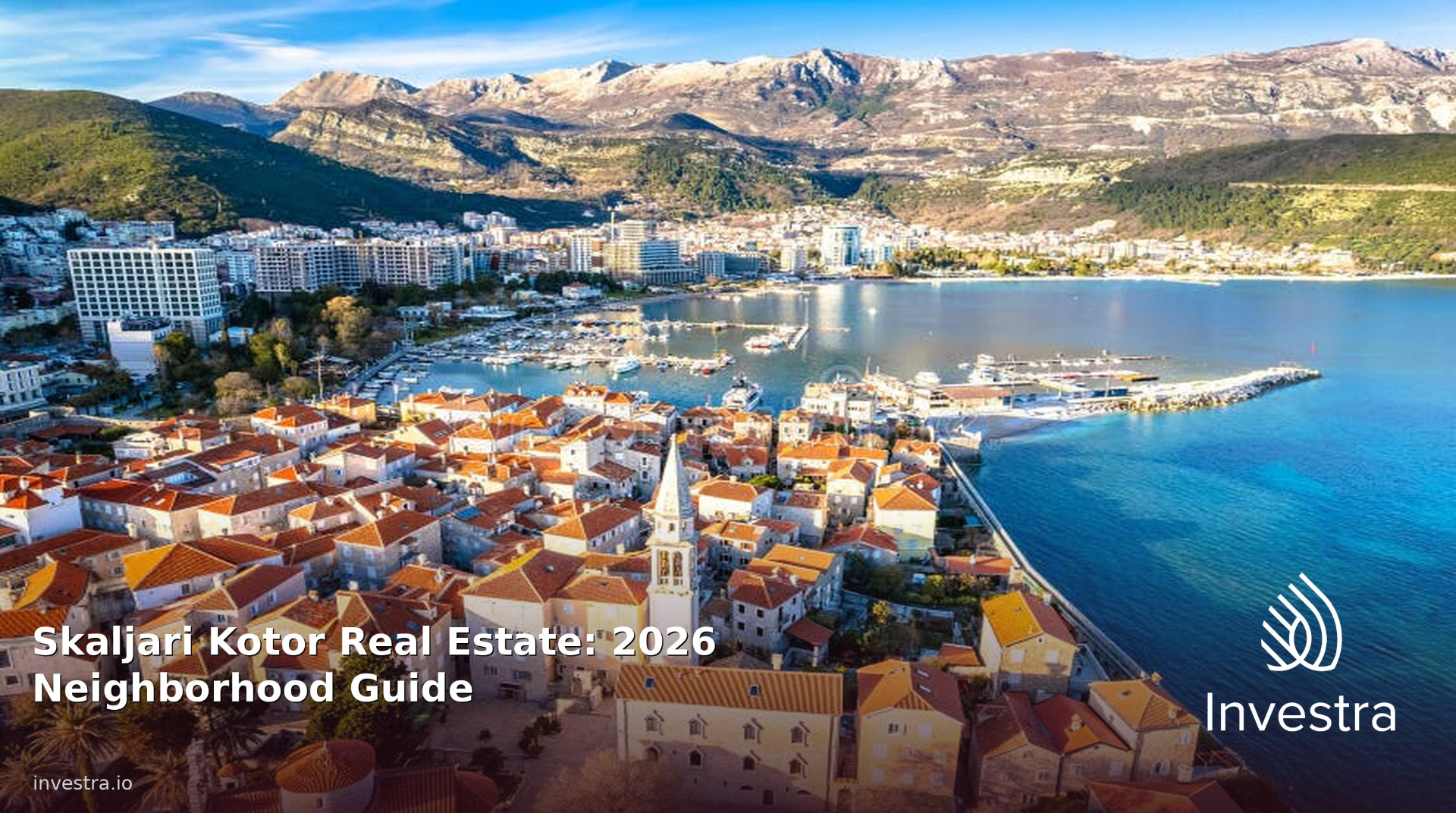
Skaljari Kotor Real Estate: 2026 Neighborhood Guide
Skaljari Kotor Real Estate: 2026 Neighborhood Guide
Understanding Skaljari as a Kotor Neighborhood
Quick Answer: Skaljari is a hillside residential neighborhood in Kotor that appeals to buyers seeking quieter, more authentic Mediterranean living away from the Old Town tourist center, with views and community character that distinguish it from seaside alternatives.
Skaljari sits on the slopes above Kotor's historic center, occupying a middle ground between the bustling Old Town waterfront and the more isolated mountain villages inland. When I first explored this neighborhood, what struck me was how quickly you leave the crowds behind—yet you're still minutes from Kotor's main attractions. It's the kind of place where locals actually live, where washing lines flutter between balconies and neighbors know each other's names.
The neighborhood gets its character from steep, narrow lanes that wind upward, stone houses in various states of restoration, and mixed development patterns that reflect decades of local building decisions rather than recent investor-led development. For foreign buyers, this authenticity carries both appeal and complexity. You're not buying into a standardized resort formula; you're entering a genuine residential fabric with its own rhythms and expectations.
Skaljari connects directly to Kotor's Old Town via pedestrian passages and roads, which means you can reach the medieval harbor and its restaurants within a 5–10 minute walk. But the moment you step uphill, the sense of place shifts noticeably. The air feels clearer. The light changes differently on the stone facades. This isn't accidental—the neighborhood's elevation and slope fundamentally alter the living experience compared to properties clustered on Kotor Bay's shoreline.
Understanding Skaljari means recognizing it's not a purpose-built resort community. It's an organic neighborhood where property values, rental potential, renovation costs, and daily life patterns follow local rather than international resort logic. That distinction matters enormously for how you should assess any property here.
Location and Accessibility Within Kotor
Quick Answer: Skaljari offers pedestrian access to Kotor's Old Town within 10 minutes while remaining physically removed from the waterfront's noise and crowds, with limited but functional vehicle access that can present challenges during peak tourist seasons.
The geography of Skaljari positions it as a true "neighborhood within Kotor" rather than a separate satellite area. You're looking at steep elevation gain—anywhere from 50 to 200 meters above Kotor Bay's water level—which means the walking routes matter considerably more than driving when you're moving within the neighborhood itself. Car access exists, but it's constrained by narrow medieval street patterns that haven't expanded to accommodate modern vehicles smoothly.
What many buyers don't fully appreciate until they visit is how the topography affects daily movement. A property that appears "just above the Old Town" on a map might involve a genuine 10–15 minute uphill walk with significant steps. For some buyers, this separation from the waterfront traffic and noise becomes the primary attraction. For others, it's an unexpected inconvenience. The reality is that fitness level and mobility genuinely influence the practical appeal of Skaljari properties.
Vehicle access from Kotor's main roads works reasonably well during off-season months. Tourist season—roughly April through October—introduces congestion that can make parking and vehicle movement unpredictable. Many Skaljari residents simply don't keep cars permanently, instead relying on pedestrian access to the Old Town, local services, and taxi/transfer arrangements for longer journeys. This shifts the practical lifestyle significantly from what waterfront property owners experience.
For connection to broader destinations, Kotor's bus station sits at the waterfront, making it perhaps a 15–20 minute walk from upper Skaljari properties. The Tivat airport lies about 25 kilometers away, with ground transport available through local services. The Budva area—covered in detail in our separate location guide for nearby neighborhoods—sits roughly 20 kilometers north, accessible via coastal roads.
Property Types and Construction Standards in Skaljari
Quick Answer: Skaljari features a mix of traditional stone houses, communist-era residential buildings, and newer reconstructions, with varying construction quality and compliance standards that require detailed due diligence before purchase.
The built environment in Skaljari reflects Montenegro's complex architectural history. You'll find genuine 18th and 19th-century stone structures—some lovingly restored, some waiting for investment, some partially inhabited. Interspersed are mid-20th-century apartment blocks built during Yugoslavia, then newer (last 15–20 years) reconstructed or newly built homes that attempt to blend traditional aesthetics with modern comfort.
This mixture creates opportunity and risk in equal measure. Traditional stone properties possess undeniable character and potential charm, but they often come with hidden structural challenges—foundation settling, moisture infiltration, electrical systems that predate modern safety standards, and roof conditions that aren't immediately visible. The romantic appeal of an old Kotor house needs to be weighed against professional structural assessment and realistic renovation cost estimates.
Communist-era apartment buildings offer more straightforward construction logic but sometimes suffer from deferred maintenance and aging infrastructure. Shared building systems—plumbing, electrical, heating where present—may require coordination with co-owners for significant upgrades. In my experience examining properties across this region, these mid-century buildings are either well-maintained by organized communities or neglected in ways that are expensive to remedy.
New construction or recently renovated properties in Skaljari vary significantly in quality. Some developers have genuinely invested in proper materials and techniques; others cut corners in ways that only become apparent years later. Without examining building permits, structural documentation, and electrical/plumbing certifications, you can't safely evaluate construction quality. This is especially critical in Skaljari, where building supervision may have been less rigorous than in formal resort developments elsewhere in Montenegro.
What Buyers Should Assess: Property Condition and Documentation
Quick Answer: Assessing Skaljari properties requires independent professional inspection for structural integrity, legal verification of ownership and building permits, utility connections, and completion of all construction-related documentation before any purchase commitment.
When researching a specific Skaljari property, several critical assessment areas demand attention. First comes the fundamental question of legal documentation. In Montenegro, property ownership verification involves checking the land registry, confirming that the current seller has clear title, and verifying there are no unresolved liens or inheritance disputes. Many older properties in Skaljari were inherited through family lines, and documentation completeness can be surprisingly inconsistent. Before any serious engagement, you need confirmation that the seller can actually transfer clean title—no small detail in a neighborhood where some properties have belonged to the same family for generations.
Building permits and construction documentation rank equally important. Did the current structure receive proper planning permission? If renovations or additions were made, were they formally approved? In Skaljari—like across Montenegro—informal additions and modifications happen. A beautiful balcony or expanded living space might have no official documentation, which creates potential complications for future resale and can even bring municipal attention. Clarifying the formal construction history protects you from inheriting someone else's regulatory liability.
Physical condition assessment requires more than a casual walk-through. Stone houses in particular benefit from professional inspection covering foundation stability, moisture patterns, roof condition, and structural soundness. These details aren't cosmetic concerns—they directly impact renovation costs and the property's long-term viability. Hiring a qualified structural engineer or building surveyor (ideally someone familiar with Mediterranean stone construction) costs money upfront but prevents far more expensive surprises later.
Utility connections deserve explicit attention. Does the property have reliable water supply? Is the sewage connection to municipal systems or a septic arrangement? Is electrical wiring modern and safely grounded, or does it present hazard signs? These practical systems influence both daily living quality and potential rental appeal. Skaljari's hillside position means some properties have water supply challenges during peak summer tourism when demand strains municipal systems.
For rental potential assessment—which influences the property's investment logic—you'll want to verify which utilities are metered individually versus shared, whether the property layout suits short-term holiday letting or longer residential tenancy, and what restrictions (if any) apply to rental use. For detailed guidance on rental assessment methodology, Investra.io's holiday rental due diligence guide covers this systematically across the broader region.
Neighborhood Services and Amenities
Quick Answer: Skaljari offers proximity to Kotor's Old Town services and restaurants but has limited local shops and amenities within the neighborhood itself, requiring reliance on the waterfront commercial center for daily grocery shopping and specialized services.
This is where Skaljari's quiet hillside character creates both charm and practical constraints. The neighborhood itself is fundamentally residential—you won't find supermarkets, banks, or pharmacies integrated into Skaljari's street life. That means daily shopping and service needs pull you toward Kotor's waterfront center or the commercial areas along the main coastal road.
Some Skaljari residents see this as the entire point. They want authentic neighborhood living without constant retail activation. Others find the distance to basic services genuinely inconvenient, especially during winter months when walking to the waterfront in bad weather feels like a chore rather than a pleasant stroll. Your assessment of this should reflect honestly: do you enjoy walking to meet everyday needs, or do you prefer services within the immediate vicinity?
Restaurants and cafes cluster primarily in Kotor's Old Town, a 5–15 minute descent depending on where in Skaljari you're based. This makes dining out or grabbing coffee a deliberate choice rather than an impulse. The upside is that you're not living surrounded by tourist-oriented establishments; the downside is that spontaneous social interaction through neighborhood cafes doesn't exist here.
Medical services require access to Kotor's hospitals and clinics, most located near the waterfront. For routine healthcare, doctor visits involve a walk or short journey downhill. Emergency services have protocols for hillside neighborhoods, but response times may be slightly longer than for waterfront properties. This is worth understanding, particularly if household members have mobility constraints or health conditions requiring regular medical access.
Educational facilities for families with children are limited directly within Skaljari. The nearest primary schools serve the broader Kotor area, again creating a commute pattern rather than neighborhood self-sufficiency. Families evaluating Skaljari for long-term residential purposes need to research school availability and assessment procedures, which fall under broader Montenegrin education administration frameworks that vary by municipality.
Seasonal Dynamics and Tourist Impact
Quick Answer: Skaljari experiences indirect tourist pressures during peak summer months through increased traffic in Kotor's Old Town and parking constraints, though the neighborhood itself remains quieter and more residential than waterfront areas.
Understanding how tourism shapes Skaljari's character across different seasons is genuinely important for long-term satisfaction. April through October sees Kotor transformed by cruise ship visits, holiday travelers, and European seasonal residents. The waterfront becomes visibly crowded, restaurants overflow with tourists, and the entire Bay area buzzes with activity. Skaljari doesn't experience this intensity directly—it's simply not where tourists congregate—but the ripple effects do arrive.
Parking becomes scarcer throughout Kotor during peak season, which affects anyone trying to access the neighborhood by car. If you're renting your Skaljari property to tourists, the easier downhill walk to the Old Town becomes a selling point for your guests. If you're living there permanently, you're aware of the seasonal shift without being overwhelmed by it. The neighborhood maintains its fundamental quietness even when Kotor's waterfront is at full capacity.
What surprised many buyers I've spoken with is how the seasonal rhythm affects utilities and services. Water pressure can drop during extreme peak demand periods. Electrical systems in older buildings sometimes strain under air-conditioning loads during summer heat waves. These aren't catastrophic concerns in well-maintained properties, but they're real enough that permanent residents need to anticipate them and seasonal rental owners need to communicate expectations clearly to guests.
The reverse dynamic happens October through March. Kotor becomes genuinely quiet. Restaurants reduce hours or close entirely. Tourist services wind down. For buyers seeking peaceful, authentic living, this is when Skaljari reveals its true character—a working neighborhood where daily life follows local rather than tourist rhythms. Some buyers love this transformation; others find the reduction of available services during winter months inconvenient.
Renovation, Upgrading, and Building Code Compliance
Quick Answer: Skaljari renovation projects require formal permits and adherence to Kotor's architectural guidelines, with cost estimates that frequently exceed initial expectations due to structural surprises and material accessibility on steep hillside terrain.
If you're considering a Skaljari property that needs work—and many do—you need realistic understanding of how renovation actually functions here. Montenegro requires building permits for substantial renovations, structural modifications, and any work that changes the external appearance of properties in historic neighborhoods. Kotor has architectural guidelines specifically designed to preserve the medieval character of the area, which means you can't simply modernize a stone house however you wish.
The permit process involves application through Kotor's municipal authority, review by heritage preservation boards, and approval timelines that can extend 4–8 weeks or longer depending on complexity. Some renovations are straightforward; others face complications if the proposed work conflicts with preservation guidelines. Understanding what changes you're legally permitted to make should happen before you purchase, not after—otherwise you risk buying a property whose renovation vision isn't actually achievable.
Practically speaking, renovation on Skaljari's steep slopes costs more than equivalent work on flatter terrain. Material delivery is constrained by narrow access roads. Construction teams navigate confined spaces. Waste removal requires more planning. A bathroom renovation that might cost €15,000 on Kotor's waterfront could cost €18,000–€22,000 in upper Skaljari simply due to terrain and access logistics. This isn't theoretical—it's the lived experience of multiple renovation projects I've monitored in the area.
Traditional stone houses present particular challenges. Hidden structural issues emerge as you open up walls. Building codes require modern electrical and plumbing systems that need careful routing through existing stonework. Insulation and moisture control in old buildings demand specialist knowledge—improper weatherproofing can trap moisture that damages the stone fabric from within. Budget for professional consultation during the planning phase; it costs less than dealing with costly corrections mid-project.
For detailed guidance on building code compliance and renovation scope across similar neighborhoods, the Investra.io legal checks guide walks through verification methodologies that apply across the broader region.
Rental Potential and Income Considerations
Quick Answer: Skaljari properties can generate rental income through holiday letting or long-term residential leases, though income potential depends on property condition, size, amenities, and whether guests will accept a hillside location without waterfront access.
Many buyers approach Skaljari with rental income as part of their investment thesis. The neighborhood's proximity to Kotor's attractions and more peaceful character than the waterfront create genuine appeal for certain renters. But rental income potential isn't automatic—it depends heavily on several specific factors that deserve serious assessment.
Holiday rental viability starts with the property itself. Does it have independent entrance and utilities that let you manage short-term guests separately from owner use? Is the layout efficient—meaning guests don't waste space on unnecessary hallways or rooms? Does it include amenities that short-term renters expect—working kitchen, proper bathroom, reliable heating and cooling, WiFi? A charming historic stone house without these conveniences will appeal to a niche market but won't generate the income per square meter that a modern, well-equipped property will produce.
The Skaljari location works for certain guest profiles. Travelers seeking quiet authenticity and willing to walk to restaurants appreciate the neighborhood. Families wanting beach access with less crowd feel aren't your target market—they'll book waterfront properties. Understanding which guest segments actually want what Skaljari offers shapes realistic income projections. Don't assume waterfront rental rates apply; they don't. A property here typically commands different nightly rates than equivalent space on the bay.
Long-term residential rentals present different dynamics. Local demand for quality rental housing exists in Kotor, particularly for professional workers and families relocating temporarily. Long-term lease rates reflect local salary levels and residential market supply. They're significantly lower than holiday rental rates but offer stability and lower management overhead. Deciding between holiday and long-term rental strategy should happen before purchase, as it influences property condition expectations and tenant management approaches.
Practical management matters too. Are you managing guests directly, or will you engage a local property management service? What's the commission structure, and is professional management's cost justified by the income it protects? Properties in Skaljari are often managed by services based in Kotor's Old Town, which works well for holiday rentals but may feel impersonal for longer-term tenant relationships.
For structured assessment of rental potential and
Explore more on Investra: Pula Real Estate Market 2026: Areas, Buyer Demand and Due Diligence | How to Buy Property in Istria as a Foreign Buyer in 2026 | Istria Property Investment 2026: A Decision Framework for Buyers | Poreč Real Estate Market 2026: A Practical Guide for Property Buyers | Pula Rental Investment Guide 2026: Long-Term Letting Buyer Questions | Umag Real Estate Market 2026: Property Types, Areas and Buyer Checks | Istria Property Due Diligence: A Croatian Buyer Checklist | Istria Property FAQ 2026: Clear Answers for International Buyers | Best Neighbourhoods in Pula for Property Buyers in 2026 | Medulin Real Estate Market 2026: A Buyer Guide to Homes and Locations | Property Taxes and Purchase Costs in Istria: What Buyers Should... | Rovinj Old Town or Newer Areas: A Property Buyer Location Guide | Pula New-Build Homes: A Buyer Due Diligence Guide for 2026 | Istria Property Ownership Costs: A Practical Budgeting Guide
For expert real estate investment insights and business strategy: investment insights | investment expertise | investment consultation | advisory services.
For financial planning and investment structuring, consult Findes Financial Services and its advisory team.
Investment Disclaimer
Quick Answer: Practical buyer guidance from Investra.io.
The information provided in this article is for educational and informational purposes only and should not be construed as financial, legal, or investment advice. Real estate investments carry inherent risks, and past performance does not guarantee future results. Investors should not invest money they cannot afford to lose. Always conduct thorough due diligence and consult with qualified financial and legal advisors before making any investment decisions. Investra.io does not guarantee returns on any investment.
Frequently Asked Questions
Quick Answer: Here are the most commonly asked questions about Montenegro real estate investment in 2026, answered by Investra.io experts.
Is Montenegro a good country for real estate investment in 2026?
Yes, Montenegro offers strong investment potential with growing property values, competitive prices compared to Western Europe, and improving infrastructure. Investra.io provides comprehensive market data and investment guidance.
Can foreigners buy property in Montenegro?
EU citizens can buy property freely in Montenegro. Non-EU citizens may need to meet specific requirements. Investra.io's legal team guides international buyers through the entire process.
What is the average property price in Budva & Kotor?
Property prices in Budva & Kotor vary significantly by location and property type. Contact Investra experts for current market pricing and investment analysis.
What rental yields can I expect?
Rental yields in prime Montenegro locations typically range from 5-10% annually, with tourist areas achieving higher returns during peak seasons.
What taxes apply to property purchases?
Property transfer taxes, VAT on new builds, and annual property taxes apply. Rates vary by property type and location. Consult Siniša Dagary for tax optimization strategies.
How long does the purchase process take?
Typically 30-60 days from offer to completion. Working with Investra.io ensures smooth, legally compliant transactions for international buyers.
What financing options are available?
Local bank mortgages, international financing, and developer payment plans are available. Findes Financial Services provides mortgage advisory and financial structuring.
Is property management available for rental properties?
Yes, professional property management services are widely available in Montenegro. Investra.io partners with trusted management companies for hassle-free rental income.
What are the best areas to invest in Budva & Kotor?
Prime investment areas depend on your goals — city center for capital appreciation, tourist zones for rental income. Investra.io's market analysis identifies the best opportunities.
Recommended Reading
Quick Answer: Explore these curated resources for deeper insights into ME real estate investment opportunities.
- Pula Real Estate Market 2026: Areas, Buyer Demand and Due Diligence
- How to Buy Property in Istria as a Foreign Buyer in 2026
- Rovinj Real Estate Market 2026: Buyer Priorities and Location Choices
- Istria Property Investment 2026: A Decision Framework for Buyers
- Poreč Real Estate Market 2026: A Practical Guide for Property Buyers
- Pula Rental Investment Guide 2026: Long-Term Letting Buyer Questions
- Siniša Dagary — Investment Consultant
- Business Strategy Blog
Connect With Investra
Quick Answer: Follow Investra for verified market context and practical property research.
Related Posts
No related posts available.
