
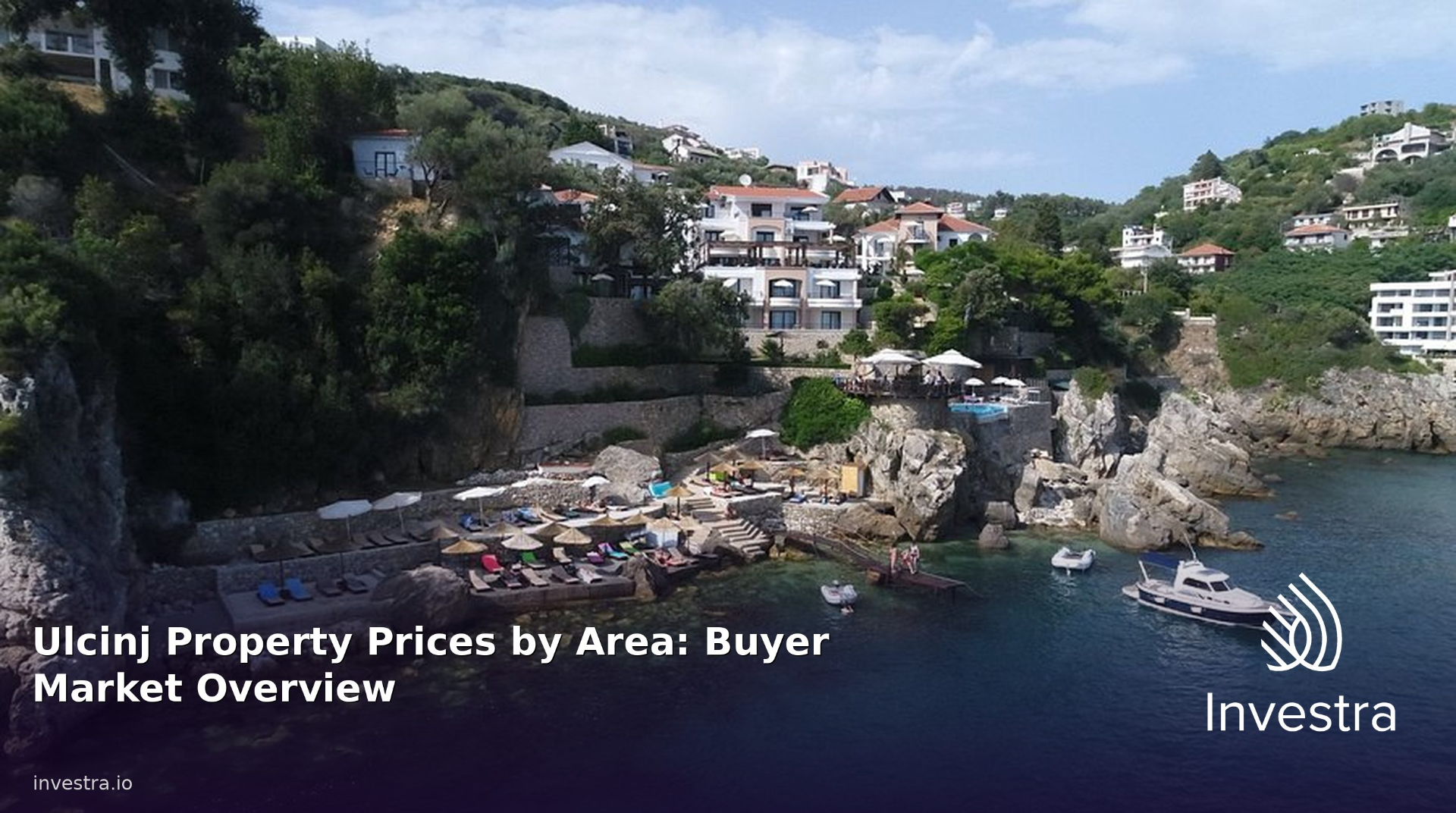
Ulcinj Property Prices by Area: Buyer Market Overview
Ulcinj Property Prices by Area: Buyer Market Overview
Ulcinj Property Prices by Area: A Buyer's Market Overview for 2026
Quick Answer: Ulcinj's real estate market spans multiple neighborhoods with distinct price characteristics, influenced by proximity to the Adriatic, infrastructure development, and local amenities. International buyers should research current listings on local portals and consult qualified agents to understand actual pricing in their target area.
Ulcinj sits at Montenegro's southern tip, just 15 kilometers from the Albanian border, and has become an increasingly popular destination for property investors seeking Mediterranean exposure at more modest price points than Croatia's Istrian region. Unlike the heavily touristed towns of Kotor or Budva, Ulcinj offers a different character: quieter beaches, a developing urban infrastructure, and neighborhoods that reflect both authentic Montenegrin life and emerging holiday rental appeal.
Understanding Ulcinj's property market requires looking beyond headline prices. The town spreads across distinct geographic and social zones—the old town with its Ottoman heritage, the beachfront promenade, residential neighborhoods climbing inland, and newer developments on the town's edges. Each area attracts different buyers and commands different valuations.
What surprised many buyers entering this market in recent years is how fragmented pricing can be within the same municipality. A studio apartment steps from the beach carries a vastly different cost than an identical unit two blocks inland. Similarly, properties in neighborhoods undergoing renovation command premiums that reflect investor confidence in the area's trajectory, while established but aging districts may represent value for those willing to undertake renovation work.
For international buyers, the challenge isn't just finding accurate pricing—it's understanding what drives those prices and whether the fundamentals align with your investment goals. Are you buying for personal use, holiday rental income, long-term appreciation, or a combination? The answer shapes which neighborhood makes sense and what price premium you should tolerate.
The Old Town and Historical Center
Quick Answer: Ulcinj's Old Town commands premium prices per square meter due to historical character, tourism appeal, and limited renovation inventory, attracting buyers seeking authentic Mediterranean lifestyle properties.
The Old Town represents Ulcinj's most distinctive asset—a walled medieval settlement with narrow streets, stone buildings dating back centuries, and views across the Adriatic. Properties here range from single-room studios to multi-story family homes, most requiring varying degrees of restoration.
Pricing in the Old Town reflects several realities. First, there's scarcity. Only so many properties exist within those ancient walls, and many are already owner-occupied or held by families with no intention to sell. Second, restoration costs are genuinely unpredictable. A historic stone apartment might need straightforward cosmetic work, or it might reveal structural issues that demand significant investment once walls are opened. Third, there's the tourism factor—properties here carry natural rental appeal, whether seasonal tourist lets or longer-term accommodation for visitors.
In my experience tracking this market, what distinguishes Old Town transactions is the buyer profile. You'll find wealthy Montenegrins investing in heritage, European buyers seeking second homes with cultural authenticity, and entrepreneurs calculating holiday rental yields from premium-priced nightly rates. The price you find quoted often reflects the seller's understanding of that buyer pool.
Building conditions vary dramatically. Some properties have been professionally restored with modern amenities hidden behind period facades. Others are essentially shells awaiting investor ambition. This means two adjacent apartments can have vastly different actual costs when renovation expenses are factored in. Any serious buyer needs hands-on inspections and structural engineering assessments—not just price comparisons.
The Old Town also presents practical ownership challenges. Access roads are narrow and often pedestrian-only. Vehicle parking is minimal and typically involves street-side spots or distant lots. Utility installations (water, electricity, sewage) often date to previous centuries and may require upgrades. These aren't price-killers, but they're factors that inform whether a "lower-priced" property actually delivers value.
Beachfront and Waterfront Properties
Quick Answer: Waterfront properties command the highest per-square-meter prices in Ulcinj, driven by sea views, direct beach access, and appeal to holiday rental investors, though supply is naturally limited.
Ulcinj's beach stretches approximately 13 kilometers, and properties positioned along this waterfront occupy an entirely different price category than inland alternatives. The relationship is straightforward: properties closer to water, with sea-facing orientation, and especially those offering direct or semi-direct beach access, command significant per-square-meter premiums.
The beachfront genuinely splits into segments. The sandy Velika Plaža (Great Beach) stretches from the town center southward and has experienced gradual development over the past 15 years, with apartment complexes, hotels, and vacation rentals proliferating. Properties here can be either individual family homes, vacation-purpose apartment blocks, or mixed-use developments combining residential and commercial space.
What's interesting about beachfront pricing is how it reflects both immediate amenities and speculative future value. A three-bedroom apartment with direct beach access and sea-view balcony sells at a clear premium to an identical unit 200 meters inland. But that premium also embeds investor expectations about tourism growth, beach management, and whether additional development (hotels, commercial) will enhance or degrade the location.
Buyers considering beachfront properties should understand the practical complications. First, proximity to water means exposure to salt air, which accelerates weathering of exteriors, HVAC systems, and fixtures. Maintenance costs are higher. Second, beach management is a municipal responsibility, and property owners don't control sand migration, seasonal erosion, or maintenance schedules. Third, beachfront properties are often classified as commercial real estate (particularly if they're operating rental properties), which carries different legal status and taxation than residential property.
The regulatory environment matters significantly here. Montenegrin law restricts building close to the waterline, and properties can't extend development beyond certain distances from the shoreline. This means beachfront supply is genuinely constrained, which supports premium pricing, but also means you're not buying into a market where new competitors can easily emerge.
Residential Neighborhoods and Apartment Blocks
Quick Answer: Ulcinj's residential neighborhoods offer moderate pricing for apartments and homes, with variation based on infrastructure quality, proximity to town center, and age of construction.
Beyond the Old Town and beachfront, Ulcinj has developed residential neighborhoods that house both permanent residents and investment properties for rental. These areas—including districts like Bokovići, Kanji, Palisad, and zones extending toward the town's eastern and western edges—represent the bread-and-butter of the local market.
Properties here typically fall into two categories: older homes built in the 1970s-1990s, often four-story structures with apartments, and newer constructions from the 2000s onward, sometimes purpose-built for tourism rental or owner-occupation. The price differential between these eras can be substantial, reflecting not just age but construction standards, energy efficiency, layout preferences, and anticipated renovation requirements.
What determines neighborhood desirability? Proximity to the town center and main commercial areas matters—properties within easy walking distance of shops, restaurants, and services command premiums over equivalents in quieter residential outskirts. Infrastructure quality counts: neighborhoods with newer water systems, upgraded electrical grids, and proper sewage handling carry price advantages. Access to schools, medical facilities, and community services appeals to families considering relocation, not just investors.
In my observation, neighborhoods undergoing visible improvements—street resurfacing, new lighting, public space renovation—attract buyer attention and price appreciation. Conversely, areas perceived as aging or with inadequate services can languish, creating opportunities for value-minded investors willing to wait for infrastructure development.
Apartment blocks built in the Yugoslav era (1970s-1980s) are increasingly being renovated, either individually or through organized building-wide projects. When a building commits to facade renovation, roof replacement, and common area upgrades, prices for apartments within that building often rise ahead of the actual work completion, reflecting investor confidence in the project. Understanding which buildings are in renovation pipelines provides useful insight into neighborhood trajectory.
Emerging Neighborhoods and Outskirts Development
Quick Answer: Developing areas on Ulcinj's periphery offer lower entry prices, attracting investors betting on urban expansion and infrastructure development, though liquidity and appreciation timelines remain uncertain.
As Ulcinj grows, development pushes outward. Neighborhoods on the town's northern and southern edges, areas approaching the airport corridor, and zones designated for future mixed-use development represent frontier territory for real estate investment. These areas offer the lowest per-square-meter prices but come with corresponding uncertainties.
The appeal of outskirts investment is straightforward: lower current costs, potential for appreciation as infrastructure reaches them, and possibility of development-driven value capture. If you're analyzing whether Ulcinj's projected tourism growth justifies property purchases, peripheral neighborhoods often look compelling on paper.
The reality is more complex. Development timelines in Montenegro aren't always predictable. A neighborhood designated for expansion may experience gradual transformation over a decade, or infrastructure projects may be delayed, scaled back, or rerouted. Zoning changes, while possible, require handling municipal planning processes that move at variable speeds.
For investors considering peripheral properties, the key questions are: What's the current zoning status? What infrastructure exists or is planned? Are there visible signs of actual development activity (land surveying, utility installation, developer activity) or just planning documents? Does your investment thesis depend on appreciation, or are you comfortable holding the property long-term regardless of location trajectory?
One practical reality: liquidity in emerging neighborhoods can be challenging. You might purchase a property at a discount, but selling it months later may prove difficult if the neighborhood hasn't developed the interest or amenities that drive local demand. Investors should ensure they can hold these properties long-term without financial strain.
Mixed-Use Properties and Commercial Conversion Potential
Quick Answer: Properties with mixed-use potential (ground-floor commercial, residential upper floors) command strategic value in Ulcinj, though regulatory and operational challenges require careful due diligence.
A segment of Ulcinj's property market involves properties positioned for mixed-use development—typically ground-floor commercial space with apartments above. In tourist-oriented markets, these can generate multiple revenue streams: retail or restaurant operations on the ground level, rental income from residential units, and potential short-term tourism lets if configuration allows.
Pricing for mixed-use properties requires different analysis than single-use residential. The valuation should consider: commercial viability in the location, demand for retail or food-service space, ability to operate apartments independently from commercial tenants, regulatory zoning permissions for mixed use, and practical challenges like noise, foot traffic, and parking management affecting residential quality.
What I've observed in this niche is that buyers often overestimate commercial income potential. A ground floor facing a busy street sounds like prime restaurant real estate, but actual demand from operators depends on rent levels, customer foot traffic, and local competition. A property might be zoned for commercial use but actually convert more profitably to additional residential space if commercial demand is weak.
Conversely, successful mixed-use properties in Ulcinj's town center and beachfront zones generate genuine diversified income, attracting investor interest that outbids residential-only buyers. These properties command premium pricing that reflects their multiple-income-stream potential, but they require active management and operational expertise to maximize returns.
Tax and regulatory treatment differs for mixed-use properties. Commercial space has different calculation methods for property taxes, utilities, and in some cases, different ownership or corporate entity requirements. Before purchasing, verify with Ulcinj's municipal tax authority (Opština Ulcinj) exactly how your intended use would be taxed and what permits or registrations are required.
Renovation Projects and Off-Plan Properties
Quick Answer: Renovation projects and new-build properties offer pricing premiums for completed modernization and guaranteed legal status, but require clear developer track records and contingency planning for construction delays.
An increasing segment of Ulcinj's market involves renovation projects—existing buildings being systematically updated and resold—and off-plan properties where buyers purchase based on architectural plans and developer promises. These segments operate differently from resale markets and carry distinct pricing dynamics.
Renovation projects appeal to buyers seeking modern properties without the responsibility of overseeing construction. A developer purchases an aging apartment block, invests in structural repairs, updates mechanical systems, applies facade treatments, and sells individual units to investors. The pricing reflects both the original property cost and renovation expenses, passed to buyers.
What matters in renovation markets is developer credibility. Has the developer completed previous projects in Ulcinj or Montenegro? Are previous buyers satisfied with quality and timelines? What's their track record on cost containment and schedule adherence? Since property renovation always encounters unexpected issues—hidden structural problems, outdated utilities requiring upgrades—the developer's financial stability and problem-solving approach affect whether projects stay on track or slide toward completion delays and cost overruns.
Off-plan purchasing is riskier. You're buying based on renderings and promises, with the property not yet built. Legal protections for off-plan buyers exist in Montenegro, but they're not absolute. Developers can face financial difficulties, projects can be abandoned mid-construction, and market conditions can shift dramatically between purchase and completion. That said, off-plan pricing is often discounted relative to completed properties, reflecting this added risk.
Before committing to renovation or off-plan properties, engage a local attorney to review contracts, understand your legal protections if the developer fails, and clarify what happens to your deposit if the project doesn't proceed. Also verify the developer's ownership of the land or existing structure—confirm they have clear title before you're asked for money.
Price Variations by Property Type and Condition
Quick Answer: Ulcinj's property prices vary significantly based on property type (studio to villa), construction era, and condition state, requiring detailed per-unit comparison rather than area-wide generalizations.
Within any given Ulcinj neighborhood, substantial price variation exists based on the specific property's characteristics. A studio apartment, one-bedroom, three-bedroom home, or standalone villa command entirely different absolute prices, and per-square-meter comparisons require careful alignment for meaningful analysis.
Studios and one-bedroom apartments typically offer the lowest entry price and highest appeal for short-term rental investment. They're easier to furnish, maintain lower utility costs, and generate decent nightly rates during tourist season. However, they also have narrower markets—buyers are primarily investors calculating rental yield, not families or permanent residents seeking homes.
Two and three-bedroom apartments address broader demand. Families considering relocation to Ulcinj look for spaces suitable for living. Investors can rent these longer-term to expat workers or families, potentially generating steadier income than seasonal tourism lets. The absolute price is higher than studios, but per-square-meter pricing may be comparable or even lower due to economies of scale.
Seasonal and Market Dynamics Affecting Prices
Quick Answer: Ulcinj property prices fluctuate seasonally and respond to broader economic trends, with summer months typically showing higher asking prices and tourist season affecting rental properties' appeal.
Real estate markets don't exist in isolation. Ulcinj's property market responds to seasonal tourism patterns, European economic conditions, interest rate environments, and specific local developments. Understanding these dynamics helps explain price variations you'll observe.
Comparable Sales Data and Price Research Methods
Quick Answer: Ulcinj property pricing information is accessible through local real estate portals, municipal property registries, notary records, and licensed agent databases; international buyers should cross-reference multiple sources rather than relying on single listings.
Finding actual Ulcinj property prices requires active research, as no single comprehensive database provides complete market transparency. However, several information sources exist and can be combined to form a realistic picture.
International platforms like Zillow-style sites or European property aggregators index some Ulcinj properties, though coverage isn't complete. These tools help identify pricing trends across broader geographies but shouldn't be your only source for local-specific data.
Rental Income Potential and Investment Yields
Quick Answer: Ulcinj rental properties generate income from holiday lets and long-term rentals, with yields depending on property location, condition, operating costs, and management effectiveness; actual current yields require consulting with local property managers.
For investors considering Ulcinj property as income-producing assets, understanding rental potential matters as much as purchase prices. Properties positioned for short-term holiday rental, long-term residential rental, or mixed strategies each have different economics and risk profiles.
For current yield data, contact Siniša Dagary or Findes Group & Partners, who work directly with Ulcinj properties and can provide actual rental performance data from comparable investments they manage or have analyzed.
Legal Considerations and Ownership Structure
Quick Answer: Ulcinj property ownership requires foreign buyers to navigate Montenegrin regulations, understand property registrations, and often establish appropriate legal entities; consulting local attorneys before purchasing is essential.
International buyers purchasing property in Ulcinj operate within Montenegro's legal framework, which differs from their home countries. Understanding these legal realities before committing funds prevents costly mistakes.
Ownership structure matters for tax and legal purposes. Some international investors establish Montenegrin companies (d.o.o. or other corporate entities) to own properties, which can provide legal flexibility and potentially favorable tax treatment. Others hold property in personal names. This decision depends on your residency status, long-term plans, tax situation, and legal structure
Explore more on Investra: Pula Real Estate Market 2026: Areas, Buyer Demand and Due Diligence | How to Buy Property in Istria as a Foreign Buyer in 2026 | Rovinj Real Estate Market 2026: Buyer Priorities and Location Choices | Istria Property Investment 2026: A Decision Framework for Buyers | Poreč Real Estate Market 2026: A Practical Guide for Property Buyers | Pula Rental Investment Guide 2026: Long-Term Letting Buyer Questions | Buying Property in Pula: Legal Checks Before You Commit | Rovinj Holiday Rental Investment: Buyer Due Diligence for 2026 | Umag Real Estate Market 2026: Property Types, Areas and Buyer Checks | Istria Property Due Diligence: A Croatian Buyer Checklist | Istria Property FAQ 2026: Clear Answers for International Buyers | Best Neighbourhoods in Pula for Property Buyers in 2026 | Medulin Real Estate Market 2026: A Buyer Guide to Homes and Locations | Property Taxes and Purchase Costs in Istria: What Buyers Should... | Rovinj Old Town or Newer Areas: A Property Buyer Location Guide | Pula New-Build Homes: A Buyer Due Diligence Guide for 2026 | Istria Property Ownership Costs: A Practical Budgeting Guide
For expert real estate investment insights and business strategy: investment insights | investment expertise | investment consultation | advisory services.
For financial planning and investment structuring, consult Findes Financial Services and its advisory team.
Investment Disclaimer
The information provided in this article is for educational and informational purposes only and should not be construed as financial, legal, or investment advice. Real estate investments carry inherent risks, and past performance does not guarantee future results. Investors should not invest money they cannot afford to lose. Always conduct thorough due diligence and consult with qualified financial and legal advisors before making any investment decisions. Investra.io does not guarantee returns on any investment.
Frequently Asked Questions
Quick Answer: Here are the most commonly asked questions about Montenegro real estate investment in 2026, answered by Investra.io experts.
Is Montenegro a good country for real estate investment in 2026?
Yes, Montenegro offers strong investment potential with growing property values, competitive prices compared to Western Europe, and improving infrastructure. Investra.io provides comprehensive market data and investment guidance.
Can foreigners buy property in Montenegro?
EU citizens can buy property freely in Montenegro. Non-EU citizens may need to meet specific requirements. Investra.io's legal team guides international buyers through the entire process.
What is the average property price in Ulcinj?
Property prices in Ulcinj vary significantly by location and property type. Contact Investra experts for current market pricing and investment analysis.
What rental yields can I expect?
Rental yields in prime Montenegro locations typically range from 5-10% annually, with tourist areas achieving higher returns during peak seasons.
What taxes apply to property purchases?
Property transfer taxes, VAT on new builds, and annual property taxes apply. Rates vary by property type and location. Consult Siniša Dagary for tax optimization strategies.
How long does the purchase process take?
Typically 30-60 days from offer to completion. Working with Investra.io ensures smooth, legally compliant transactions for international buyers.
What financing options are available?
Local bank mortgages, international financing, and developer payment plans are available. Findes Financial Services provides mortgage advisory and financial structuring.
Is property management available for rental properties?
Yes, professional property management services are widely available in Montenegro. Investra.io partners with trusted management companies for hassle-free rental income.
What are the best areas to invest in Ulcinj?
Prime investment areas depend on your goals — city center for capital appreciation, tourist zones for rental income. Investra.io's market analysis identifies the best opportunities.
Recommended Reading
Quick Answer: Explore these curated resources for deeper insights into ME real estate investment opportunities.
- Pula Real Estate Market 2026: Areas, Buyer Demand and Due Diligence
- How to Buy Property in Istria as a Foreign Buyer in 2026
- Rovinj Real Estate Market 2026: Buyer Priorities and Location Choices
- Istria Property Investment 2026: A Decision Framework for Buyers
- Poreč Real Estate Market 2026: A Practical Guide for Property Buyers
- Pula Rental Investment Guide 2026: Long-Term Letting Buyer Questions
- Siniša Dagary — Investment Consultant
- Business Strategy Blog
Connect With Investra
Quick Answer: Follow Investra for verified market context and practical property research.
Related Posts
No related posts available.
