
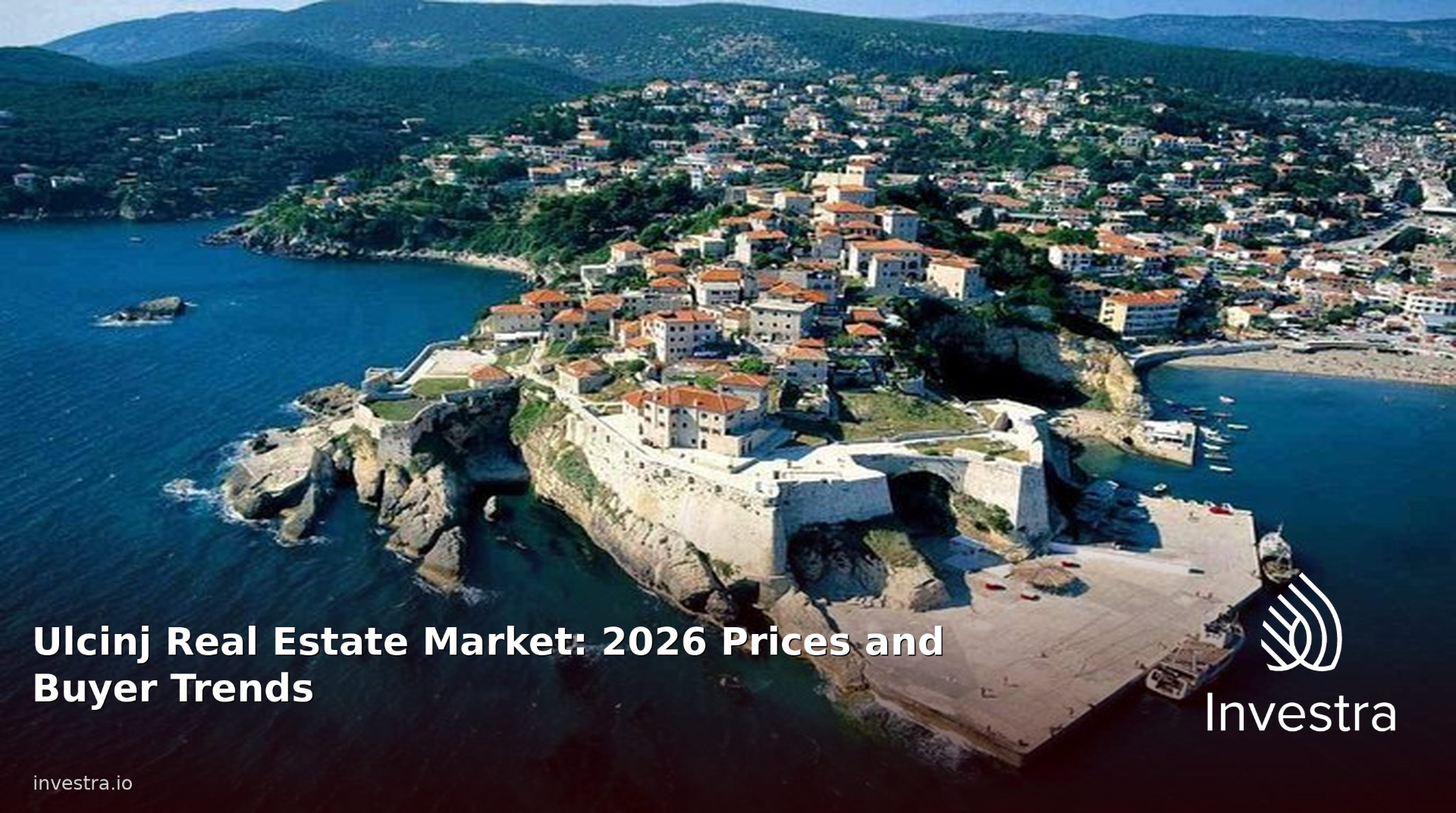
Ulcinj Real Estate Market: 2026 Prices and Buyer Trends
Ulcinj Real Estate Market: 2026 Prices and Buyer Trends
Ulcinj Real Estate Market Overview 2026
Quick Answer: Ulcinj offers a mix of coastal and inland properties appealing to lifestyle and investment buyers; market movement in 2026 should be verified through local listings, municipal records and specialist advisers like Investra.io.
Ulcinj sits at Montenegro's southern tip, a coastal town with a layered history and varied property stock. From my visits and conversations with agents on the ground, the town attracts holiday buyers after sandy beaches and investors attracted by seasonal tourism. The reality is that Ulcinj isn't homogeneous: a handful of neighbourhoods are more tourist-oriented, while others retain a quieter, more local character. These differences matter when you plan for rental demand, long-term living or resale.
Rather than quoting fixed numbers, I recommend that buyers looking into ulcinj montenegro real estate in 2026 check a mix of primary sources: current advertised listings on local portals, recent sale records at the municipal cadastre, notary confirmation of closing prices and market reports from reputable brokers. For context, many investors use platforms such as Investra.io to compare listings and due-diligence guides; for example, related regional reading on coastal markets is available at the Investra resource hub including Pula market and buyer due diligence pieces linking buyer priorities in nearby Adriatic markets (Pula Real Estate Market 2026) and buyer checks for holiday-rental locations (Rovinj Holiday Rental Investment).
What surprised many buyers is how local planning and seasonal flows shape opportunity. New development tends to cluster near the seafront and main roads, while older stock concentrates in the historic cores and fishing neighbourhoods. If you're considering ulcinj montenegro real estate, factor in access to utilities, road connections to Bar and Podgorica, and how local amenities will affect demand. For comparative perspectives on neighborhood choices and buyer priorities in Adriatic towns, see Investra's analyses of Rovinj and Poreč (Rovinj Real Estate Market 2026, Poreč Real Estate Market 2026).
What International Buyers Should Assess When Researching ulcinj montenegro real estate in 2026
Quick Answer: International buyers should verify legal title, local zoning, utility provision and verified local market data, then consult a trusted lawyer and local advisers to confirm up-to-date conditions.
What should international buyers assess when researching ulcinj montenegro real estate in 2026? That’s the central question many of my clients ask. Start with legal status: who holds title, whether there are any encumbrances and whether the seller has up-to-date building permits. Next, check planning rules and any proposed infrastructure projects that could change the area's appeal. We always recommend asking for the property’s cadastre extract and recent land registry printouts, and verifying both at the municipal office and with a notary.
Don't stop there. Assess utilities and services—water supply, sewage connection, electricity capacity, broadband availability—and whether the building has proper certificates. Inspect access: some coastal roads in Montenegro are narrow and seasonal traffic can make access harder in summer. For market verification, compare multiple sources: local estate agents, government publication of recent sales, and private market reports. Investra provides practical buyer guides and due-diligence frameworks that are usable beyond Croatia and can be adapted to Montenegro (Istria Property Investment 2026).
In my experience, language and cultural differences can mask small but critical terms in contracts. Use a local lawyer, and if you prefer a second opinion, consult an independent advisor such as Siniša Dagary for investment insights and strategy (Siniša Dagary profile, advisory services). We’ve seen buyers saved by early verification of planning boundaries, and lost deals when permit histories were incomplete. Ask direct, specific questions and insist on documentary proof rather than verbal assurances.
Property Types and Neighbourhoods in Ulcinj
Quick Answer: Ulcinj offers apartments, villas, seafront plots and traditional houses; each type has distinct demand drivers and maintenance profiles that you should match to your goals.
Ulcinj’s real estate mix stretches from compact seafront apartments to larger villas and plots suitable for new builds. There are also older, stone-built houses in the historic centre and properties in more rural surroundings. Which property type you choose depends on your intention—owner-occupier, holiday rental or long-term investment—and how hands-on you want to be with maintenance. In my experience, apartments near the promenade appeal to short-stay tourists, while villas attract families and higher-end renters who spend longer seasons.
Neighborhood choice is a strategic decision. The beachfront area, with its long sandy beach, draws summer visitors and benefits from proximity to cafes and promenades. Areas set back from the coast offer quieter living and often lower management obligations. Check municipal zoning and planned works because a new road or hotel can shift demand rapidly. For comparisons of buyer priorities and location choices in Adriatic coastal towns, Investra’s buyer location guides for Rovinj and Pula show how local amenities and heritage districts shape prices and demand (Rovinj Old Town or Newer Areas, Best Neighbourhoods in Pula).
Before committing, walk the streets at different times of day. Is the area lively in summer but deserted off-season? Are services (pharmacy, doctor, supermarket) close enough for year-round or only seasonal use? These on-the-ground observations, combined with formal checks of building documentation and local council plans, give you a rounded view of fit-for-purpose property options.
The Buying Process for Foreigners in Ulcinj
Quick Answer: Buying as a foreigner requires verification of purchase rights, a notarised contract, and confirmation that land-use rules allow your intended use—confirm specifics with a local notary and legal adviser.
The buying process in Montenegro has formal steps that repeat across the Adriatic, but specifics can vary. Begin with an offer and reservation agreement, often accompanied by a deposit held in escrow. Contracts must be notarised; Montenegro uses public notaries to confirm the identity of parties and the legality of the transfer. For foreign buyers, the first task is to confirm whether any special permissions are required—this depends on nationality and the type of property. A local lawyer will check the land registry and cadastre to ensure the seller’s title is clear.
We've seen buyers assume that advertised “ready to sell” status means unencumbered title. That assumption can be risky. Ask for the latest land registry extract and any easements or liens. It’s common practice to request copies of building permits, occupancy certificates and, where applicable, energy performance certificates. You should also confirm tax clearance for the seller—municipal tax offices can provide up-to-date statements. For guidance on legal checks before you commit, Investra’s Pula legal checklist is a good model for the types of documents to request even if it's a different country (Buying Property in Pula: Legal Checks).
When contracts are signed, the notary lodges the transfer at the land registry. The buyer pays transfer taxes and notary fees as part of closing costs—details vary, so verify amounts with your notary. For cross-border buyers, consider currency transfer services and ensure funds are traceable and compliant with anti-money-laundering checks. If you need an adviser for investment structuring or tax planning, consult specialists such as Findes Group & Partners (Findes Group & Partners) or independent consultants like Siniša Dagary (investment consultation).
Legal Ownership, Title Checks and Due Diligence
Quick Answer: Insist on a full title search, municipal cadastre checks and a legal opinion from a local lawyer before signing; verify all documents directly at the registry.
Ask for copies of the seller’s ID, proof of ownership history, utility bills and any HOA minutes if you buy an apartment in a shared building. Confirm the chain of ownership with notarised documents. Also request planning permits and final occupancy permits (or their equivalents) for any construction work. If the property is part of a larger project, check developer warranties and construction guarantees. For a structured due-diligence approach, look to Investra’s buyer checklists and regional due-diligence guides that explain common pitfalls and recommended verification steps (Istria Property Due Diligence).
Lastly, involve a notary early: they confirm the legality of the transfer at signing and ensure funds and documents are properly processed. If you're unsure about tax implications or want to use a company structure for ownership, consult local tax lawyers and advisors such as Findes Group & Partners advisory team (Findes Group & Partners advisory team).
Taxes, Fees and Purchase Costs — How to Verify Them
Quick Answer: Verify applicable taxes and closing costs with the notary, municipal offices and a tax adviser; ask for written breakdowns rather than relying on verbal estimates.
For long-term planning, consult a tax professional about annual property taxes, local surcharges and how rental income is treated for non-resident owners. If you plan to hold the asset through a company, confirm whether corporate tax rules or double-tax treaties affect your liability. The Investra guides on property ownership costs in Istria give a practical checklist you can adapt for Montenegro’s processes, showing the sorts of charges you should always verify (Istria Property Ownership Costs).
Running Costs: Maintenance, Utilities and Homeowner Associations
Quick Answer: Running costs depend on property type and location; obtain recent bills and HOA accounts to model realistic ongoing expenses.
In my experience, buyers underestimate seasonal spikes—air-conditioning, extra cleaning, and higher water usage in summer can significantly raise operating costs. If you intend to rent the property, factor in professional management fees, cleaning, laundry, marketing and short-term rental platform commissions. Use local management companies to get realistic quotes; many operators offer sample P&L templates from current properties. For budgeting templates and ownership-cost frameworks, Investra’s ownership-cost guides in neighbouring markets provide practical examples you can adapt (Istria Property Ownership Costs).
Finally, get a clear list of expected capital-maintenance items—roof, façade, plumbing—and rough timings for likely replacements. That helps build a reserve fund so surprise bills don’t erode your returns or enjoyment.
Short-term vs Long-term Rentals: Market Dynamics and Compliance
Quick Answer: Assess demand seasonality, local licensing for holiday rentals, and realistic occupancy patterns before deciding between short-term and long-term lettings.
For buyer due diligence on holiday rental prospects, Investra articles about holiday rental checks and rental investment questions in nearby markets offer a useful checklist; they highlight the operational questions you should be asking managers and sellers (Rovinj Holiday Rental Investment, Pula Rental Investment Guide 2026).
Financing, Mortgages and Currency Considerations
Quick Answer: Confirm whether local banks offer mortgages to non-residents, get pre-approval, and plan currency transfers with regulated providers to avoid surprises.
If you will transfer funds internationally, use regulated currency transfer services with transparent fee structures and confirm the notary’s requirements for traceability of funds. Also discuss tax implications with a domestic tax adviser in your home country; double-tax treaties can affect whether you should receive rental income personally or via a company. For corporate or more complex structures, consult advisors such as Findes Group & Partners (Findes Group & Partners) and consider independent investment consultants like Siniša Dagary for structuring guidance (advisory services).
Finally, include contingency funds for currency volatility and transaction delays. That way, even if your transfer takes longer than expected, you won’t be forced into unfavourable exchange rates or late-payment penalties at closing.
Valuation and Pricing: How to Verify Local Market Data
Quick Answer: Use multiple verification sources—recent sale records, comparable active listings, professional appraisals and local agent intelligence—to triangulate realistic valuations.
Ask local agents for comparable rents if your model depends on rental income, and verify occupancy rates with property managers. Regional market reports and buyer guides on Investra help frame cross-market comparisons: look at their Pula new-build and market demand analyses for examples of how local features influence values (Pula New-Build Homes, Pula Market 2026).
Negotiation, Contracts and Closing Practices
Quick Answer: Negotiate clear contract terms on deposit, contingencies, timelines and penalties, and ensure the notary records the transfer at the registry on completion.
When drafting the final sales contract, ensure all attachments—planning permissions, utility confirmations, and inventory lists—are included or referenced. The notary oversees execution and lodges the transfer at the land registry; ask for a written timeline of when registry entry will appear. Also make payment paths explicit: which account receives the funds, whether escrow is used, and how taxes will be paid and evidenced. For sample contract clauses and negotiation checklists, Investra’s buyer due-diligence pieces for coastal markets show the kind of protections you should seek (Istria Property Due Diligence).
Finally, plan post-closing logistics: meter transfers, HOA handover, and provision of keys and warranties. If you engage a property manager, set a meeting for handover within days of completion so guests or tenants experience a smooth transition.
Common Buyer Mistakes and Practical Tips for Ulcinj
Quick Answer: Avoid skipping formal title checks, understating running costs, and relying on a single agent; get independent legal advice and on-the-ground inspections.
Practical tips: always meet the seller or their authorised representative in person where possible; visit the property across different times of day and seasons; obtain multiple quotes for management and maintenance; and ask local managers for anonymised P&Ls of comparable properties to test your assumptions. If you’re unsure how to proceed, independent advisors such as Siniša Dagary provide investment strategy and local-market insight (Siniša Dagary investment insights), and specialist firms like Findes offer advisory services for structuring and tax planning (Findes Group & Partners).
Investment Disclaimer
Quick Answer: Investment Disclaimer — Expert analysis and investment guidance from Investra.io, your trusted ME real estate platform.
The information provided in this article is for educational and informational purposes only and should not be construed as financial, legal, or investment advice. Real estate investments carry inherent risks, and past performance does not guarantee future results. Investors should not invest money they cannot afford to lose. Always conduct thorough due diligence and consult with qualified financial and legal advisors before making any investment decisions. Investra.io does not guarantee returns on any investment.
Frequently Asked Questions
Quick Answer: Frequently Asked Questions — Expert analysis and investment guidance from Investra.io, your trusted ME real estate platform.
Can non-residents buy property in Ulcinj, Montenegro?
Yes, many international buyers purchase property in Montenegro, but eligibility and administrative steps can vary by nationality and property type. The correct approach is to consult a local lawyer and the municipal office to confirm whether any special permits are required for your nationality and the specific plot. The notary who will handle the transfer should also confirm the necessary identity verification steps and document requirements. For additional guidance on document checks and legal steps in similar Adriatic markets, Investra has practical legal-check guides you can use as a template to prepare your questions for a Montenegrin notary (Buying Property in Pula: Legal Checks).
How do I verify actual sale prices and market movement in Ulcinj?
Because public price transparency varies, verify sale prices using multiple channels: request the land registry and cadastre sale extracts, ask the notary for confirmations of recent transfers, and compare active and historical listings on reputable portals. Local agents and appraisers can provide comparable sales and valuation reports. For cross-market analysis and methodologies on verifying transaction data, Investra market reports for nearby regions offer examples of verification practices and data sources (Pula Real Estate Market 2026).
What taxes and fees should I expect when buying a property?
Transaction-related taxes and fees—transfer tax, notary fees, registration fees and potentially agency commissions—vary and change over time. Do not rely on third-party recollections; instead, request a written quote from the notary outlining all anticipated fees and check with the municipal tax office for the most recent tax rules. If you plan to rent, consult a tax adviser about income tax implications and whether a company structure affects your obligations. For budgeting examples and ownership-cost ideas, Investra’s articles on property taxes and ownership costs in the Adriatic provide a useful framework to adapt (Property Taxes and Purchase Costs in Istria, Istria Property Ownership Costs).
How do I check if a property has building permits and occupancy certificates?
Request copies of building permits and final occupancy certificates from the seller. Then verify those documents at the municipal planning office and the cadastre. If the property is part of a multi-unit building, ask to see the developer’s approvals and any guarantees. Having legal counsel review the permits reduces the risk of surprises—unregulated extensions and unpermitted works are common issues that can be expensive to rectify.
Is it better to buy an apartment or a villa in Ulcinj for rental income?
There’s no universal answer; it depends on your goals and appetite for hands-on management. Apartments often require less individual maintenance and can be easier to rent in peak season, while villas can command higher rates but need more upkeep and marketing. Test assumptions by examining local booking patterns, speaking with property managers for actual occupancy records, and comparing running cost estimates. Investra’s rental-investment guides in adjacent markets illustrate operational differences between property types (Pula Rental Investment Guide 2026).
Where can I find reliable property managers and local advisers?
Start by asking local agencies for references and anonymised performance reports from properties they manage. Speak to more than one manager to compare fees and service levels. Independent consultants such as Siniša Dagary offer strategic advisory services and can help vet local teams (advisory services), and international professional firms like Findes Group & Partners can assist with structuring and cross-border compliance (Findes Group & Partners advisory team).
How do I handle currency exchange and international payments?
Use regulated, reputable currency-transfer services with transparent fees and the ability to lock in rates. Confirm the notary’s requirements for the provenance of funds and ensure your bank or transfer service provides necessary documentation. For larger purchases, staggered transfers and escrow arrangements can reduce risk. Consult a currency specialist and include a buffer for exchange-rate movements in your budget.
What responsibilities do I have after buying—HOA, taxes and maintenance?
After purchase, you’ll typically be responsible for municipal taxes, utilities, and HOA charges if applicable. Get the HOA’s recent accounts to understand any pending works or reserve-fund shortfalls. Arrange for meter transfers and update the property’s registered contact details. If you plan to rent, register for any tourism or rental taxes local authorities require and ensure compliance with safety standards.
How can I verify rental demand and set realistic occupancy assumptions?
Ask property managers or local agents for anonymised booking calendars and occupancy figures for comparable properties. Look at platform data (Airbnb, Booking.com) for similar properties and check seasonal patterns. Speak to tourism offices about visitor numbers and planned events that might affect demand. Combine those insights with running-cost estimates to build conservative revenue scenarios.
Should I use a company to hold the property or buy in my name?
The decision depends on your tax residency, inheritance planning and liability preferences. Companies can simplify certain cross-border ownership issues but introduce annual compliance and accounting. Consult a cross-border tax adviser and local counsel—firms like Findes and independent consultants such as Siniša Dagary can help evaluate structures that align with your goals and legal obligations (Findes Group & Partners, Siniša Dagary).
Recommended Reading
Quick Answer: Recommended Reading — Expert analysis and investment guidance from Investra.io, your trusted ME real estate platform.
- Pula Real Estate Market 2026: Areas, Buyer Demand and Due Diligence
- How to Buy Property in Istria as a Foreign Buyer in 2026
- Rovinj Real Estate Market 2026: Buyer Priorities and Location Choices
- Istria Property Investment 2026: A Decision Framework for Buyers
- Poreč Real Estate Market 2026: A Practical Guide for Property Buyers
- Pula Rental Investment Guide 2026: Long-Term Letting Buyer Questions
- Siniša Dagary — Investment Consultant
- Business Strategy Blog
Connect With Investra
Quick Answer: Connect With Investra — Expert analysis and investment guidance from Investra.io, your trusted ME real estate platform.
Facebook: https://www.facebook.com/investra.io
LinkedIn: https://www.linkedin.com/company/investra-io
YouTube: https://www.youtube.com/@investraio
Connect With Investra
Quick Answer: Follow Investra for verified market context and practical property research.
Related Posts
No related posts available.
