
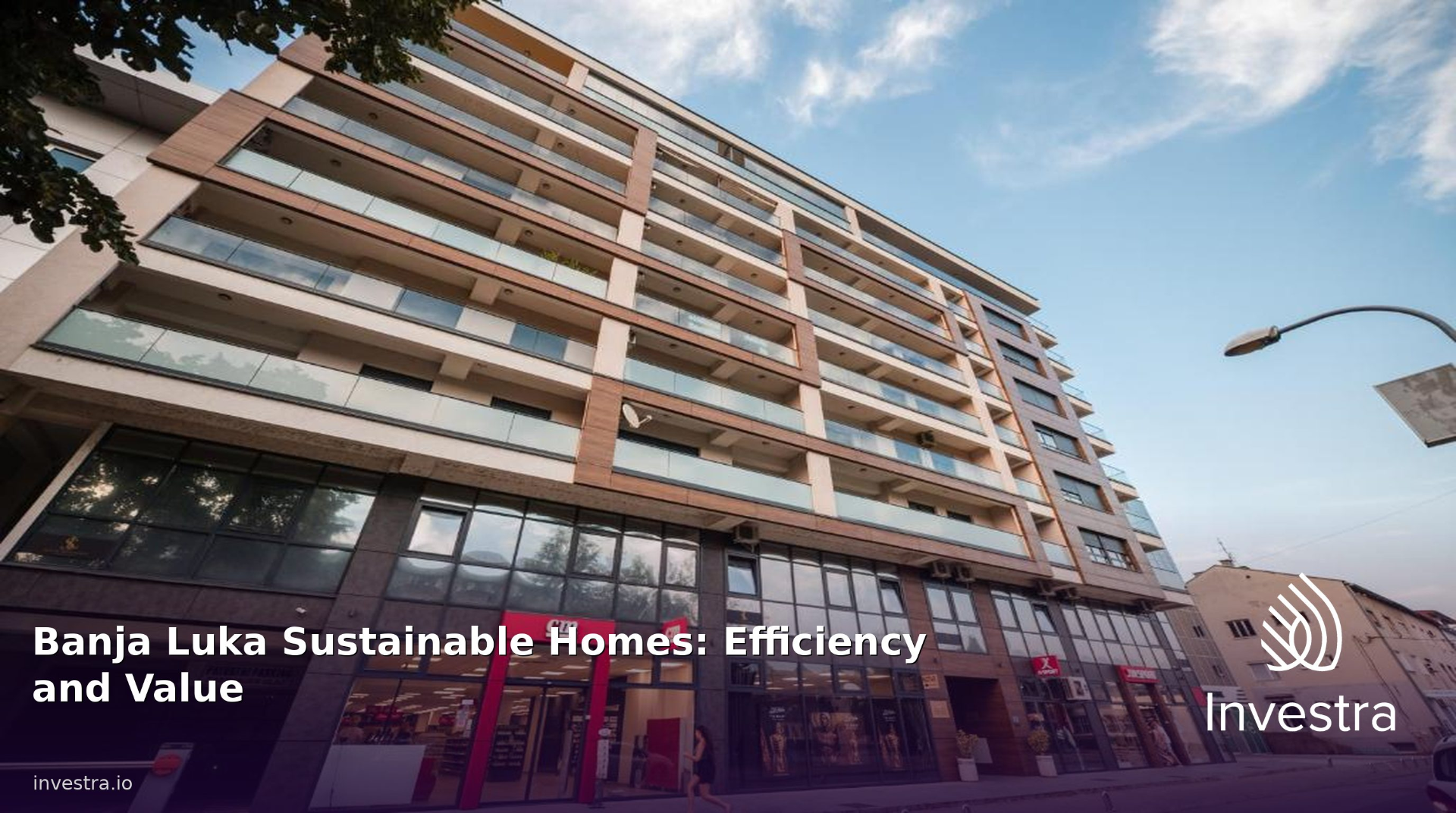
Banja Luka Sustainable Homes: Efficiency and Value
Banja Luka Sustainable Homes: Efficiency and Value
Sustainable homes Banja Luka: an overview
Quick Answer: Sustainable homes Banja Luka combine local building traditions with modern efficiency practices to cut running costs and environmental impact while increasing long-term comfort and resilience. For practical listings and market context, Investra.io’s Banja Luka real estate market guide is a good starting point.
The concept of sustainable homes Banja Luka brings together a handful of things buyers care about: energy efficiency, durability, low-maintenance materials, and an eye to resale or rental appeal. Banja Luka sits in a continental climate where cold winters and warm summers mean thermal performance matters more than in some other Bosnian cities. The reality is that a well-built, efficient house will feel more comfortable year-round and will often need fewer expensive interventions as systems age. In my experience working with buyers across Bosnia and Herzegovina, sustainability in this market usually starts with good insulation, airtightness, and efficient heating — not just flashy solar panels.
What surprised many buyers is how much the neighbourhood and orientation of a property affect its sustainability. A compact apartment in a well-served urban district can have a smaller carbon footprint than a large poorly insulated detached house in the suburbs. If you want to compare regions or neighbourhoods before committing, consult broader context pieces such as the Sarajevo real estate market guide and the Tuzla real estate market guide on Investra.io to understand differences in demand and infrastructure that touch energy and transport options.
What should you do first? Walk the properties, check for obvious signs of retrofitting (new windows, insulated roofs), and ask sellers for technical documents. For renovation-minded buyers, the Banja Luka new-build and property renovation guide will help you weigh the trade-offs between renovating an older building and buying a modern, energy-efficient new build.
Energy standards and certifications in Banja Luka
Quick Answer: Energy standards and relevant certifications for sustainable homes Banja Luka determine expected performance and can guide renovation or buying choices; verify current certification schemes and requirements with local authorities or qualified assessors.
Buyers often ask: are there national energy labels or local certifications I need to know about? The short answer is that energy performance for buildings is governed by national and entity-level building codes and by local implementation. What that means practically is that you should request any available energy performance certificates (EPCs) and technical project documentation when viewing a property. In my experience, older properties frequently lack formal EPCs and buyers assume efficiency from cosmetic upgrades — a risky assumption.
How do you check standards? Speak with a certified energy auditor or architect in Banja Luka. Professional services such as those available through Findes Group & Partners can run diagnostics and explain compliance. Documentation to request includes any recent energy audits, thermal imaging reports, and details on installed systems (boilers, heat pumps, solar). If you’re comparing across Bosnia’s cities, the Sarajevo new-build guide and Mostar new-build guide on Investra.io provide useful references for what modern installations look like in practice.
The reality is that standards change over time. To verify current rules, contact the local building authority in Banja Luka or consult a lawyer or engineer familiar with Republika Srpska building regulations. If you lack contacts, the Findes Group & Partners advisory team can make introductions, and advisors like Siniša Dagary offer tailored consultancy services that connect technical checks with investment questions.
New builds vs renovation for sustainability
Quick Answer: Choosing between a new build and renovating an existing property in Banja Luka depends on condition, location, and long-term use; consult local guides and professionals to compare lifecycle costs rather than relying on sticker prices.
We repeatedly see two types of buyers: those drawn to turn-key new builds and those who prefer renovating character properties. Both paths can yield sustainable homes Banja Luka, but the trade-offs are different. New builds typically come with modern thermal envelopes, planned systems, and warranties. Renovations offer the chance to preserve local architecture and potentially achieve high efficiency if the upgrade is done holistically — insulation, windows, ventilation and heating all considered together.
But how do you choose? Start with a technical survey. For an objective view on new development quality, look at the Banja Luka new-build and property renovation guide on Investra.io. If you’re renovating, plan the sequence: insulation and airtightness first, then services. What surprised many buyers is that partial retrofits — fixing windows without addressing roof or walls — often disappoint; improvements must be coordinated to realize full energy gains.
We’ve seen buyers ask about permitting and timelines. Permitting can vary between municipal zones, so talk to the building department early and consult experienced local architects. If you need a step-up in advisory capability, consider the advisory services listed by Siniša Dagary and Findes to bridge planning with construction and legal compliance. Ultimately, the choice comes down to location, personal preferences, and the realistic timeline you have for living in the property or renting it out.
Materials and construction practices that work locally
Quick Answer: Locally appropriate materials—well-dried timber, stone, and modern breathable insulation—paired with solid detailing deliver durable sustainable homes Banja Luka; verify suppliers and test materials with builders and consultants.
Banja Luka’s climate and building traditions mean some materials perform better here than others. Locally sourced stone and clay bricks remain common and can be part of a sustainable strategy when combined with modern insulation and moisture control. Timber is attractive for its thermal properties but must be properly treated and specified to avoid long-term issues. What we know from refurbishment projects is that moisture management is critical: breathable wall systems where needed, effective damp-proofing where not, and careful detailing at junctions such as window frames.
How to check materials quality? Ask developers for product datasheets and guarantees, and ask contractors for references on past projects. If you’re thinking about new builds outside Banja Luka’s city core, check the Banja Luka neighbourhood guide on Investra.io to understand how ground conditions and microclimate could affect material choice. Suppliers and manufacturers often have technical reps who can walk you through expected performance, but independent verification—third-party testing or advice from engineers—is prudent.
If sustainability is a priority, consider specifying low-embodied-energy materials and locally available options to reduce transport impacts. Some buyers also ask about reclaimed or recycled materials; these can be used successfully but require careful selection to ensure structural suitability and regulatory compliance. For detailed contracting and procurement support, services such as Siniša Dagary’s investment consultation can be useful to source reliable suppliers and manage contracts.
Insulation, heating and cooling strategies
Quick Answer: Effective insulation and the right heating/cooling strategy define comfort and operating cost in sustainable homes Banja Luka; always request system specifications and performance data from sellers or builders.
One of the most tangible improvements for occupants is a properly insulated building. In Banja Luka, the thermal mass of older masonry buildings can be an advantage, but without insulation, they still lose a lot of heat. A layered approach—roof, walls, floor—combined with good windows and airtightness control delivers the largest performance shifts. I often tell buyers to look beyond the surface: plaster and paint hide thermal defects that only a professional survey will reveal.
Heating systems are another core decision. Gas, biomass, heat pump and electric systems all have roles depending on availability, running-cost preferences and infrastructure. Heat pumps offer efficiency advantages in many climates, but performance depends on proper sizing and a good envelope. That’s why renovation projects must treat building fabric upgrades and system upgrades as linked tasks.
To verify expected performance, ask for seasonal performance data, FiTs (if applicable), and manufacturer warranties. If a seller claims an efficient system, request invoices for recent fuel or electricity use, or better yet, an energy audit. If you want to compare how neighbors manage heating and cooling, the Banja Luka rental market guide and Banja Luka real estate market guide on Investra.io give context on what tenants expect in different areas.
Renewable energy and on-site generation
Quick Answer: Solar PV, solar thermal and small-scale biomass are viable on-site options for sustainable homes Banja Luka, subject to roof orientation, planning rules and grid connection; confirm technical feasibility with an installer and local utility.
Installing on-site generation is often high on buyer wishlists. Solar photovoltaic panels are widely recognized, and solar thermal can assist water heating. For Banja Luka, roof angle, shading from trees or neighbouring buildings, and orientation (south-facing roofs) are practical constraints. Grid-connection rules and net-metering arrangements—if present—also influence whether an installation economically makes sense.
How do you verify feasibility? Have a qualified installer do a site visit and a shading analysis. Ask for a proposed production estimate in kWh along with the assumptions behind that estimate. Also ask the installer about warranties and anticipated degradation. If you need help identifying reliable installers or assessing payback scenarios, the Findes Group & Partners advisory team and consultants like Siniša Dagary can help structure technical and financial analysis so claims are independently tested.
What surprised many buyers is that simple behavioral changes — thermostatic controls, zoning, and user education — often deliver quick gains on top of generation. If you plan to rent a sustainable home, marketing the on-site generation system and providing clear instructions to tenants will often increase both interest and perceived value.
The buying process for sustainable homes in Banja Luka
Quick Answer: The buying process for sustainable homes Banja Luka follows the same legal steps as other property purchases but asks for extra technical due diligence; use local specialists and official registries to verify titles and permits.
Buying any property here means checking ownership, encumbrances, and building permits. For sustainable homes Banja Luka, I always recommend one additional step: a technical due diligence focused on energy performance and compliance. Ask sellers for technical documentation—EPCs, renovation permits, invoices for major works—and if those aren't available, commission a survey.
Where do you begin? Start with a lawyer who understands Republika Srpska property law and a local real estate agent who knows Banja Luka’s micro-markets. The Investra guide on Buying property in Banja Luka explains procedural steps and local considerations that buyers commonly ask about. If you are also looking at Sarajevo or Mostar for comparison, the buying guides for those cities on Investra.io are useful to understand procedural differences and how local market dynamics influence buyer protection and documentation standards.
Practical tip: insist on a condition-based contract clause that allows you to withdraw or renegotiate after technical checks. Many deals I've seen proceed more smoothly when both parties agree on a professional inspection window and a transparent handover of system manuals and warranties.
Taxes, ownership forms and legal checks
Quick Answer: Taxes and ownership rules for sustainable homes Banja Luka follow Bosnian and Republika Srpska laws, so verify current obligations with a local notary or tax advisor rather than relying on generic figures.
Questions about taxes and ownership are central to buying sustainable homes Banja Luka. The rules governing property transfer taxes, annual property taxes, and ownership structures (individual, company, etc.) can affect both purchase decisions and operating costs. I don’t give numbers because these change, but I always advise buyers to get written estimates from a local notary and a tax consultant before committing to an offer.
What should you request? Title search documents from the land registry, proof of tax clearance by the seller, and copies of building permits for recent renovations or additions. If a property has been subdivided or altered without permits, future legal exposure can be costly. For buyers unfamiliar with local practice, Investra’s Buying property in Banja Luka resource provides procedural orientation, while the services of advisors such as Siniša Dagary and the Findes Group & Partners advisory team can help facilitate local legal checks and translations.
Another practical check: verify that any planned renewable installations meet municipal rules and that permits for roof-mounted arrays or external changes are in order. If you’re unsure where to go, the Banja Luka neighbourhood guide and the Banja Luka new-build guide on Investra.io offer context on what local authorities typically require in different neighbourhoods.
Financing, grants and how to verify incentives
Quick Answer: Financing options and grant programs for sustainable homes Banja Luka evolve over time; confirm current offerings with banks, municipal offices and technical advisors and document any promised incentives in writing.
Many buyers hope to combine mortgages with government or EU-backed grants for energy upgrades. That aspiration is realistic in principle, but the availability of specific programs shifts with policy cycles and funding calls. The correct approach is to contact local banks for green mortgage products and the municipal office in Banja Luka for regional support schemes. If a developer claims a subsidy will apply, ask for written proof and for the developer to show how the subsidy will be transferred or reflected in the purchase contract.
We often work with clients who want an independent verification process. For that, an advisor like those listed on Siniša Dagary’s investment insights pages can collate program eligibility criteria and coordinate with banks. The Findes Group & Partners advisory team can also assist in preparing documentation for grant applications and in assessing the financing landscape.
How to verify incentives? Look up official program announcements from Republika Srpska government or Bosnia and Herzegovina national ministries, request confirmation letters from lenders, and ask for copies of successful grant approvals from other projects as references. Remember: verbal assurances aren’t reliable; always insist on written confirmation before relying on a grant in your budget.
Rental potential and management for sustainable properties
Quick Answer: Sustainable homes Banja Luka can appeal to tenants seeking comfort and lower bills, but rental success depends on location, management and clear communication about the property’s efficiency features.
Renters increasingly care about energy costs and comfort. A property that is quieter, warmer in winter and cooler in summer can attract higher demand, especially among professionals and small families. Yet the rental potential of a sustainable home Banja Luka ultimately ties back to location and amenities. A highly efficient home in a poorly connected area may underperform compared with a standard property in a central, well-connected neighbourhood.
If you plan to rent, think about management: how will you monitor systems remotely, who handles servicing, and what information will you give tenants about using efficiency features? Clear user guides and regular servicing schedules reduce misunderstandings and maintenance issues. The Banja Luka rental market guide on Investra.io helps you set expectations for the local tenant market, while the Banja Luka neighbourhood guide offers insight into which areas attract different tenant profiles.
Choosing local professionals and advisory partners
Quick Answer: Select local architects, builders and advisors familiar with Banja Luka’s climate and regulations to deliver sustainable homes Banja Luka; vet credentials, ask for references, and use trusted advisory services if you lack local contacts.
Investment Disclaimer
Quick Answer: This article provides educational information about sustainable homes Banja Luka and should not be taken as individual financial, legal, or investment advice; consult professionals for decisions that affect your finances.
The information provided in this article is for educational and informational purposes only and should not be construed as financial, legal, or investment advice. Real estate investments carry inherent risks, and past performance does not guarantee future results. Investors should not invest money they cannot afford to lose. Always conduct thorough due diligence and consult with qualified financial and legal advisors before making any investment decisions. Investra.io does not guarantee returns on any investment.
Frequently Asked Questions
Quick Answer: These FAQs cover common buyer questions about sustainable homes Banja Luka, from verifying energy claims to choosing professionals and understanding legal checks.
What should buyers know about sustainable homes Banja Luka?
Buyers should know that sustainable homes Banja Luka require both technical due diligence and a clear plan for operation. Ask sellers for energy documentation, commission a professional energy audit if documentation is missing, and assess whether the property’s location and services meet your lifestyle and rental expectations. Verify permits and check with local authorities for any post-renovation approvals. If in doubt, use specialist advisors to bridge local regulation and technical performance.
How can I verify a property's energy performance without an EPC?
If an Energy Performance Certificate isn’t available, commission an independent energy audit that includes thermographic imaging, blower-door tests for airtightness, and an inspection of heating systems and insulation. This gives objective data you can use in negotiations. Ask the auditor to provide a clear list of recommended works and estimated performance improvements instead of vague conclusions.
Are there grants or subsidies for energy renovations in Banja Luka?
Grant programs and subsidies change frequently. To verify current offerings, consult municipal offices in Banja Luka, national funding portals, or banks offering green financing options. Advisors experienced in local programs can prepare applications and validate eligibility; don’t rely on verbal promises from sellers or developers without written confirmation.
Should I buy a new-build or renovate an older house for sustainability?
The right choice depends on the property’s condition, location and your time horizon. New builds often bring predictable performance and warranties. Renovations can deliver character and potentially high efficiency but require careful whole-building planning. Commission a technical survey and compare lifecycle costs rather than just purchase price to decide.
How do I choose a reliable local contractor for sustainable upgrades?
Pick contractors with relevant local experience, request references from past projects, and review warranties and certifications. Site visits to completed jobs are especially informative. If you’re unsure, use an independent project manager or advisory firm to oversee procurement and quality control.
Can sustainable features increase rental demand in Banja Luka?
Yes, but location and management matter more than features alone. Efficient heating, good insulation and clear tenant guidance typically improve attractiveness, especially among professionals and families. Provide operating instructions and rapid maintenance support to maximize tenant satisfaction and retention.
What legal checks are essential before buying a sustainable home?
Essential checks include a land registry title search, confirmation of no encumbrances, verification of building permits for recent work, and proof of tax clearance. If renovations were done, ensure they were permitted. Engage a local notary and lawyer to manage these checks for you.
How do I compare energy offers from developers?
Ask for detailed technical specifications, manufacturer warranties, projected seasonal performance and references from similar completed projects. Ask developers to provide test results and, ideally, independent verification. Compare consistent metrics rather than marketing claims.
Who can help me with cross-border advice when comparing Banja Luka to Sarajevo or Mostar?
Use regional guides and advisors who work across Bosnia and Herzegovina. Investra.io’s Sarajevo and Mostar market guides are useful comparative resources, and advisory firms like Findes Group & Partners or consultants such as Siniša Dagary can provide cross-city perspective and coordinate due diligence in multiple locations.
Recommended Reading
Quick Answer: Consult these Investra and Siniša Dagary resources for in-depth local guides and professional advisory options to support decisions about sustainable homes Banja Luka.
- Sarajevo real estate market guide
- Buying property in Sarajevo
- Sarajevo rental market guide
- Sarajevo neighbourhood guide
- Sarajevo new-build guide
- Mostar real estate market guide
- Siniša Dagary — Investment Consultant
- Business Strategy Blog
Connect With Investra
Quick Answer: Follow Investra.io on social media for market updates and new property listings relevant to sustainable homes Banja Luka.
Facebook: https://www.facebook.com/investra.io
LinkedIn: https://www.linkedin.com/company/investra-io
YouTube: https://www.youtube.com/c/InvestraIO
Connect With Investra
Quick Answer: Follow Investra for verified market context and practical property research.
Related Posts
No related posts available.
