
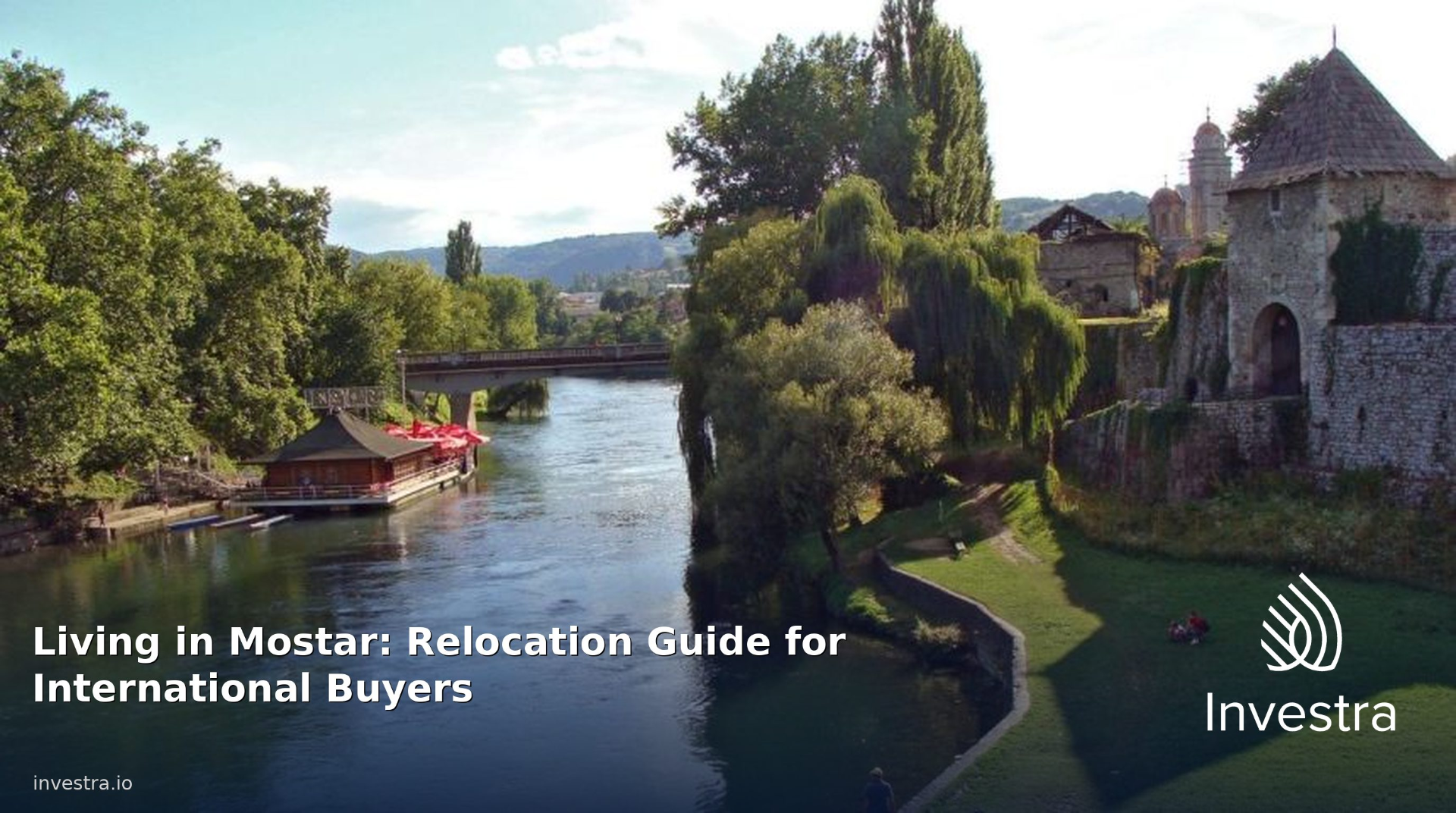
Living in Mostar: Relocation Guide for International Buyers
Living in Mostar: Relocation Guide for International Buyers
Living in Mostar — an overview for international buyers
Quick Answer: Living in Mostar offers a mix of historic city life, riverfront scenery and Balkan culture; international buyers should research local property rules and lifestyle factors before committing. See the Mostar real estate market guide for context.
Mostar sits where the Neretva slices the city in half, creating dramatic views and a compact urban core that attracts tourists and residents alike. For many expats the appeal is obvious: a walkable old town, stone bridges, and a cost base that can feel more forgiving than Western Europe. In my experience, people who choose Mostar are drawn equally by lifestyle and potential property opportunities—some want a holiday base, others seek rental income or long-term residence.
But what should buyers know about living in Mostar? First, lifestyles differ between the historic centre and nearby suburbs. Streets that charm you on a hot summer afternoon may be quiet in winter. Services such as international schools, specialised medical care and certain conveniences are available but may not match larger regional capitals. That's not a criticism—it's reality. We’ve seen buyers happily adapt, and others who prefer to be closer to a major hub like Sarajevo or Banja Luka for work and specialist services.
Local market intelligence matters. Use practical sources to verify facts: municipal offices for urban plans, the land registry for title checks, and professional legal advice for cross-border purchase rules. For on-the-ground perspective, consult local guides like our Buying property in Mostar article and speak with advisors such as investment consultants who specialise in Bosnia and Herzegovina. The reality is that living well in Mostar comes down to matching location and property to your expectations, then verifying the legal and practical steps through trusted, local channels.
Mostar neighbourhoods and lifestyle choices
Quick Answer: Mostar’s neighbourhoods vary from the Old Bazaar to newer suburbs, each offering different lifestyles and practical trade-offs; consult the Mostar neighbourhood guide to match needs to location.
When I show clients around Mostar I start in the Stari Most (Old Bridge) area. The atmosphere is unique—stone-paved alleys, cafés and high tourist footfall in summer. Live here if you want the energy and don’t mind seasonal crowds. Walk a few blocks and you reach quieter residential streets with older apartment blocks. Move further out and you’ll find newer developments and single-family houses that suit families or those prioritising space.
What surprised many buyers is how swiftly micro-location can change daily life. Proximity to the river gives cooling breezes and view premiums for some buyers. Living near central markets and bakeries yields convenience, but it can also mean more noise. For people who commute, access to main roads and parking becomes a priority—something not immediately obvious on a glossy listing.
We recommend mapping your typical week: where you'll shop, where kids might attend school, and what kind of neighbours you want. Use the Mostar neighbourhood guide on Investra for neighbourhood snapshots and contact a local advisor—Siniša Dagary’s site (advisory services) lists consultancy options for personalised assessments. Visiting at different times of year helps, too. The reality of living in Mostar shifts with seasons and festivals; seeing a district in high season is different from a quiet winter afternoon.
Buying property in Mostar: legal basics for foreign buyers
Quick Answer: Foreign ownership in Mostar is possible but governed by Bosnian property law and local registration procedures—read the Buying property in Mostar guide and consult a local lawyer to verify current rules.
One of the first questions I get is: can I buy property as a foreign national? The short answer is yes, but the legal route depends on citizenship, residency and the type of property. The paperwork involves deeds, land registry checks and notary formalities. The reality is that laws and administrative practices can change, so you should rely on primary sources and qualified local counsel to confirm the current position.
Start with title verification at the land registry and ask for a recent extract; deeds sometimes reflect historical complexities in Bosnia and Herzegovina. Use a licensed translator when needed. We always suggest engaging a local notary and a lawyer who understands property transfer, because they will check for encumbrances, zoning restrictions and hereditary claims. The Investra buying guide for Mostar is a practical starting point. For additional advisory support, Siniša Dagary’s profile and services pages provide contact routes for personalised guidance.
Don’t expect to take verbal assurances at face value. Ask for copies of municipal decisions if you plan to change use of a property, and confirm whether a property is within any conservation or cultural protection zone. If financing is part of the plan, check with local banks and consult the Banja Luka and Tuzla buying guides on Investra for broader, regional context—these help compare administrative processes across Bosnia and Herzegovina.
Finding and viewing properties in Mostar
Quick Answer: Finding properties requires a mix of online research, local agents and in-person visits; use the Mostar new-build guide and local listings to plan visits.
Online portals are useful but incomplete. In my experience, the best opportunities often surface through local agents, word of mouth and estate offices. If a property looks promising online, plan an in-person visit—photos rarely tell the whole story. Ask to see the property at different times of day to assess noise, light and neighbourhood rhythm.
Be prepared with a checklist. Ask the seller about the property’s history, recent works, and any ongoing communal charges or disputes. Confirm the boundaries and whether the listing reflects legal title. Insist on seeing official documents. If you’re short on time, hire a trusted local agent who can pre-qualify properties and arrange viewings. For developers, consult the Mostar new-build guide on Investra to verify permits and delivery timelines.
Remember: a private viewing is also an opportunity to meet the neighbourhood. Talk to nearby residents if you can. You'll learn about practicalities—parking, bin collections, or whether older buildings have effective maintenance funds. For reassurance on negotiation and offer handling, professional advisory services such as those listed on Siniša Dagary investment insights can be helpful when you're making critical decisions.
Ownership types, registration and the notary process
Quick Answer: Ownership transfers require registration with the land registry and notary authentication; consult local notaries and the Investra Mostar buying guide for step-by-step checks.
Ownership in Bosnia and Herzegovina is formalised through the land registry system. The transfer process typically includes a preliminary contract, due diligence checks, a final purchase contract notarised by an authorised notary, and then registration. In my experience, buyers underestimate the time needed for thorough title searches—what looks straightforward can reveal historical claims or administrative omissions.
A qualified notary will authenticate signatures and ensure the contract complies with statutory requirements. Your lawyer should attend the notary appointment and lodge the registration application with the competent registry office. International buyers often need certified translations of documents and apostilles for foreign paperwork. Confirm identification requirements and any residency-related paperwork before you travel for signings.
We don’t give legal opinions here. Instead, we recommend confirming details with a local notary and checking recent government guidance. For a practical orientation, the Investra guides linked throughout this article give procedural overviews and local contact points. Advisory services like Findes Group & Partners can also help coordinate cross-border documentation—see their advisory team for specifics on administrative support.
Taxes, fees and ongoing costs when living in Mostar
Quick Answer: Property transactions and ownership carry taxes and fees that change over time; verify current rates and obligations with a local tax advisor, municipal offices and your lawyer rather than relying on estimates.
Taxes and fees are a vital part of the buying equation, but I'm not going to invent numbers for you. What I can offer is a practical checklist of the cost items you should confirm: transfer taxes (where applicable), notary fees, registration costs, local municipal charges, utility connection fees and any annual property taxes. Ask your lawyer to provide a written estimate for the transaction, and ask the municipality for the most recent tax regulations.
Ongoing costs are just as important. Consider communal maintenance contributions, waste collection fees, and seasonal utility variability. If you plan to rent the property, there may be additional compliance costs for short-term lets—local regulations evolve, so get a current confirmation. For guidance on how to research these items, review local tax office contacts and consult a professional advisor; services such as Findes Group & Partners can connect you to tax and legal teams who specialise in the region.
The pragmatic route: request a written breakdown from your notary or lawyer before signing, and verify each figure with the issuing authority. If you're working with a developer, ask for a full list of transfer-related fees and any service-level agreements that define future charges. This diligence prevents surprises after you've moved in.
Financing and mortgages for Mostar buyers
Quick Answer: Local banks and some international lenders may offer mortgage products, but terms vary; contact banks directly and seek independent mortgage advice to verify current offerings and documentation requirements.
Many buyers ask whether they can finance a purchase in Mostar through a local bank. The reality is that financing options differ by bank, buyer nationality and the type of property. In my experience, banks will want solid documentation: proof of income, credit history, a clear title, and frequent local requirements such as a Bosnian guarantor or residency evidence for non-residents. That said, we must avoid generic claims—always check current bank policies.
Approach this pragmatically. Start by contacting several Bosnian banks and ask for a written mortgage pre-approval checklist. Compare terms, required down payments and amortisation rules. If you're seeking cross-border finance, consider lenders in neighbouring countries too. Advisory firms like Findes Group & Partners and private consultants such as Siniša Dagary can help you compile applications and liaise with lenders.
We recommend getting a local mortgage specialist involved early. Their knowledge of documentation standards and translation requirements will save time. Also ask about foreign-currency implications and how interest rate indexation is expressed in contracts—these are critical details that differ between lenders and over time.
Renting out and short-term lets: what international owners should consider
Quick Answer: Renting a Mostar property can be attractive, but local regulations, tourist seasonality and property management affect outcomes; consult the Mostar rental market guide and local authorities to confirm rules.
Many international buyers consider renting out their Mostar property either as a long-term rental or a short-term holiday let. What we know from owners on the ground is that profitability hinges on legal compliance, occupancy patterns and the quality of property management. Local licensing rules for tourist accommodation can change; get written confirmation from the municipal tourism office about registration requirements.
Seasonality matters. Tourism peaks can bring high demand in summer months, but winters are quieter. If you plan short-term lets, consider whether you can manage guest turnover remotely or need a local property manager. Practical matters like cleaning, laundry, maintenance and emergency repairs all require local solutions. Investra’s Mostar rental guide is a good starting point for understanding market dynamics, and working with local agents helps align expectations with operational realities.
Don’t forget tax compliance. Income from rentals has reporting requirements. Your local accountant or tax advisor should confirm registration and filing rules. For support in operational setup and management, Findes Group & Partners and independent consultants such as those on Siniša Dagary’s services can provide practical assistance.
Renovation, new-builds and construction standards in Mostar
Quick Answer: Renovations and new builds are subject to municipal planning and building permits; check local permits and developer credentials using the Mostar new-build guide.
Many buyers are drawn to the idea of renovating a historic Mostar house. It can be rewarding, but approvals and conservation rules often apply—especially in protected or historic zones. My advice? Before you buy with renovation in mind, request copies of any previous renovation permits and consult the municipal urban planning department for potential restrictions.
New-build developments are another route. Choose developers with verifiable track records, request construction progress documentation, and insist on a written specification for materials and finishes. Ask for guarantees and completion timelines in the contract. For an informed review, compare new-build projects to the regional standards described in Investra’s new-build guides for Mostar and nearby cities; these provide perspective on delivery practices and renovation norms.
Construction standards and inspections vary. Engage a local architect or engineer to inspect structural elements and advise on compliance with current building regulations. If you plan to rent or resell, a professionally managed renovation that respects local planning rules will preserve value and avoid legal complications.
Practical everyday living: utilities, healthcare, schools and transport
Quick Answer: Everyday life in Mostar is comfortable for many expats, with basic utilities, medical facilities and transport options available; verify school options and specialist healthcare access before moving.
Living day-to-day in Mostar means dealing with the practicalities: water, electricity, internet, waste collection and public transport. Most of these services are available, but standards and reliability can vary from neighbourhood to neighbourhood. In my experience, new residents often don’t anticipate differences in service continuity or the need to set up accounts in person, so plan a few on-the-ground days to sort utilities.
Healthcare in the city includes primary care clinics and some specialist services; for more advanced treatments many residents travel to larger regional hospitals in Sarajevo or beyond. If you have specific medical needs, check hospital capabilities and specialist availability. For families, research schooling options well in advance—international schools are limited, so many expats choose local schools or opt for commuting to larger cities for certain educational needs.
Transport is practical for local travel: Mostar is compact and walkable, with road links to neighbouring regions. However, if you depend on frequent air travel, check connections from nearby airports and the reliability of local bus and rail services. Ask long-term residents or local advisors for insider tips on service providers and the best neighbourhoods for your preferred daily routine.
Relocation logistics: visas, residence permits, moving and settling
Quick Answer: Visas and residence procedures depend on nationality and purpose of stay; verify current requirements with Bosnian consulates, immigration authorities and professional advisors before moving.
Settlement also involves more mundane but essential steps: opening a bank account, registering utilities, getting a local phone number, and meeting local tax registration obligations if you’re working or renting out property. Advisory firms such as Findes Group & Partners advisory team and individual consultants like Siniša Dagary can help coordinate these processes if you prefer local support.
Investment Disclaimer
Quick Answer: This section explains the article’s purpose and limitations; it does not substitute for professional financial, legal, or tax advice.
The information provided in this article is for educational and informational purposes only and should not be construed as financial, legal, or investment advice. Real estate investments carry inherent risks, and past performance does not guarantee future results. Investors should not invest money they cannot afford to lose. Always conduct thorough due diligence and consult with qualified financial and legal advisors before making any investment decisions. Investra.io does not guarantee returns on any investment.
Frequently Asked Questions
Quick Answer: Below are common questions about living in Mostar with practical, verifiable guidance; for specific legal or financial answers, contact local authorities or professional advisors.
What should buyers know about living in Mostar?
Buyers should understand local property law, neighbourhood differences, service availability and seasonal lifestyle changes. Verify legal and tax obligations with a local lawyer and the land registry. Visit at different times of year to assess living conditions. Use Investra’s Mostar guides for a market overview, and consult local advisors such as those listed on Siniša Dagary for tailored advice.
Can foreigners buy property in Mostar?
Yes, foreigners can often buy property, but conditions vary by nationality and property type. The correct route is to consult a local lawyer and the land registry to confirm title and transfer requirements. Read Investra’s step-by-step buying guide for Mostar and seek confirmation from local authorities or an accredited notary before proceeding.
How do I verify property ownership and encumbrances?
Request an official land registry extract and have your lawyer or notary check for mortgages, liens, or disputed ownership claims. Municipal offices can provide planning and zoning information. For precision, obtain certified copies of the title and a legal opinion from a licensed local attorney.
What taxes and fees apply when buying or owning property?
Taxes and fees vary and are subject to legislative changes. Ask the notary to provide a written schedule of expected transaction costs, then verify each item with the relevant municipal or tax authority. For ongoing tax obligations, consult a local accountant or tax lawyer for the current rules and filing procedures.
Are there good options for mortgages in Mostar?
Local banks may offer mortgage products, but terms differ by lender and borrower status. Contact several banks directly for current products and pre-approval criteria. Mortgage specialists or advisory teams such as Findes Group & Partners can help assemble documentation and evaluate lender offers.
Is it easy to rent out a property in Mostar?
Rentability depends on location, property condition and season. Short-term lets may require tourist registration and compliance with local regulations. Use professional property managers to handle guest services and legal compliance if you’re managing remotely. Review Investra’s Mostar rental guide for market context.
What should I check before renovating a property?
Confirm planning permissions, conservation restrictions and building permits with the municipal planning office. Hire accredited engineers or architects to inspect structure and systems. Ask for previous permit records and consult the Investra new-build and renovation guide for common pitfalls and best practices.
How do I handle healthcare and schooling as an expat in Mostar?
Research local clinics and hospitals for primary care and specialists. For specialised treatment, you may need to travel to a larger regional centre. For children, investigate local and regional school options early and speak to parents in expatriate communities. Professional relocation advisors can provide lists and introductions.
Who can help me with the relocation process?
Use a coordinated team: local lawyers, notaries, tax advisors, property managers and relocation specialists. Organisations like Findes Group & Partners and independent consultants such as Siniša Dagary offer services that span legal, tax and practical settling-in support. Ask for references and documented experience before engaging any advisor.
How do I verify current market prices and rental data in Mostar?
Market data changes frequently. Check recent transaction records at the land registry, consult local estate agents for comparable sales, and review market reports from professional platforms. The Investra Mostar real estate market guide is a useful secondary source; for precise figures, request current market appraisals from licensed valuers.
Can I manage a Mostar property from abroad?
Yes, but it requires a trusted local team. Property management services handle tenant relations, maintenance and compliance. Ensure contracts specify service levels, fees and emergency procedures. If you plan to rent short-term, verify tourist registration and taxation processes with your accountant.
Recommended Reading
Quick Answer: These Investra and partner resources will help you research Mostar and Bosnia and Herzegovina property matters in depth.
- Sarajevo real estate market guide
- Buying property in Sarajevo
- Sarajevo rental market guide
- Sarajevo neighbourhood guide
- Sarajevo new-build guide
- Mostar real estate market guide
- Siniša Dagary — Investment Consultant
- Business Strategy Blog
Connect With Investra
Quick Answer: Follow Investra.io on social media for updates, listings and video market insights.
Facebook: https://www.facebook.com/investra.io
LinkedIn: https://www.linkedin.com/company/investra-io
YouTube: https://www.youtube.com/c/InvestraIO
Additional useful partner and advisory links referenced in this article:
- Buying property in Mostar
- Mostar rental market guide
- Mostar neighbourhood guide
- Mostar new-build guide
- Banja Luka real estate market guide
- Buying property in Banja Luka
- Banja Luka rental market guide
- Banja Luka neighbourhood guide
- Banja Luka new-build guide
- Tuzla real estate market guide
- Buying property in Tuzla
- Siniša Dagary profile
- investment consultation
- Findes Group & Partners
- Findes Group & Partners advisory team
Connect With Investra
Quick Answer: Follow Investra for verified market context and practical property research.
Related Posts
No related posts available.
