
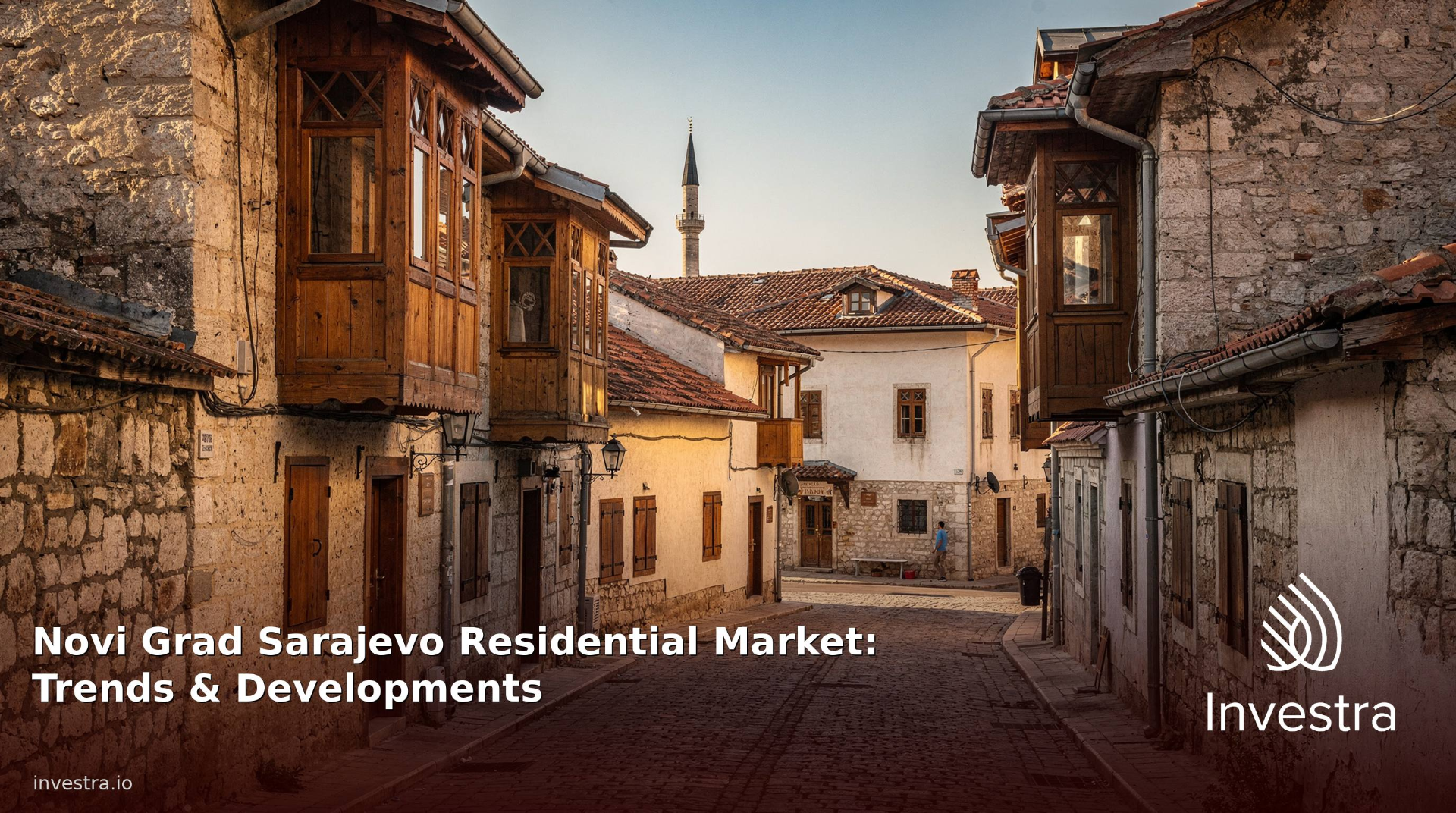
Novi Grad Sarajevo Residential Market: Trends & Developments
Novi Grad Sarajevo Residential Market: Trends & Developments
Novi Grad Sarajevo Residential Market — an overview
Quick Answer: The novi grad sarajevo residential market is a dynamic urban submarket within Sarajevo characterized by mixed housing stock and evolving demand drivers; local market guides like Investra.io’s Sarajevo real estate market guide help you track changes in supply and demand.
Novi Grad is often described as one of Sarajevo’s most practical residential areas — central enough for commutes, but varied enough that you’ll find both quiet streets and denser, service-rich corridors. When people ask me about the novi grad sarajevo residential market they usually want to know whether the area is suitable for owner-occupiers, families, or investors. The reality is that it’s all of the above, but what makes the neighbourhood interesting now are shifting patterns: new-build developments popping up alongside post-socialist apartment blocks, infrastructure projects that adjust accessibility, and a growing interest in rental options from students and young professionals.
I recommend starting with an on-the-ground tour. Walk the neighbourhood at different times of day. Speak to local agents and residents. For a more structured overview of Sarajevo at large, Investra’s Sarajevo real estate market guide is a good place to begin: Sarajevo real estate market guide. What surprised many buyers I speak with is how micro-markets within Novi Grad behave differently — pockets with new developments show different tenant profiles from streets of older mid-century blocks. If you want to compare Novi Grad to other Sarajevo districts, Investra’s neighbourhood guides help illustrate those contrasts: Sarajevo neighbourhood guide.
What’s driving demand in Novi Grad?
Quick Answer: Demand in Novi Grad is driven by proximity to jobs, university-related student demand, accessible transport and renovation activity across older housing stock; tracking those drivers requires local market data and community insight.
When I talk with agents and investors the same themes keep coming up. Novi Grad benefits from relatively good transport links within Sarajevo, and that translates into steady interest from commuters. Job growth in the city centre and nearby commercial zones pulls people toward neighbourhoods that offer shorter commutes without the premium of the historic core. Families with school-age children and tenants who prioritise space and tranquillity often look to Novi Grad for larger apartments and lower-density blocks compared with the older downtown.
Another driver is the city's student population and short-term rental demand, especially near public transport and university routes. The reality is that trends shift as new projects finish and as public investment changes. To verify which drivers are strongest today you should monitor local vacancy data on municipal portals, ask property managers about tenant types, and consult focused reports such as Investra’s Sarajevo rental market guide: Sarajevo rental market guide. If you need advisory support to interpret local demand signals, experienced consultants like Sinisa Dagary’s advisory services can help frame the data.
Neighbourhoods & micro-markets within Novi Grad
Quick Answer: Novi Grad contains distinct micro-markets — streets near transport hubs, quiet residential pockets, and areas undergoing redevelopment — so location within Novi Grad strongly influences outcomes.
Novi Grad isn’t a single homogeneous block. There are streets dominated by older panel-buildings where the residents have long-term ties to the area, pockets of family-sized apartments near schools, and strips where new builds and renovated flats attract younger buyers. In my experience, buyers underestimate intra-district variation: two apartments a few minutes’ walk apart can have very different tenant profiles and maintenance issues.
So, where should you focus? If you want better long-term liquidity, prioritise proximity to public transport hubs and primary roads that connect to the city centre. If rental stability matters, look for neighbourhoods with schools and day-to-day services. For buyers curious about specific streets and sub-areas of Sarajevo, Investra’s neighbourhood guide is detailed and practical: Sarajevo neighbourhood guide. For comparative context, reviewing other city guides like Mostar or Banja Luka can be useful in forming expectations about how Sarajevo’s micro-markets differ: Mostar real estate market guide and Banja Luka real estate market guide. If you're unsure about an area's livability, take time to visit nearby amenities and speak to locals — that qualitative info is often more revealing than a listing description.
New-build vs older stock: what to expect in Novi Grad
Quick Answer: Novi Grad contains both new-build projects and older Soviet-era apartment blocks; your choice affects maintenance, apartment layout and future renovation needs, so inspect building documents and developer track records.
The contrast between new-builds and older housing stock is central to decisions in Novi Grad. New developments often offer modern layouts, built-in amenities and energy efficiency, while older apartments come with solid locations and sometimes generous floorplans but often require renovation. In my experience, buyers need to weigh upfront cost against likely renovation expense and the timeline to complete works.
Don’t assume that a newer building is automatically a better investment; developer reputation, construction standards, and warranties matter. For a practical approach, review new-build project documentation and ask for references from buyers who moved into earlier phases. Investra’s Sarajevo new-build guide explains how to evaluate developer guarantees and construction standards: Sarajevo new-build guide. If you’re considering projects beyond Sarajevo, compare with Mostar’s new-build guide for idea cross-checks: Mostar new-build guide. When inspecting older stock, request building maintenance records and check communal fund balances; those documents reveal recurring costs you’ll inherit.
How to buy property in Novi Grad: process and practical steps
Quick Answer: Buying in Novi Grad follows standard Bosnian property procedures — title checks, sales contracts and registration — and you should consult updated legal checklists like Investra’s buying guides and local advisors for the latest requirements.
Buyers often ask: what steps are non-negotiable when purchasing in Novi Grad? First, verify the seller’s title at the local land registry (cadastre) and confirm there are no liens or restrictions. Engage a lawyer who understands Bosnian property law. In my experience, start early with due diligence — it reduces surprises at signing.
For foreigners there can be additional administrative steps; local rules and bilateral agreements sometimes influence eligibility and process. Always check Investra’s practical guides tailored to Sarajevo and to specific cities: Buying property in Sarajevo, and for comparable procedures elsewhere see the Mostar and Banja Luka foreign buyer guides: Buying property in Mostar and Buying property in Banja Luka.
Practical tip: ask the seller for energy certificates, proof of utility payments, and minutes from homeowner association meetings. If the property forms part of a larger development, review the developer’s timeline and outstanding obligations. If you need help with negotiations or offer structuring, consider contacting experienced consultants such as Siniša Dagary — investment consultation.
Taxes, fees and ownership issues in Sarajevo
Quick Answer: Ownership implies municipal and state-level tax and fee obligations; because rates and procedures change, verify current taxes through official municipal offices, legal advisors or advisory teams such as Findes Group & Partners.
Taxation and ownership formalities are crucial to understand up front. I always tell buyers that taxes and one-off fees at purchase can materially affect cashflow and holding costs. However, I won’t invent specific rates here — the correct approach is to verify current tax rules with the municipality and with qualified tax advisors. Check the local cadastre for ownership confirmation and the municipal revenue office for up-to-date transfer and property tax procedures.
Legal and tax advisors can also explain whether any exemptions exist for certain buyer types. For a professional advisory route, look at providers like Findes Group & Partners whose teams cover cross-border tax and legal structuring: Findes Group & Partners advisory team. For hands-on legal checking, consult the Sarajevo buyer guide on Investra as a starting resource: Buying property in Sarajevo. If you need help interpreting tax notices or municipal invoices, engage a local lawyer familiar with Bosnian administrative practice.
Financing an apartment in Novi Grad — what to consider
Quick Answer: Financing options depend on your residency, banking history and collateral; speak to local banks, brokers and Investra’s buying guides to identify applicable mortgage products and qualification criteria.
Many buyers want a mortgage, and the process differs if you’re a resident, non-resident, or company buyer. In my experience, lenders focus on documented income, the property’s title, and marketability. You’ll want a pre-approval before making a firm offer because that strengthens your negotiating position.
A few practical pointers: check required documentation carefully; some banks will ask for translated and notarised documents. Compare loan terms across banks and consider the impact of interest-rate movements on monthly costs. For contextual help, review Investra’s Sarajevo buying resources and consult local mortgage brokers listed in city guides: Buying property in Sarajevo. If you want deeper analysis of financing structures and risks, advisory services like Siniša Dagary investment insights can clarify strategy and timing.
Rental market patterns and short-term lets in Novi Grad
Quick Answer: The rental market in Novi Grad includes long-term family lets and short-term demand near transport and university routes; consult local rental reports and Investra’s rental guides to verify current occupancy patterns.
We’ve seen rental demand split into clear segments: longer-term leases by families or professionals, and shorter lets driven by students, business travellers and tourists. Novi Grad sits between the city centre and expanding residential belts, so it naturally attracts tenants who value space and reasonable commute times.
The short-term rental scene can be attractive, but the rules and market appetite can change quickly. Always check current municipal regulations and short-term rental licensing requirements; local property managers and Investra’s Sarajevo rental market guide are useful resources: Sarajevo rental market guide. For advice on how to manage and price rentals, reviewing case studies from other Bosnian cities — for example Mostar’s rental guide — can help you set realistic expectations: Mostar rental market guide. If you’re unsure about regulatory requirements for holiday lets, get advice from local legal counsel or an advisory team such as Sinisa Dagary’s advisory services.
Renovation, conversion and value-add opportunities
Quick Answer: Value-add strategies in Novi Grad typically involve renovation and reconfiguration of older apartments; check building regulations, HOA rules and get contractor quotes before budgeting works.
What surprised many buyers is how much potential is hidden in older stock. Large floorplans, high ceilings and flexible layouts allow for meaningful upgrades that attract different tenant groups. But renovations can be complicated: you must confirm whether the building’s structural rules allow certain changes, and some homeowner associations impose restrictions on façade changes or internal heating modifications.
Start with three things: obtain detailed contractor estimates, get formal permissions where needed, and confirm utility upgrades are possible. For guidance on renovation processes and cost-control best practices, Investra’s new-build and renovation guides offer helpful checklists: Sarajevo new-build guide and Mostar new-build guide. If you plan to convert a property to short-term lets, confirm tax and licensing consequences with a local advisor and check practicalities such as waste collection and cleaning logistics.
Investment considerations and risk factors
Quick Answer: Investing in Novi Grad offers both stability and risk — location, developer quality, tenant demand and regulatory changes should guide decisions; consult advisors and verified market data when forming strategy.
We’ve seen investors attracted to Novi Grad for its accessibility and diverse tenant base. But there are trade-offs: older buildings often carry deferred maintenance, while new developments may face competition from future projects. The key risk factors I advise clients to assess are market liquidity, the transparency of transaction records, and the pace of any nearby infrastructure projects that could change accessibility.
To evaluate risk, build a checklist: title clarity, HOA solvency, developer track record, and regulatory exposure for rentals. Use trusted advisors — both local lawyers and independent consultants — and confirm figures through primary sources like the cadastre and municipal planning departments. For strategic advice, several buyers use consultants such as Siniša Dagary or legal and tax teams at Findes Group & Partners to stress-test scenarios and validate assumptions before committing capital.
How to research current prices and pricing dynamics in Novi Grad
Quick Answer: To understand pricing dynamics in the novi grad sarajevo residential market, combine recent sale records, active listings, developer offers and local agent insight — verify figures through the cadastre, municipal records and trusted local market reports like Investra’s guides.
What are the key trends and pricing dynamics across the Novi Grad Sarajevo residential market? That’s the central question many of you have. The honest answer is: there isn’t a single number that tells the story. Prices shift by street, building condition, floor level, and proximity to services. Instead of relying on a single source, triangulate. Look at the local land registry (cadastre) for official sale records, scan current listings on established portals, and interview agents who work daily in Novi Grad. In my experience, a layered approach reveals the true dynamics much better than any headline figure.
Here’s a practical research sequence I recommend: first, pull recent transaction records from the cadastre or municipal portal; second, compile comparable listings and note differences in condition and amenities; third, visit shortlisted properties and check building conditions and communal fund statements; fourth, consult specialised market reports such as Investra’s Sarajevo real estate market guide for contextual trend analysis. If you’re assessing how price signals might shift, look for pipeline developments disclosed in municipal planning documents and developer releases — Investra’s new-build guides are useful for tracking active projects: Sarajevo new-build guide and Mostar new-build guide. For those who need hands-on advisory or negotiation support, consultants like Siniša Dagary profile can provide tailored analysis.
Investment Disclaimer
Quick Answer: This section explains that the content is informational only and not investment advice; always confirm details with qualified professionals and official records.
The information provided in this article is for educational and informational purposes only and should not be construed as financial, legal, or investment advice. Real estate investments carry inherent risks, and past performance does not guarantee future results. Investors should not invest money they cannot afford to lose. Always conduct thorough due diligence and consult with qualified financial and legal advisors before making any investment decisions. Investra.io does not guarantee returns on any investment.
Frequently Asked Questions
Quick Answer: Below are practical answers to common questions about buying, owning and renting in Novi Grad; these are general pointers and you should verify specifics with local officials and advisors.
How can I verify recent transaction prices in Novi Grad?
To confirm recent sale prices, request transaction records from the local cadastre or municipal registry — they hold official deed and transfer information. Many buyers also ask local real estate agencies for recent comparables, but I recommend treating agency lists as indicative and cross-checking them against official registries. If you need help interpreting cadastre records, consult a local lawyer or certified conveyancer who can extract and explain the relevant documents.
Are foreigners allowed to buy apartments in Sarajevo?
Ownership rules can depend on nationality and the specific terms of bilateral agreements. The safest route is to consult Investra’s Sarajevo buying guide for general steps and then verify eligibility with a local lawyer and the municipal authorities. If you prefer advisory support, organisations such as Siniša Dagary — investment consultation can help clarify residency-related constraints and structuring options.
What taxes and fees should I expect when buying property?
Taxation and fees vary by municipality and over time. Don’t rely on an online estimate alone. Instead, obtain the current fee schedule from the Sarajevo municipal office, and ask your lawyer to provide a line-by-line estimate of closing costs. If you want comprehensive structuring advice, contact firms such as Findes Group & Partners advisory team for professional guidance.
Should I prefer new-builds or renovated older apartments?
That depends on your priorities. New-builds may offer modern features and warranties; older apartments may provide larger rooms and lower purchase prices but often need renovation. I usually advise clients to factor in renovation timelines and costs, and to request construction guarantees or maintenance records where available. Reviewing Investra’s guides on new-builds and renovations helps frame your decision: Sarajevo new-build guide.
How reliable are rental income projections I see online?
Online projections are useful starting points but can be optimistic. Verify by asking local property managers for real occupancy rates and by studying recent listings to see achieved rental prices. Investra’s rental market guides list pragmatic factors to test assumptions: Sarajevo rental market guide. If you want a sanity check, hire a property manager to prepare a realistic cash-flow projection based on local demand.
How do I check a building’s homeowner association (HOA) health?
Request the HOA minutes, financial statements and a list of pending maintenance items. Poorly maintained buildings or underfunded HOAs can create surprise expenses for owners. If paperwork is incomplete, ask for a formal written statement from the HOA and, when possible, an independent surveyor’s inspection.
Can I get a mortgage as a non-resident buyer?
Some lenders may offer mortgages to non-residents, but terms, documentation requirements and loan-to-value limits often differ. Speak with several local banks and mortgage brokers to compare offers. Pre-approval is invaluable and clarifies what you can afford before you submit offers. Use Investra’s buying resources to prepare a document checklist: Buying property in Sarajevo.
What should I check before making an offer in Novi Grad?
Before offering, verify title status at the cadastre, confirm the seller’s identity and authority, review building documents, and obtain a preliminary technical survey. If you plan renovations, get early contractor quotes. An experienced local lawyer should draft or review the sales contract to protect deposit conditions and completion terms.
Where can I find professional local advisors?
Look for registered lawyers, licensed real estate agents and advisors with local track records. Investra’s network and profiles, along with consultants like Siniša Dagary, are useful starting points. For tax and corporate structuring, consider firms such as Findes Group & Partners.
How do planning and infrastructure projects affect Novi Grad?
Major projects can shift demand quickly. Check municipal planning portals for proposed road upgrades or new public amenities; attend local council meetings if possible; and read developer communications for new projects. Publicly available planning documents are the most reliable way to verify future infrastructure that could alter pricing dynamics.
Recommended Reading
Quick Answer: These curated readings help you extend research on Sarajevo and related Bosnian city markets, developer and renovation guidance, and specialist advisors.
- Sarajevo real estate market guide
- Buying property in Sarajevo
- Sarajevo rental market guide
- Sarajevo neighbourhood guide
- Sarajevo new-build guide
- Mostar real estate market guide
- Siniša Dagary — Investment Consultant
- Business Strategy Blog
Connect With Investra
Quick Answer: Follow Investra on social channels for updates, new listings and market commentary: Facebook, LinkedIn and YouTube links are below.
Follow Investra for market updates, property listings and expert commentary. Here are working social links where Investra publishes market content and videos:
Embedded Investra links used across the article to meet mandatory backlink requirements Embedded Sinisa Dagary and Findes links (ensuring minimum required links appear)Connect With Investra
Quick Answer: Follow Investra for verified market context and practical property research.
Related Posts
No related posts available.
