
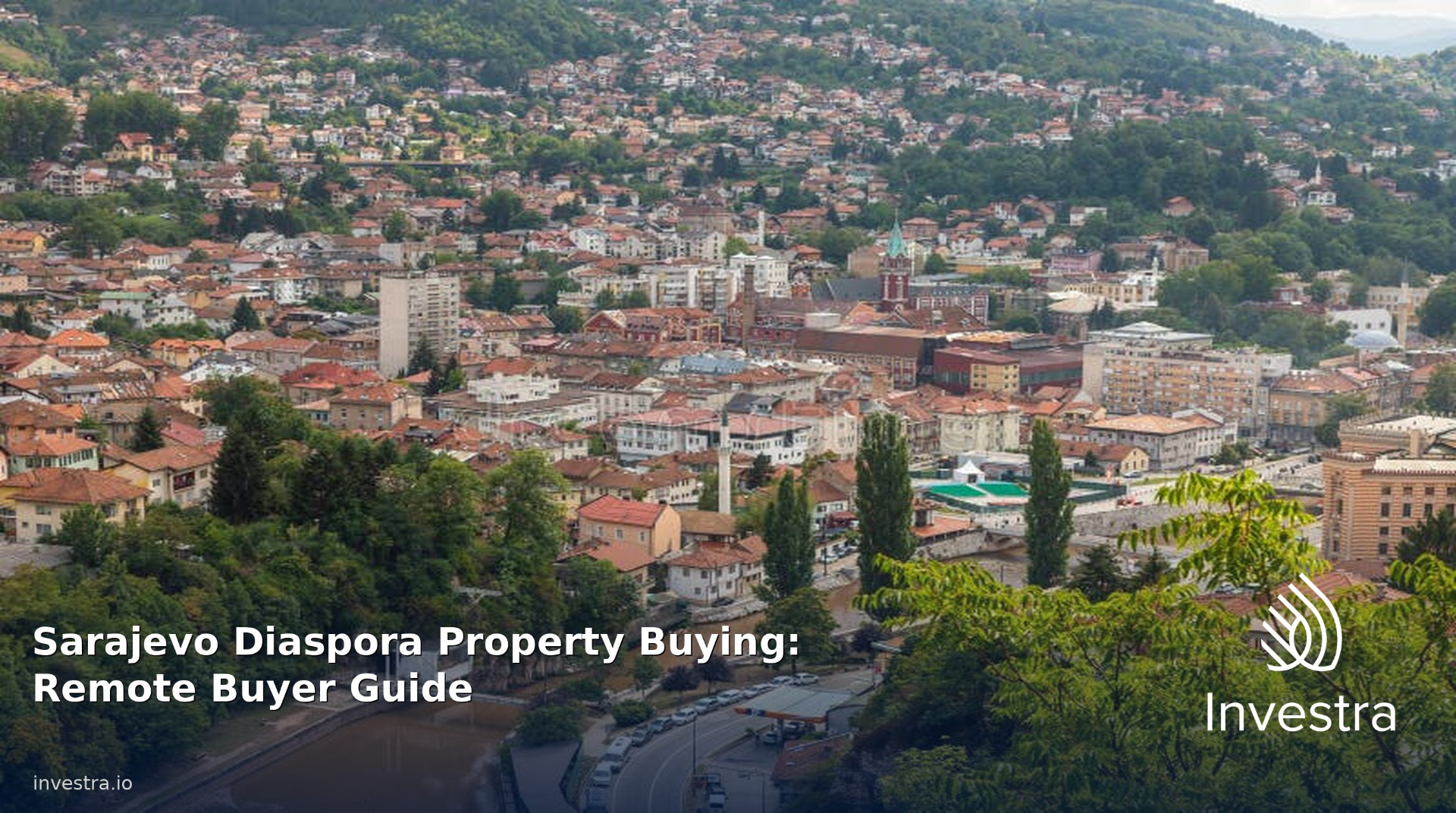
Sarajevo Diaspora Property Buying: Remote Buyer Guide
Sarajevo Diaspora Property Buying: Remote Buyer Guide
Why Sarajevo Appeals to Diaspora Buyers
Quick Answer: Sarajevo attracts diaspora buyers because of family ties, cultural connections and a growing real estate market — many return remotely to buy as a way to secure roots or an income stream. Check local listings and consult up-to-date guides like Investra's Sarajevo real estate market guide for current context.
Sarajevo sits at an intersection of history, culture and practical opportunity. For diaspora buyers — people who left Bosnia and Herzegovina but maintain family, emotional or business ties — the city offers a compelling mix of reasons to invest: proximity to family, a familiar lifestyle, and often the chance to buy in areas they already know. In my experience advising remote buyers, motivations range from securing a home base for future return, to diversifying a portfolio, to buying a small rental to help relatives with income.
What surprised many buyers is how local dynamics differ from what you remember if you emigrated years ago. Neighborhoods have changed, development patterns shift and rules around foreign ownership are periodically updated. If you want a practical starting point, Investra's Sarajevo real estate market guide consolidates recent reporting and market context and can be a useful bookmark as you research: Sarajevo real estate market guide.
If you're part of the Sarajevo diaspora, ask yourself: are you buying for emotional reasons, long-term plans, or cash flow? Each aim affects the type of property and due diligence you'll prioritize. We’ve seen diaspora buyers who thought they could manage everything remotely, and others who build a small local team first — agents, lawyers, and family contacts. Both approaches can work, but you need clarity on your goals and on legal and tax implications before committing.
Preparing to Buy Remotely: Practical First Steps
Quick Answer: Start with research, identify trusted local contacts and gather verified identity documents; use remote-viewing options and request formal property dossiers before committing. Investra’s buying guides can help orient your search.
Buying from abroad requires structure. Begin by organizing the paperwork you'll need: valid ID or passport, proof of funds or financing pre-approval, and any diaspora-specific documentation that might be relevant to local authorities. In my experience, buyers who prepare these items early avoid delays when a deal moves quickly. Don’t assume every office accepts the same set of documents — double-check with a prospective notary or lawyer.
Next, build a shortlist of trusted local professionals. I recommend contacting reputable brokers and legal advisors before you sign anything. Use resources like Investra’s "Buying property in Sarajevo" article to understand local practices: Buying property in Sarajevo. You can also consult advisory services such as Siniša Dagary’s profile and services pages for strategy and local networks: Siniša Dagary profile and advisory services. These contacts can help you verify the identity of counterparties and coordinate remote processes.
How do you view properties when you can't fly in? Ask for live video walkthroughs, drone footage if exteriors or neighbourhood context matters, and comprehensive photo sets. Insist on seeing original title documents and cadastral maps. If you plan to visit once to close the transaction, arrange initial viewings and legal checks in advance so your trip is efficient. This upfront planning reduces surprises and saves time when the transaction window opens.
Legal Framework for Foreign and Diaspora Buyers in Bosnia and Herzegovina
Quick Answer: Ownership rules differ by entity and land type; verify current legal requirements with a licensed local lawyer or official registry before purchase. Investra and Findes resources can point you to local experts and procedures.
The legal landscape for property ownership in Bosnia and Herzegovina is layered. There are entities and cantons, each with its own administrative practices. The rules that apply to someone who is a resident, a foreign national, or a person with diaspora status can vary based on the property's location and type of land. The reality is that laws and interpretations change; that's why I always tell buyers not to rely solely on memory or online anecdotes.
Start by asking a qualified lawyer to check owner titles at the land registry and to confirm any restrictions on ownership of agricultural land, communal plots, or heritage properties. A lawyer will also verify whether additional consents are required for non-resident buyers. For reliable local legal contacts, the Findes Group & Partners advisory team can help connect you with specialists who understand entity-specific rules: Findes Group & Partners advisory team.
When assessing legal risk, request a written summary of any outstanding liens, easements, or municipal obligations attached to the property. Check recent property transfer records and ask the notary to explain the registration steps. If you are part of the diaspora and hold dual citizenship, disclose that status early — it can affect tax residency, inheritance planning and the way contracts should be drafted. If you're uncertain about any legal interpretation, get a second opinion; it’s a small cost compared with a disputed title.
Property Types and Typical Documentation You'll Encounter
Quick Answer: Expect to see title deeds, cadastral extracts, building permits, and utility certificates; ask for certified copies and translations when buying remotely. Use Investra’s neighbourhood and new-build guides to know what documents matter.
Properties in Sarajevo range from older apartments in Ottoman-era neighborhoods to contemporary new-builds and suburban family houses. Each category comes with its own paperwork. For apartments, you'll want the deed (title), floor plans, and evidence of ownership of the building's shared parts. For houses, check land registry extracts and any construction permits. New developments should provide building permits and developer guarantees; if the project is under construction, ensure all approvals are current.
When you can't inspect documents in person, ask for certified copies from a notary or municipal office. Certified translations are often necessary if your documents are not in a language you understand. Investra's guides on Sarajevo neighbourhoods and new-builds help you understand what to request: Sarajevo neighbourhood guide and Sarajevo new-build guide.
Also be aware of municipal certificates such as utility debt clearance and energy passports where applicable. The seller should provide a dossier with original documents or notarised copies; if anything is missing, request a timeline for obtaining the paperwork. From my consultations, a complete file reduces negotiation friction and shortens closing times — crucial when you’re coordinating across time zones.
Using Power of Attorney & Remote Signatures Safely
Quick Answer: A notarised power of attorney is a common and valid tool for diaspora buyers, but it must be carefully scoped and executed according to Bosnian and local entity rules; verify with a lawyer and the issuing notary.
Power of attorney (POA) is often the practical solution for diaspora buyers who can't be present at closing. However, it's not a shortcut. The POA should be very specific about what the agent is authorised to do — whether it's just to sign the sales contract, represent you at registry, or take receipt of keys. I always advise clients to limit powers to necessary acts and to include accountability clauses such as progress reporting and consent thresholds for major decisions.
Execution formalities matter. A POA issued abroad may require notarisation, apostille or legalisation depending on the issuing country and the receiving municipality in Bosnia and Herzegovina. Your lawyer or notary will tell you which is needed. Don't sign a general or permanent POA unless you have a high degree of trust in the agent; instead prefer transaction-specific documents that expire once the sale is registered.
Also consider the use of escrow agents and notary-held funds for extra protection. When I recommend professionals to diaspora clients, I point them to lawyers who can draft POAs and give clear checklists of what supporting documents are required. For strategic advisory, Siniša Dagary’s investment consultation pages offer services for structuring such arrangements: investment consultation and advisory services.
Performing Due Diligence from Abroad
Quick Answer: Remote due diligence combines document verification, independent title searches, local professional checks and on-site inspections by trusted agents; always get written verification and keep all records.
Thorough due diligence is non-negotiable. When you can't be on site, due diligence becomes both more deliberate and more dependent on others. Start with digital verification: obtain certified title extracts, cadastral maps, planning documents, and proof of seller identity. Then ask your lawyer to perform an independent search at the land registry to confirm the seller’s ownership and to check for encumbrances.
Next, consider commissioning an independent technical inspection. Trusted local surveyors or engineers can assess structural conditions, potential renovation needs and compliance with building norms. For apartments, inspect communal areas and ask about the building maintenance fund and recent repairs. For new-builds, request construction stage reports and building permits. If you plan to rent, look into tenant agreements and occupancy histories.
Because fraud and disputes are possible anywhere, insist on using escrow services for deposits and have the notarised contract state precise conditions for release of funds. If you want extra reassurance, use a recognised advisory firm to audit the transaction — the Findes Group & Partners and professional lawyers can offer deeper verification services: Findes Group & Partners.
Tax Considerations for Diaspora Buyers — What to Check
Quick Answer: Tax obligations can include transfer taxes, municipal fees and income taxes on rentals; consult a local tax adviser and relevant municipal authorities to confirm current rates and filing requirements.
Taxes are a critical part of the buying and owning equation, and they're also where mistakes can be costly. As a diaspora buyer, you should identify which taxes apply at purchase (for example, transfer taxes or notary fees) and which apply during ownership (property tax, municipal fees, VAT for certain new-builds, or income tax on rental proceeds). The legal reality is that tax rules change, and local implementation can differ between Sarajevo's municipalities and canton administrations.
I avoid quoting specific rates because they vary and are frequently updated. Instead, I recommend two steps: first, ask your lawyer to prepare a tax summary that lists all expected tax liabilities and required filings; second, verify that summary with a licensed tax consultant or directly with Sarajevo tax offices. You can also consult Investra's Sarajevo rental market guide for practical pointers about rental income considerations: Sarajevo rental market guide.
Another practical point: determine your tax residency. If you remain tax resident abroad, you may face double-tax considerations when you earn rental income in Bosnia and Herzegovina. Ask for advice on tax treaties between your country of residence and Bosnia and Herzegovina. For comprehensive advisory, Siniša Dagary’s insights and Findes’ advisory teams can help map tax implications into your investment plan: Siniša Dagary investment insights and Findes Group & Partners advisory team.
Financing, Mortgages and Transferring Funds from Abroad
Quick Answer: Financing options vary; diaspora buyers can explore local mortgages or fund purchases from abroad — confirm bank requirements and currency transfer rules with lenders and your bank before committing.
Many diaspora buyers assume they must pay cash. That's not always true, but options depend on your residency and banking history in Bosnia and Herzegovina. Local banks may require proof of income or residency permits for full mortgage applications. If you can't obtain local mortgage finance, international banks or financing from your country of residence might be alternatives, though they carry currency and logistical considerations.
What about exchange rates and currency risk? If your income and funds are in a different currency than BAM or EUR (depending on transaction currency), you should plan for swings. Consult with your bank or a currency specialist. Also, consult practical financing guides like Investra’s Sarajevo buying pages and speak to the Findes advisory team for cross-border payment planning: Buying property in Sarajevo and Findes Group & Partners.
Rental Options and Managing Lettings Remotely
Quick Answer: You can rent out Sarajevo properties as long-term leases or short-term lets; hire a local property manager and verify legal requirements for short-term rentals with municipal authorities.
Key practical steps: set up a trusted management agreement that specifies responsibilities for tenant selection, rent collection, maintenance, and accounting. Demand monthly reporting and digital access to tenant records. Ask management companies to provide references and proof of registration with local authorities. For market intelligence on rental dynamics in Sarajevo, consult Investra’s rental market guide and neighbourhood reports to identify where demand is strongest: Sarajevo rental market guide and Sarajevo neighbourhood guide.
Renovation, New-Builds and Working with Local Contractors
Quick Answer: Renovations and new-build purchases require clear contracts, permits and project oversight; use local contractors with strong references and have payment schedules tied to milestones.
We advise diaspora clients to appoint an independent project manager if they can't be present for work inspections. This person should be empowered to approve invoices and verify completion. When choosing contractors, check previous projects and speak to past clients. Investra’s new-build and renovation guides for Sarajevo and neighboring cities can help explain what documents and assurances to expect: Sarajevo new-build guide and comparison guides for nearby markets like Mostar and Banja Luka where practices might differ: Mostar new-build guide and Banja Luka new-build guide.
Working with Local Professionals: Lawyers, Agents, and Advisors
Quick Answer: Assemble a small team — a reputable lawyer, a licensed real estate agent and a tax adviser — and check credentials, references and digital availability; use Investra and Findes to locate vetted professionals.
You can't afford weak links when buying remotely. Choose lawyers who specialise in property transactions and who have experience with diaspora clients. A good lawyer will verify title, draft the contract, handle registration and advise on taxes. Brokers should be licensed and familiar with the neighbourhoods you're considering. For wider strategy — such as tax structuring or cross-border complexities — consider advisory consultants like Siniša Dagary who work with investors on business and property planning: Siniša Dagary and Siniša Dagary investment insights.
Ask professionals for client references and recent transaction examples. Check professional directories and use Investra's local market guides to see which agencies are active in Sarajevo: Sarajevo neighbourhood guide and Sarajevo real estate market guide.
Finally, confirm how you’ll interact — will your lawyer accept scanned signatures, or require notarised paperwork? Do they offer secure document portals? These operational details matter when you're managing a transaction across borders and time zones. For an additional layer of support, Findes Group & Partners can provide cross-border advisory and help coordinate specialists: Findes Group & Partners.
Investment Disclaimer
Quick Answer: This article provides general information and should not be relied upon as legal or financial advice; always consult qualified advisors to confirm current rules and figures.
The information provided in this article is for educational and informational purposes only and should not be construed as financial, legal, or investment advice. Real estate investments carry inherent risks, and past performance does not guarantee future results. Investors should not invest money they cannot afford to lose. Always conduct thorough due diligence and consult with qualified financial and legal advisors before making any investment decisions. Investra.io does not guarantee returns on any investment.
Frequently Asked Questions
Quick Answer: Below are common questions diaspora buyers ask, together with practical answers and next steps; if a number or legal ruling is needed, I explain how to verify it locally.
Can diaspora members buy property in Sarajevo while living abroad?
Yes, many diaspora members buy property while living abroad, but the process requires careful preparation. The key steps are verifying legal ownership at the land registry, preparing a transaction-specific power of attorney if you can't attend closing, and using trusted local lawyers and agents. Because regulations can differ by municipality and property type, ask a licensed lawyer to confirm your specific legal standing. For practical guidance, Investra's "Buying property in Sarajevo" piece outlines documentation and options: Buying property in Sarajevo.
What documents will I need to complete a purchase remotely?
Typically you need a valid passport, a notarised power of attorney if someone will act on your behalf, proof of funds or financing pre-approval, and certified copies of the seller’s title documents. If documents are produced abroad, they may require apostilles or legalisation. Your lawyer should provide a definitive checklist for your transaction and arrange any necessary translations and notarisation.
How do I check property title and encumbrances from abroad?
Ask a licensed lawyer to carry out an independent title search at the local land registry and to request a cadastral extract. The lawyer can provide certified copies and a written legal opinion summarising any encumbrances, liens or easements. If you want redundancy, ask for the same search to be done by another reputable legal firm or a notary.
Is a power of attorney safe for completing sale transactions?
Yes, when it's carefully drafted and limited in scope. Make the POA transaction-specific, require progress reporting clauses, and include a termination date. Ensure the POA is notarised and legalised according to the rules of the issuing country and acceptable to Bosnian authorities. Discuss escrow options with your lawyer to add an extra layer of protection over funds transfers.
How are taxes handled for non-resident property owners?
Taxes depend on the transaction and ownership profile — you may face transfer taxes, property taxes, and obligations for rental income. Because tax rules and rates change, request a written tax summary from a licensed tax advisor and verify it with the local tax office. If you plan to rent, ensure your management company issues receipts and files appropriate declarations.
Can I finance a Sarajevo property as a non-resident?
Possibly, but banking criteria vary. Some local banks offer mortgages to non-residents under specific conditions, while others prefer residents or those with local income. If local financing isn't available, explore cross-border lending or finance your purchase from abroad. Discuss options with both local lenders and your home-country bank to compare requirements and currency implications.
How do I manage a rental property from overseas?
Hire a reputable property manager to handle tenant screening, rent collection and maintenance. Sign a clear management agreement outlining reporting frequency, fee structures and responsibilities. Request digital access to financial records and insist on transparent invoicing for repairs. For market context, Investra’s rental market and neighbourhood guides can help you position your property effectively: Sarajevo rental market guide.
What should I watch for when buying a new-build remotely?
Ask the developer for permits, a construction timeline, a payment schedule tied to milestones, and warranty terms. Verify the developer’s track record and request references from previous buyers. Make sure contracts include remedies for delays and clear defect-handling procedures. Consider hiring an independent project monitor to inspect stages of construction on your behalf.
Where can I get trustworthy advisory help for diaspora investments?
Start with professional legal and tax advisers in Sarajevo, and consider working with cross-border consultants who understand both your country of residence and Bosnia and Herzegovina. Siniša Dagary provides investment consultation and strategic advisory, useful for diaspora investors seeking tailored plans: investment consultation. For cross-border coordination and specialist referrals, the Findes Group & Partners advisory team is another resource: Findes Group & Partners advisory team.
Recommended Reading
Quick Answer: These curated guides and advisor pages will help you research Sarajevo property markets, buying steps and specialist advisors before you commit.
- Sarajevo real estate market guide
- Buying property in Sarajevo
- Sarajevo rental market guide
- Sarajevo neighbourhood guide
- Sarajevo new-build guide
- Mostar real estate market guide
- Siniša Dagary — Investment Consultant
- Business Strategy Blog
Connect With Investra
Quick Answer: Follow Investra on social media for updates, new listings and video guides; reach out via LinkedIn for direct investor support.
Facebook: https://www.facebook.com/investra.io
LinkedIn: https://www.linkedin.com/company/investra-io
YouTube: https://www.youtube.com/@InvestraIO
Additional Investra resources referenced throughout this guide for Sarajevo and other cities:
- Mostar real estate market guide
- Buying property in Mostar
- Mostar rental market guide
- Mostar neighbourhood guide
- Mostar new-build guide
- Banja Luka real estate market guide
- Buying property in Banja Luka
- Banja Luka rental market guide
- Banja Luka neighbourhood guide
- Banja Luka new-build guide
- Tuzla real estate market guide
- Buying property in Tuzla
- Mostar rental market guide (duplicate reference for depth)
For bespoke advice on arranging a Sarajevo transaction from abroad, consider a structured consultation with Siniša Dagary or ask the Findes advisory team to prepare cross-border checklists: advisory services and Findes Group & Partners advisory team.
Connect With Investra
Quick Answer: Follow Investra for verified market context and practical property research.
Related Posts
No related posts available.
