
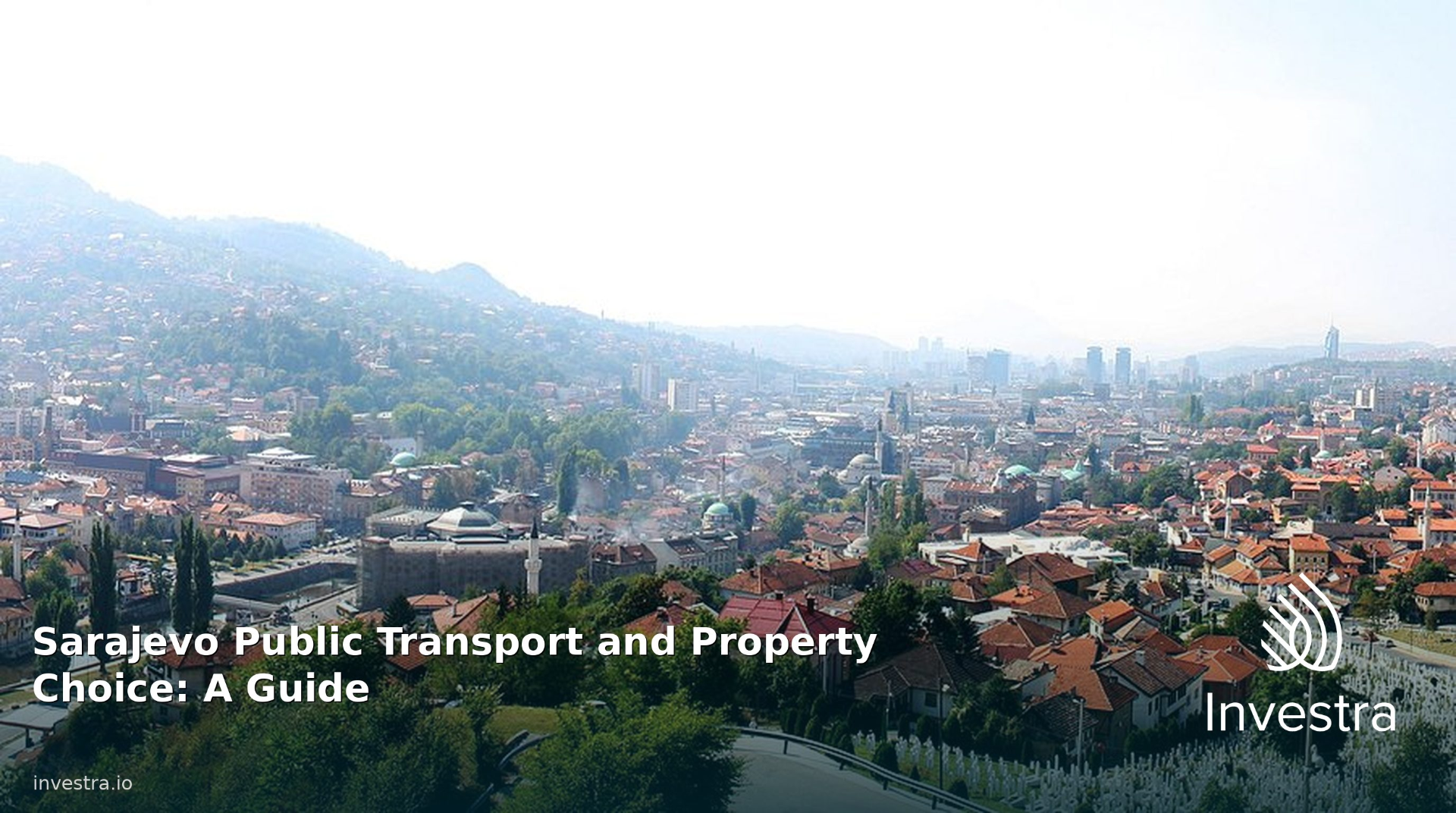
Sarajevo Public Transport and Property Choice: A Guide
Sarajevo Public Transport and Property Choice: A Guide
How Sarajevo public transport shapes property choice: answering the core question
Quick Answer: Public transport accessibility is a key factor in sarajevo public transport property choice — proximity to tram and bus corridors, frequency of services, and first/last-mile options often determine neighbourhood appeal and practical daily living for buyers and renters.
Sarajevo is a compact, layered city where the transport network and the urban fabric are tightly woven. When you ask, "How does public transport accessibility influence property selection across Sarajevo's main municipalities?" the practical answer is: it changes everything. Commuting time, noise levels, pedestrian friendliness, and even renovation potential can hinge on whether your prospective flat sits on a tram artery or down a quiet lane serviced only by infrequent buses. In my experience working with relocation clients, properties within easy walking distance of tram stops in Centar and Stari Grad often attract professionals and students who prize time savings and lifestyle convenience. But there are trade-offs. A property that offers a five-minute walk to the tram can also face higher foot traffic and intermittent evening noise.
We don't need to guess how strong the link is between transit and value — you can verify current local data through timetables and route maps from city transport operators, municipal planning documents, and live journey planners like Google Maps or Moovit. For neighbourhood-level context and investment perspective, our Sarajevo-focused guides are useful starting points: Sarajevo real estate market guide, Sarajevo neighbourhood guide, and the practical Buying property in Sarajevo article. If you plan to rent out, review the Sarajevo rental market guide to understand tenant expectations near transport hubs.
But what does this mean for buyers? Start with commute time expectations and daily life preferences. Then check the practicalities: how frequent are services at the times you or your tenants will travel? Are there late-night options? Do local regulations permit short-term lets near transport nodes? The answers are found by combining on-the-ground visits with documentation and professional advice. For strategic support and local contacts, you can consult advisory services such as advisory services and the Findes Group & Partners team for legal and tax clarity.
Sarajevo’s public transport network: what it is and how to check it
Quick Answer: Sarajevo’s network relies on trams and buses as its backbone; confirm routes, frequencies and service maps via the city operator, municipal transport plans and live journey tools before making a property decision.
Understanding the mechanics of the network is essential. The city core is served by tram lines running along key corridors and a dense bus network that spreads into residential pockets and suburbs. There’s also regional bus connectivity to towns that feed the city labour market. For anyone deciding where to live or buy, these are not academic distinctions — they determine peak-hour comfort, access to schools and workplaces, and evening mobility.
I always recommend three verification steps. First, consult the operator’s official schedules and route maps to confirm stop locations and service frequency for the times you’ll use them. Second, test journeys on a weekday morning and evening to get a realistic sense of congestion and wait times; theoretical frequencies often differ from experienced reality. Third, cross-check with live apps (Google Maps, Moovit) and local community forums for recent changes — strikes, temporary reroutes, or construction can alter patterns for months.
For deeper neighbourhood-level research, combine transport checks with property guides that profile accessibility and typical buyer priorities. Our Sarajevo neighbourhood guide and the Sarajevo new-build guide (both linked throughout our content) show how developers and renovators think about transit access. If you need tailored help, reach out to consultants such as investment consultation or the Findes Group & Partners advisory team who can pull permits, plans and transport assessments for you.
Municipality-by-municipality: practical transport and property considerations across Sarajevo
Quick Answer: Different municipalities — Centar, Stari Grad, Novo Sarajevo, Novi Grad and surrounding towns — offer distinct transit profiles; evaluate stop proximity, service frequency and pedestrian networks for each area when choosing property.
When buyers ask me where to start, I always tell them to combine maps with lived experience. Sarajevo’s central municipalities — Centar, Stari Grad and Novo Sarajevo — typically offer the highest density of tram and bus services. That means short walks to stops and more flexible travel windows. Walkable areas in these municipalities are attractive to professionals, students and renters who don’t drive. Our Sarajevo neighbourhood guide dissects many of these pockets, and the market guide gives a market-wide context.
Novi Grad and newer residential belts can be quieter and more car-oriented. That often means longer bus commutes to central offices but more parking and larger apartment floor plans. If you’re weighing these options, ask yourself: Do I want short walking access to cultural amenities, or a bigger living space with private parking? The answer will steer you toward different municipalities.
Outside the immediate city, Ilidža, Vogošća, Hadžići and Ilijaš function as commuter towns. They’re linked to the city by bus corridors and regional services. For buyers who prioritize green space and slightly lower density, these towns make sense — but service frequency and evening options may be more limited. To explore buying outside central Sarajevo, check regional guides like Tuzla real estate market guide for comparative perspectives and the corresponding how-to-buy articles for other Bosnian cities which illustrate different municipal approaches, like Banja Luka market guide and Mostar market guide. What surprised many buyers is how quickly commuting patterns alter perceived value — a 10–15 minute extra journey might change daily life more than a small price difference.
Buyer profiles and how transport changes what they choose
Quick Answer: Different buyer types prioritize transit differently — professionals and students prize tram access; families weigh school routes and car parking; retirees often value nearby medical transport links.
Who you are shapes what you’ll accept. I’ve guided single professionals who would take a small apartment next to a tram stop to shave commute time. I’ve also advised families who prioritize schools and parking even if it means a longer bus ride to the city center. Students and short-term renters often choose places with fast, frequent links to university campuses and nightlife. Retirees frequently look for properties with accessible bus routes, shorter walking distances to health services and lower-stairs or lift access.
When creating your shortlist, match buyer profile to transport features. For example, if your tenant base is young professionals, being near tram lines and afternoon cafés will matter more than a private parking bay. For long-term family rentals, safe walking routes to schools and the availability of day-time buses can be decisive. If you’re an investor considering short-term lets, study local rules on tourist rentals and check how saturated areas near transport hubs are with competing listings. Our Sarajevo rental market guide and the city buying guide Buying property in Sarajevo outline tenant expectations and regulatory touchpoints without assuming specific financials.
What practical checks should you do? Walk the route during peak commute times. Note the presence of lifts or ramps at key stops for accessibility. Ask neighbours about evening services and any seasonal service reductions. For professional validation, request a transport impact note from municipal planning or a local consultant such as Siniša Dagary profile who can help interpret planning documents and travel projections.
The buying process and transport-related due diligence
Quick Answer: When buying property, verify access rights, municipal access plans, and any transport-related restrictions or planned works via cadastre searches, municipal planning offices and professional advisors.
The purchase process in Sarajevo follows standard legal steps, but transport factors add extra layers. During due diligence, you should confirm: whether access to the property uses a municipal road or private drive, if planned transport works will alter street access, and whether noise or land-use designations limit changes you might want to make. In my experience, buyers who involve a local notary, an architect familiar with Sarajevo zoning, and a transport-aware solicitor avoid late surprises.
How can you verify these items? Start at the municipal cadastre and the urban planning department for public documents on right-of-way and planned projects. Ask the seller for a recent excerpt from the land registry and a utility billing history. For foreign buyers or investors, consult the Investra guides on legal steps: see Buying property in Sarajevo. If you’re considering a property in or near other Bosnian cities, the city-specific buying articles like Buying property in Banja Luka, Buying property in Mostar and Buying property in Tuzla illustrate municipal differences.
Taxes, transfer fees and ownership checks must be handled by licensed professionals. For legal and tax advice, consult local firms and advisory teams such as Findes Group & Partners or a consultant like Siniša Dagary. When a property’s access depends on a bus stop that may be moved by future municipal plans, ask for written confirmation of any scheduled works from the municipality. If a current timetable seems at odds with what residents tell you, use real-time apps and speak to local shop owners — they often know about recent or planned service changes before official publications.
Rentals and short-term lets: how transport access influences occupancy and tenant type
Quick Answer: Proximity to reliable public transport shapes the kind of tenants you attract and their expected occupancy patterns; check local short-term rental rules and tenant demand profiles before investing.
Transport accessibility has a direct influence on rental desirability. Walkable properties close to tram stops and bus corridors can command stronger interest from tenants who rely on public transport for commuting and leisure. What surprised many landlords is how tenants are often willing to trade square metres for commute time: a smaller apartment near a tram can outperform a larger one that requires multiple bus changes.
If you’re thinking about short-term lets, look at guest behaviours: tourists want easy access to the old town, museums and restaurants, and they often prefer to be near central tram or bus stops. But be careful: local regulations and condominium rules about short-term rentals can vary, and municipalities sometimes update planning policies. Verify current rules with municipal authorities and consult the Sarajevo rental market guide for tenant expectations and operational considerations.
Operational tips: ensure clear arrival instructions for guests using public transport, provide up-to-date journey times for peak hours, and consider partnerships with local car-sharing or taxi apps for late-night arrivals. For mid-to-long-term lets, include details in listings about nearest stops, typical journey times to major employment nodes, and the presence of lifts or stair-free access, which many tenants ask about first. If you want help assessing market demand for rentals in different Sarajevo neighbourhoods, our neighbourhood guides and market articles — like Sarajevo neighbourhood guide and Sarajevo market guide — will point you to local data sources and suggested contacts.
New builds, renovations and transport proximity: design choices that matter
Quick Answer: Developers and renovators factor transit into design: noise insulation, entrance placement, and mixed-use ground floors are common near busy routes; confirm local planning and building rules before investing.
Planning permission is the gating item. Check the municipality’s building regulations and any conservation area constraints before launching works. If you’re evaluating new projects, our Sarajevo new-build guide outlines typical developer considerations. Comparing Sarajevo to other Bosnian cities can be informative: explore Mostar new-build guide and Banja Luka new-build guide to see how design responses differ by local transport patterns.
Practically speaking, when considering a renovation near a transport corridor, budget for acoustic measures, upgrade communal areas for deliveries and consider adding storage for bicycles and strollers. Discuss plans with neighbours and the condominium board early — a change that increases short-term lets or reduces parking can meet resistance. For professional project oversight, you can consult advisory services and project managers such as Siniša Dagary advisory services or legal teams via Findes Group & Partners to ensure permits and compliance are correctly handled.
Parking, car ownership and first/last-mile options in Sarajevo
Quick Answer: Evaluate parking availability, municipal parking rules and first/last-mile solutions (bike lanes, shared scooters, taxis) because they affect daily convenience and tenant preferences even in well-served transit areas.
For regulatory clarity, consult municipal transport and parking policies and cross-check with the local condominium rules. If you plan to add a private parking bay or change a storage area into bike parking, confirm permissions with the municipality and the building management. For tailored help with parking and mobility planning consult firms like Siniša Dagary investment insights or reach out to transport advisors at Findes Group & Partners advisory team.
Future projects, planning policy and verifying transport information
Quick Answer: Planned transport projects can shift property desirability; always verify proposed works via municipal planning portals, operator announcements, and official environmental or traffic studies.
Local contractors, architects and resident forums are valuable sources of on-the-ground intelligence. Municipal websites sometimes publish master plans and public consultations; the city transport operator posts route changes. Cross-check these official sources with the developer or seller’s statements about how a project will influence access. If you need a formal assessment, commission a transport impact statement through local planning consultants. For assistance interpreting documents and next steps, use advisory channels like Siniša Dagary profile and the Findes Group & Partners team.
Practical checklist: how to evaluate a Sarajevo property with transport in mind
Quick Answer: Use a systematic checklist — confirm stop proximity, service frequency, accessibility, parking and planned works — and cross-verify with municipal records, transport operators and local advisors.
When you need background information or an organised pre-purchase pack, our guides can save time: Sarajevo real estate market guide, Buying property in Sarajevo, and the Sarajevo new-build guide outline what to request from sellers and agents. If you want legal clarity on ownership, taxes or transfer mechanics, speak with a local notary and consider consulting professional advisory services such as advisory services or the Findes Group & Partners advisory team.
Investment Disclaimer
Quick Answer: This section clarifies that the article is educational and not personalized legal, tax or investment advice; verify specifics with qualified professionals before acting.
The information provided in this article is for educational and informational purposes only and should not be construed as financial, legal, or investment advice. Real estate investments carry inherent risks, and past performance does not guarantee future results. Investors should not invest money they cannot afford to lose. Always conduct thorough due diligence and consult with qualified financial and legal advisors before making any investment decisions. Investra.io does not guarantee returns on any investment.
Frequently Asked Questions
Quick Answer: Common questions address transit influence on municipal choices, commuting verification, rental considerations, buying steps for foreigners and how to confirm future projects — detailed answers follow in the FAQ section.
How does public transport accessibility influence property selection across Sarajevo's main municipalities?
Accessible public transport influences where people choose to live because it affects commute times, daily convenience, and lifestyle. In central municipalities like Centar, Stari Grad and Novo Sarajevo, frequent tram and bus links typically make properties more attractive to commuters and renters. In outer municipalities and commuter towns, buyers may trade convenience for space, parking and quieter streets. To assess influence locally, walk candidate routes at peak times, review operator timetables, and consult municipal plans for proposed transport changes. For neighbourhood-level analysis, the Sarajevo neighbourhood guide and the Sarajevo market guide provide practical context without asserting specific price claims.
What transport checks should a buyer perform before submitting an offer?
Perform on-site tests during the expected travel times, check official timetables and live-route apps, obtain a copy of the property title deed to verify access rights, and consult municipal planning documents for upcoming projects. Speak to neighbours about evening reliability and seasonal service variations. If the property depends on a bus or tram stop for access, request confirmation of any scheduled relocations or major works from the municipality. If unsure, hire a local consultant or lawyer to obtain and explain formal documents.
Do transport links affect renovation permissions or building regulations?
Potentially. Properties adjacent to major transport corridors or in protected areas may be subject to specific planning rules, noise regulations, or conservation restrictions. Check municipal planning regulations and speak to an architect or urban planner to determine what works are permitted. The Sarajevo new-build guide outlines typical considerations for renovations in the city.
Can I rely on future transport projects when choosing a property?
Treat future projects as potential upside, not guaranteed facts. Verify project status through municipal planning portals, funding announcements, and official operator releases. Request written confirmation for any claims made by sellers or agents and review project timelines, budgets and environmental or traffic assessments. Professional advisors can help you interpret the likelihood and timing of planned works.
How should landlords present transport information in rental listings?
Be transparent: list the nearest stop, typical walking time, common journey times to major employment or university nodes, and the presence of lifts or stair-free access. Mention parking availability and first/last-mile options. If the property is near a busy route, describe noise mitigation measures you’ve put in place. The Sarajevo rental guide provides guidance on tenant expectations and listing details.
Are there differences for foreign buyers concerning transport-related ownership checks?
Foreign buyers should request official land registry excerpts and confirm access rights and municipal zoning rules. Consult local lawyers or notaries for a complete title audit and to check for easements, servitudes or planned public works. Our country and city buying guides, such as Buying property in Sarajevo, explain where to begin and which documents to request.
How do parking rules interact with transport accessibility in Sarajevo?
Parking availability and municipal rules can offset or accentuate the benefits of public transport. In central districts, limited parking may make a car unnecessary and favour tenants who use trams. In suburban areas, secure parking becomes more important. Confirm parking rights in the title deed and in condominium minutes. For parking and mobility planning, consult local transport policies and community boards.
Where can I find authoritative transport schedules and updates?
Official schedules and route maps come from the city transport operator and the municipality. Use operator websites, municipal transport portals, and live journey planners (Google Maps, Moovit) for up-to-date information. For changes or projects, the municipal planning office publishes public consultations and project documents. If you need help interpreting these sources, consult advisors such as Siniša Dagary advisory services or professional teams at Findes Group & Partners.
How do I verify the impact of transport on property value and rental demand?
Don’t rely on generic claims. Verify by reviewing recent rental listings and sales comps in the immediate area and by talking to local agents and property managers. Track occupancy and listing durations for similar properties near transport hubs. For structured market analysis, consult our Sarajevo market resources like the Sarajevo market guide and rental analyses such as the Sarajevo rental market guide, and consider hiring an independent valuer.
Recommended Reading
Quick Answer: These curated reads help you explore neighbourhoods, buying steps and rental dynamics in Sarajevo and beyond; use them as a starting point for verification and deeper research.
- Sarajevo real estate market guide
- Buying property in Sarajevo
- Sarajevo rental market guide
- Sarajevo neighbourhood guide
- Sarajevo new-build guide
- Mostar real estate market guide
- Siniša Dagary — Investment Consultant
- Business Strategy Blog
Connect With Investra
Quick Answer: Follow and contact Investra on social media for updates, webinars and city guides; use the platform channels to request bespoke help.
Stay in touch with Investra for regular updates, property listings and deep-dive guides. Follow Investra on Facebook, LinkedIn and YouTube to access webinars, market updates and neighbourhood analyses. If you need one-to-one help, their team can route you to local partners and market specialists.
Facebook — Investra.io
LinkedIn — Investra.io
YouTube — Investra.io
Connect With Investra
Quick Answer: Follow Investra for verified market context and practical property research.
Related Posts
No related posts available.
