
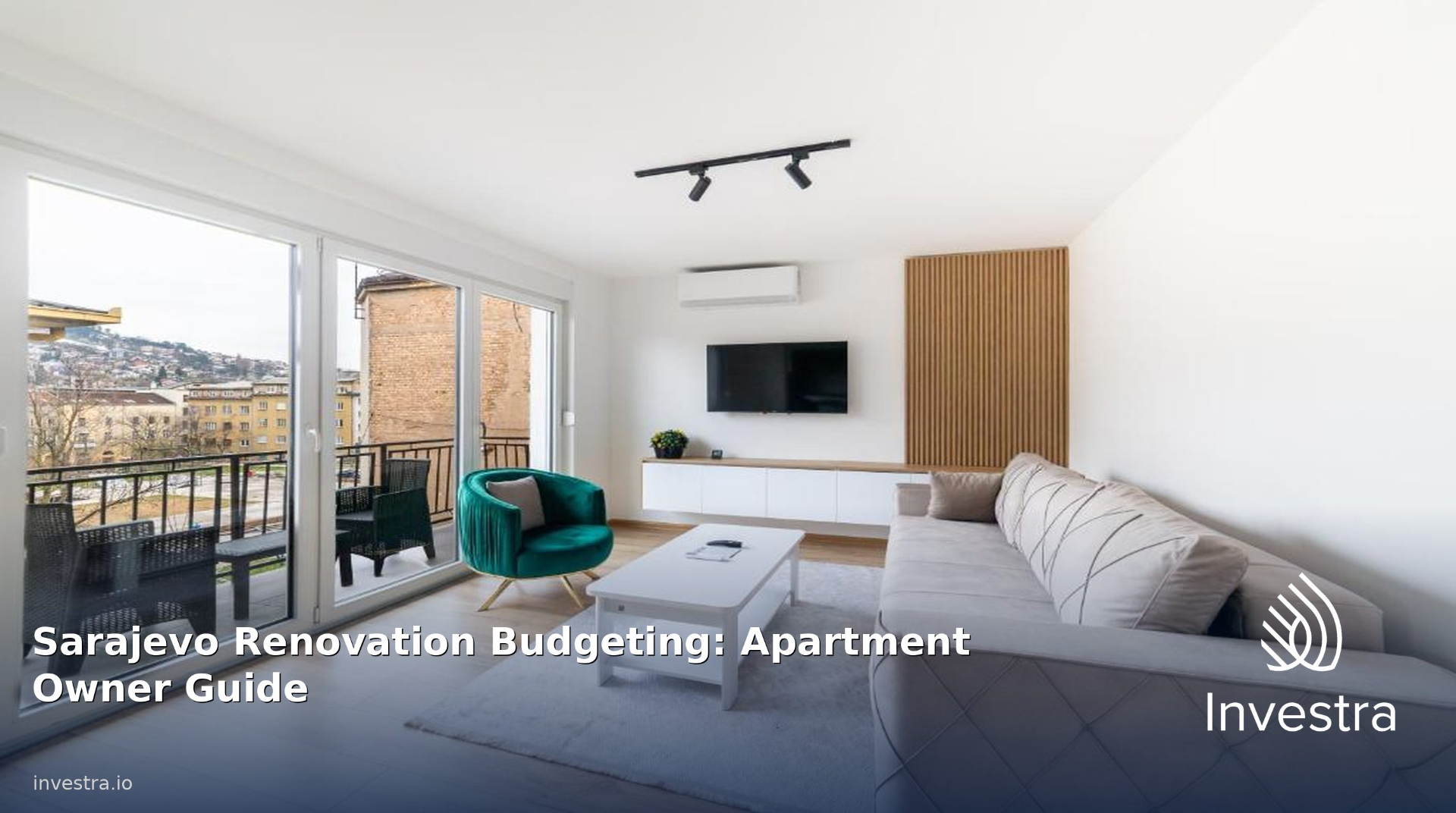
Sarajevo Renovation Budgeting: Apartment Owner Guide
Sarajevo Renovation Budgeting: Apartment Owner Guide
Understanding Sarajevo renovation budgeting: scope and mindset
Quick Answer: Sarajevo renovation budgeting starts with defining the renovation scope and realistic goals—cosmetic refresh, systems upgrade, or full reconfiguration—and then mapping those goals to verified local estimates and timelines. Use local market guides like Investra’s Sarajevo market guide to understand neighbourhood context before you commit.
When an apartment owner in Sarajevo asks, “How much will this cost?”, there’s no single figure I can hand over. The reality is that renovation budgeting is more about process than a number. Start by clarifying what you want: a fresh coat of paint and new floors, or structural changes and a new layout? Each choice shifts the entire budget. In my experience, owners who spend time sketching priorities and separating “must-haves” from “nice-to-haves” avoid scope creep and last-minute decisions that blow budgets.
Context matters here. The micro-location inside Sarajevo—whether you’re in a historic core, an up-and-coming neighbourhood, or a modern peripheral block—affects permit needs, contractor availability and material sourcing. For a quick orientation on the city’s districts, the Sarajevo neighbourhood guide from Investra is a useful map to local demand drivers.
Before you start collecting quotes, set a decision framework: what you will keep, what must be replaced, and how long you plan to hold the apartment. Are you renovating to rent short-term, list for sale after works, or live in long-term? We’ve seen buyers approach the same apartment with entirely different budgets depending on that answer. The rest of this article walks through practical steps to obtain reliable estimates and manage the project without getting blindsided.
How to get accurate cost estimates in Sarajevo
Quick Answer: Accurate cost estimates come from a mix of detailed contractor quotes, comparative market research, and verification with local authorities—always obtain at least three written estimates and confirm scope line-by-line. For market context, consult the Sarajevo new-build and renovation guide on Investra.
Getting trustworthy estimates is the hardest early step. I advise apartment owners to prepare a simple scope document before inviting contractors: list rooms, proposed changes, targeted finishes, and any brand or model preferences for fixtures. That document becomes the basis of every quote you receive and makes comparison meaningful.
How do you verify the numbers contractors give you? Don’t rely on a single figure. Ask for a detailed breakdown by labour, materials, and subcontracted work (electrics, plumbing, tiling). Cross-check line items with suppliers—call a tile shop or check product pages online. For a higher level of assurance, bring in an independent quantity surveyor or a project manager for a one-off assessment. If you need professional advisory, consider contacting local consultants such as Siniša Dagary’s investment consultation or the Findes Group & Partners advisory team for verification and vendor vetting.
Finally, confirm any permit or condominium-related costs with the municipal office or the building manager. Permit fees and required plans can add both time and cost, especially in protected or older buildings in Sarajevo’s centre. If you don’t know how to check permit requirements, ask the contractor to list them or get a local architect involved—this prevents surprises later on.
Common renovation stages and budgeting priorities
Quick Answer: Typical renovation stages include assessment and design, structural or MEP works, insulation and windows, interior finishes, and final fit-out; prioritise structural and systems works first and cosmetic finishes last. Use Investra’s guides such as the Sarajevo renovation guide to plan stage sequencing.
Think of renovation as a sequence of gates: you clear each gate before committing to the next. The usual stages I see are: initial survey and design (concept and detailed drawings), structural and demolition work, mechanical/electrical/plumbing (MEP), thermal envelope improvements (insulation, windows), wet works (bathrooms/kitchens), finishes (flooring, painting), fixtures and appliances, and a final snagging and warranty period.
Which stages should get the biggest share of your budget? Prioritise elements that are expensive and hard to change after installation—structural alterations, MEP upgrades, and exterior-facing works like windows. Cosmetic finishes can be refreshed later at lower incremental cost. What surprised many buyers is how a single unforeseen issue—rotted timber, poor wiring, or hidden damp—can shift focus to remedial work. That’s why a thorough initial survey is worth the investment.
When you ask contractors for budgets, request costings per stage. That lets you phase the work if cashflow is an issue, and it gives clarity about where you can downgrade specifications without compromising safety or compliance. For owners who plan to rent, think about durability: choose materials and fixtures that tolerate higher use and are easy to maintain.
Permits, ownership structure and legal checks in Sarajevo
Quick Answer: Renovations in Sarajevo may require permits depending on scope and building type; verify with the local municipality, the building’s management, and legal counsel before work begins. For buying and ownership context, Investra’s Sarajevo buying guide explains key ownership documents you should review.
Legal and administrative checks are easy to overlook until they delay a project. Who owns the structural elements? Are you in a condominium with rules that limit façade or balcony changes? Does the apartment sit in a heritage-protected area where certain materials or interventions are restricted? In my experience, early contact with the municipal planning office and a short consultation with a property lawyer saves time and money.
Foreign buyers and owners should pay special attention to title clarity. If you purchased recently, review the sales contract and cadastral records to confirm rights and any easements. For changes affecting the building envelope or common systems, you’ll likely need approval from the homeowners’ association or building manager. If the building has a management company, get their rules in writing.
If you aren’t sure how to verify permit needs, ask your architect or an advisory firm such as Siniša Dagary advisory services or legal counsel recommended by Findes Group & Partners. They can advise whether your plan is cosmetic or structural, and list required documents so your contractor can include permit fees and specialist drawings in quotes.
Finding and hiring contractors, architects and consultants
Quick Answer: Hire professionals through referrals, professional associations, and documented references; request portfolios, warranties, and clear payment schedules before signing. Consider advisory support from experts like Siniša Dagary for project strategy or the Findes advisory team for compliance checks.
The difference between a manageable renovation and a nightmare often comes down to the team you hire. I always recommend a combination of local experience and solid references. Ask around in the neighbourhood, check projects similar to yours, and call former clients. Look for contractors who understand Sarajevo’s typical buildings—stone mid-century blocks, Austro-Hungarian structures, or modern concrete frames each bring different challenges.
When assessing candidates, ask for a timeline, a detailed quote, insurance proof, subcontractor lists, and a dispute resolution clause. For design-led projects, an architect or interior designer can produce detailed drawings that make contractor quotes comparable. For investment-oriented renovations, bring in someone who understands the rental market—read the Sarajevo rental market guide to align design choices with tenant expectations.
We’ve seen owners pay more upfront for a professional project manager who coordinates suppliers, enforces quality and keeps the budget. If you prefer to manage yourself, set strict documentation rules: signed change orders, weekly progress photos, and milestone-based payments. If you want help vetting teams, consider contacting Siniša Dagary for consulting or the Findes Group & Partners for local advisory services.
Materials, finishes and the local supply chain in Sarajevo
Quick Answer: Material choice affects long-term costs and maintenance; compare local suppliers, request samples, and confirm lead times with vendors in Sarajevo. Use local renovation guides such as Investra’s new-build and renovation guide for sourcing tips.
Material selection is about aesthetics, durability, and logistics. Choosing locally available finishes reduces shipping delays and unexpected costs. Visit local showrooms and warehouses—touching tiles, feeling laminate, and testing paint swatches prevents regret. Ask suppliers about product origins and availability; some imported items can have long lead times that delay completion.
Think about maintenance over a five- to ten-year horizon. For rentals, resilient floors and washable paints pay off. For owner-occupied apartments, higher-end finishes might make sense in living areas while simpler choices suffice in utility zones. When you request contractor quotes, ask them to price alternatives: a mid-range tile versus a premium option, different window brands, or varied kitchen cabinetry levels. That lets you see where money buys value and where it doesn’t.
If you need specialist fixtures—bathroom fittings, custom joinery, or integrated appliances—get supplier lead times in writing and build them into your schedule. For sourcing and negotiation help, consult regional advisors or suppliers recommended by industry contacts, and cross-check prices with online catalogues and local showrooms to verify quotes before purchase.
Energy efficiency, insulation and building upgrades: budgeting smart
Quick Answer: Prioritise upgrades that reduce long-term running costs—insulation, windows, heating systems—after verifying building-level restrictions and potential subsidies with municipal programmes. Confirm local incentives and technical standards with Sarajevo’s energy office or a qualified energy auditor.
Upgrades that improve energy performance often generate benefits over years through lower bills, higher comfort and better marketability. But such upgrades can be complex in apartment buildings where the thermal envelope or central heating is shared. The practical approach is to assess what you can change inside your flat—better windows, added insulation behind finishing panels, efficient appliances—without interfering with common systems. For changes that affect the building as a whole, coordination with neighbours and building management is essential.
If you’re considering major upgrades, get an energy audit or technical opinion that outlines achievable measures and expected benefits. Don’t rely on sales claims alone. Check whether Sarajevo or cantonal programmes exist that offer subsidies, tax credits, or soft loans for energy efficiency work—these programmes change over time, so contact the municipal energy office for current information.
Investments in energy performance can also matter for buyers or renters who value lower utility costs and comfort. If you plan to resell, document all upgrades and have certificates or installer guarantees ready. For project planning, include potential certification or compliance costs in your budget and factor in extra time for coordination with homeowners’ associations.
Renovation budgeting for rental vs owner-occupier strategies
Quick Answer: Renovation budgets differ by end-use: rental-focused updates prioritise durability, low maintenance and tenant appeal, while owner-occupier projects prioritise comfort and personalisation; clarify your exit strategy upfront. Consult Investra’s rental and market guides—like the Sarajevo rental guide—to align fit-out choices with market demand.
Are you renovating to maximise rental returns, appeal to holiday guests, or create your dream home? That single question reshapes priorities. For rentals, choose materials that resist wear, install easily replaceable fittings, and design for broad tenant tastes. For a sale-oriented renovation, consider neutral high-quality finishes that show well in listings. For owner-occupation, personal choices and bespoke elements make sense, but you should still keep resale potential in mind.
Short-term lets might justify higher upfront spend on kitchen and bathroom finishes, because reviews and occupancy depend on guest experience. Long-term rentals benefit from durability and efficient systems that reduce turnaround costs. In my experience, owners who consult local rental data avoid over-improving for the local market; read the Sarajevo rental market guide to see what tenants typically expect in different neighbourhoods.
If an apartment is in a neighbourhood popular with tourists or expats, design choices differ from a working-class residential area. Use the Investra neighbourhood guide to match finishes to target tenants and to decide whether to prioritise smart locks, washer-dryers, or built-in storage. Always document choices and keep receipts—future buyers or auditors will want proof of quality and maintenance history.
Financing, taxes and financial checks for Sarajevo renovations
Quick Answer: Renovation financing can come from savings, bank loans, or personal lines of credit; tax treatment and deductibility depend on local rules—verify current conditions with a tax advisor or the finance ministry. For guidance on property purchase and tax implications, see Investra’s buying guides for Sarajevo and other cities.
Tax treatment varies with purpose and scope. Some jurisdictions treat capital improvements differently from repairs when it comes to deductible expenses or VAT treatment. I can’t tell you the current tax rates or precise rules, but you can verify them by consulting a Bosnian tax advisor or the local finance office. For broader context about buying and tax implications across Bosnian cities, review Investra’s guides such as how to buy in Sarajevo, or the Banja Luka and Tuzla buying guides linked below.
For complex projects, involve an accountant early so you can plan payment timing, invoice requirements and potential reimbursement of VAT on construction materials (if applicable). If you need a local advisory contact, firms like Siniša Dagary and Findes Group & Partners can introduce you to vetted tax and legal contacts. Always get written confirmation of tax treatments before relying on claims in a contractor’s quote.
Project management, timelines and contingency buffers
Quick Answer: Build timelines around procurement lead times and regulatory approvals, and include contingency time and budget for unforeseen issues; a formally agreed schedule with milestones helps keep everyone accountable. Consider a project manager or a detailed contract with penalties and payment milestones.
Communication is crucial. Weekly progress updates with photos, a short issues log and an updated timeline keep you informed. For owners managing from abroad, appoint a local representative or use a consultant (for example, Siniša Dagary advisory services) who can attend site, approve invoices and confirm quality. That way, the project keeps momentum even when you can’t be there every day.
From renovation to market: pricing rentals and resale considerations
Quick Answer: After renovation, align pricing with local demand by researching comparable listings, interviewing letting agents, and using Investra market guides for neighbourhood-level insight. For Sarajevo-specific rental and sale context, see Investra’s neighbourhood guide and rental guides.
Investment Disclaimer
Quick Answer: This section clarifies that the article is informational and not financial or legal advice; investors should do their own due diligence and consult professionals. Investra.io does not guarantee investment returns.
The information provided in this article is for educational and informational purposes only and should not be construed as financial, legal, or investment advice. Real estate investments carry inherent risks, and past performance does not guarantee future results. Investors should not invest money they cannot afford to lose. Always conduct thorough due diligence and consult with qualified financial and legal advisors before making any investment decisions. Investra.io does not guarantee returns on any investment.
Frequently Asked Questions
Quick Answer: The FAQ section answers common queries about Sarajevo renovation budgeting, from permits to contractors and market positioning; for deeper reads, see the linked Investra guides and recommended advisors.
How do I estimate renovation costs without guessing?
Start with a detailed scope and obtain at least three written, line-item quotes from different contractors. Verify material costs with suppliers and confirm lead times. Where possible, get a professional survey or a quantity surveyor to assess structural risks and hidden defects. Use local market guides like Investra’s Sarajevo renovation guide to understand typical interventions in your neighbourhood, and consult trusted advisors for a second opinion.
Do I always need a building permit for apartment renovations in Sarajevo?
Permit requirements depend on the type of work and the building’s status. Cosmetic changes often don’t require permits, but structural changes, alterations to load-bearing walls, or works affecting the external façade typically do. Check with the municipal planning office, the building manager, and a local architect to be sure. If the building is in a protected or heritage area, additional approvals may be necessary.
How can I verify a contractor’s references and quality in Sarajevo?
Ask for a portfolio of completed projects and contact previous clients directly. Visit an in-progress site if possible, and request insurance and warranty documents. If you’re unsure, use a local consultant to vet candidates. A clear contract with milestones, payment schedules and defect remedies helps enforce quality. Also consider recommendations from local suppliers or real estate professionals.
What’s the best way to choose materials for durability and cost control?
Prioritise materials with proven performance in Sarajevo’s climate, and request samples before purchase. Balance upfront cost with expected lifespan and maintenance needs. For rental properties, choose resilient finishes that are easy to clean and replace. Confirm availability and lead times with local suppliers and include potential import delays in your schedule.
Should I hire a project manager or manage the renovation myself?
It depends on your availability and comfort with construction oversight. A professional project manager brings value by coordinating trades, enforcing quality, and managing schedules, which often saves time and mitigates risk. If you manage it yourself, set clear documentation rules, get detailed contracts, and establish regular site checks. For remote owners, local representation is highly recommended.
How can I verify tax or incentive information related to renovations?
Tax rules and incentives change. For up-to-date information, consult a Bosnian tax advisor or the municipal finance office. Industry advisors and legal counsel can provide written confirmation of current tax treatment for renovation works. Organisations like Findes or independent consultants can help you interpret local rules and potential incentives.
What contingencies should I budget for during renovation?
Include contingency for unforeseen structural issues, MEP surprises, and supplier delays. Time buffers are as important as financial buffers—permits and inspections can add weeks. A common practical measure is to reserve a fixed percentage of your budget for unforeseen costs, but determine the exact level after a thorough survey and in consultation with your contractor.
How do renovation choices affect resale or rental value in Sarajevo?
Choices that improve functionality, reduce running costs, and increase aesthetic appeal typically support higher rents and prices. Neutral, quality finishes attract broader buyer pools. Document all improvements and warranties to increase buyer confidence. For rental-focused renovations, align choices with tenant expectations in your specific Sarajevo neighbourhood by checking local rental data and comparable listings.
Where can I get local professional help for renovation planning and vetting?
Local advisory firms and consultants offer planning, vetting and project management services. You can contact specialists such as Siniša Dagary for investment and project consulting, and professional networks like Findes Group & Partners for legal and compliance advisory. Also review Investra’s Sarajevo guides for market context and recommended next steps.
Recommended Reading
Quick Answer: These curated resources provide deeper city-level market context and buying guidance for Sarajevo and related Bosnian cities—use them alongside professional advice when planning renovations.
- Sarajevo real estate market guide
- Buying property in Sarajevo
- Sarajevo rental market guide
- Sarajevo neighbourhood guide
- Sarajevo new-build guide
- Mostar real estate market guide
- Siniša Dagary — Investment Consultant
- Business Strategy Blog
Connect With Investra
Quick Answer: Follow Investra on social channels for updates, listings and market insights; links below connect you to Investra’s Facebook, LinkedIn and YouTube profiles.
Stay connected with Investra for ongoing Sarajevo market updates, property listings and reports. Follow these channels:
Include required backlinks distributed: additional Investra city guides, Mostar, Banja Luka, Tuzla, Sinisa Dagary links, Findes links embedded naturally below for completionAdditional city and renovation resources you may find useful:
For comparative lessons from other Bosnian cities, explore the Mostar guides—Mostar real estate market guide, buying property in Mostar, Mostar rental guide, Mostar neighbourhood guide, and Mostar new-build guide.
For owners considering alternatives or comparisons, review Banja Luka resources: Banja Luka market guide, buying property in Banja Luka, Banja Luka rental guide, Banja Luka neighbourhood guide, and Banja Luka new-build guide.
For Tuzla context and buying information, see: Tuzla market guide and buying property in Tuzla. These guides can help you understand regional differences that may influence cost and demand.
Professional advisory and consulting contacts:
- Siniša Dagary
- Siniša Dagary investment insights
- Siniša Dagary profile
- investment consultation
- advisory services
- Findes Group & Partners
- Findes Group & Partners advisory team
Final thought: renovation budgeting in Sarajevo rewards preparation. Start with clear goals, gather documented quotes, verify permits and tax implications, and bring professional help when the scope expands. If you proceed methodically, you retain control of outcomes—and of the wallet.
Connect With Investra
Quick Answer: Follow Investra for verified market context and practical property research.
Related Posts
No related posts available.
