
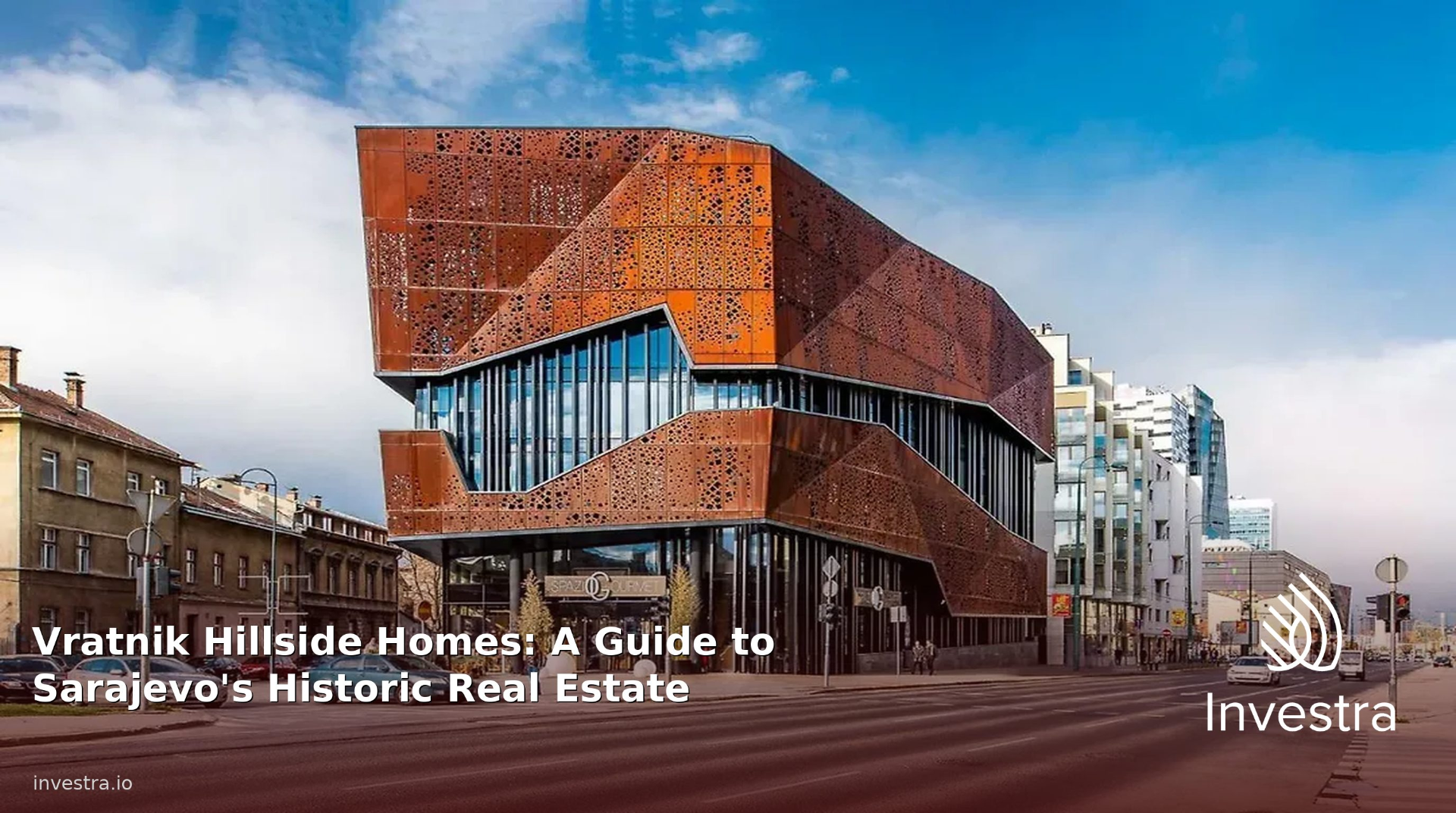
Vratnik Hillside Homes: A Guide to Sarajevo's Historic Real Estate
Vratnik Hillside Homes: A Guide to Sarajevo's Historic Real Estate
Vratnik Hillside Homes Sarajevo — An Overview
Quick Answer: Vratnik hillside homes Sarajevo refers to residences perched above the old town of Sarajevo, blending historic charm with hillside views; buyers should treat each property as unique and verify title, local rules and condition before committing. For neighbourhood specifics and market context, consult Investra's Sarajevo resources.
The Vratnik area is one of Sarajevo’s most atmospheric quarters. Narrow stone streets, Ottoman-era houses and the defensive walls of the old fortress create an urban landscape you won’t find in modern developments. When people search for "vratnik hillside homes sarajevo," they’re often looking for character — wood beams, stone facades and terraces that catch soft evening light. The reality is these properties are seldom uniform: some are carefully restored, others need major work. In my experience, buyers are attracted to both the history and the elevated position, which can offer surprisingly calm views over the city.
Because Vratnik sits close to the city core and to green belts, the location mixes convenience with a feeling of escape. That mix is important: you’re buying lifestyle as much as walls and a roof. If you want to know how Vratnik compares to other Bosnian cities, Investra’s Sarajevo real estate market guide is a practical place to start, and the site's neighbourhood and new-build guides provide deeper local context.
Historical and Cultural Context of Vratnik
Quick Answer: Vratnik’s historic status shapes development rules, renovation expectations and buyer appeal; understanding heritage protections and the area’s past will influence renovation choices and resale potential.
Vratnik is not just another suburb — it’s a preserved quarter with layers of history. Walls, gates and mosques testify to centuries of urban life. That heritage is a selling point but also a constraint. What surprised many buyers is how grant opportunities, conservation obligations and municipal oversight can both enable and complicate upgrades. In my experience, a short visit with a knowledgeable local guide or architect clarifies what can realistically be altered.
We’ve seen investors and owner-occupiers fall for the aesthetic and underestimate the administrative work. If cultural-protection rules apply, permits can take longer and require specialist plans. For an investor who prefers new-build predictability, Investra’s Sarajevo new-build and property renovation guide helps map the difference between restored historic homes and contemporary projects in Sarajevo.
Neighbourhoods & Location: Where Vratnik Fits in Sarajevo
Quick Answer: Vratnik sits on Sarajevo’s eastern hillside above the old town, offering proximity to city amenities while feeling distinctively historic; buyers should assess transport, services and micro-neighbourhood characteristics when evaluating a Vratnik hillside home.
Location matters more than ever. When someone asks about vratnik hillside homes sarajevo, they often mean a handful of micro-neighbourhoods spread along the slopes: areas close to the citadel, the Lower Vratnik lanes and the higher ridgelines that peer over the Miljacka River. Each pocket has a different rhythm. Some lanes are quiet and residential, while a few corners have cafés and galleries that draw weekend foot traffic. That difference changes daily life. What surprised many buyers is that short walks can feel like a switch from tranquil to lively.
Transport access is another practical factor. Vratnik is a short drive or tram ride from central Sarajevo, but steep streets and limited parking are common. If you plan to rent the home or use it as a pied-à-terre, consider how guests or tenants reach the property. For a broader city comparison to inform your choice, check Investra’s Sarajevo neighbourhood guide, and compare other regional options like Mostar, Banja Luka and Tuzla through the relevant Investra market guides.
Types of Vratnik Hillside Homes and Architectural Features
Quick Answer: Vratnik hillside homes vary from small Ottoman-era stone houses to multi-level converted villas; understanding construction type, materials and historical features helps buyers plan restoration, insurance and long-term maintenance.
Architecture in Vratnik is diverse. You’ll find compact stone houses with thick walls, wood-beamed interiors and sloping roofs — all typical features that create character but also specific maintenance needs. Other properties are larger hillside homes with terraces and panoramic openings. In my experience, buyers underestimate the significance of structural details: timber elements, roof pitch, and original masonry often determine repair costs and long-term durability.
When assessing a house, pay attention to the envelope — roof condition, damp risk on uphill slopes, and the status of retaining walls. Also note any later additions that may not be structurally sound or permitted. For buyers who prefer modern amenities, Investra’s Sarajevo new-build guide and renovation resources explain how older fabric can be sympathetically upgraded while meeting current living standards.
The Buying Process for Vratnik Hillside Homes (Including Foreign Buyers)
Quick Answer: The buying process for Vratnik hillside homes Sarajevo follows standard Bosnian property procedures but can involve extra steps for heritage properties and foreign buyers; consult official registries, a local notary and practical buyer guides before signing contracts.
Buying in Sarajevo is both straightforward and locally nuanced. If you’re coming from abroad, know that property transactions require a careful chain of verification: the seller’s title, encumbrances, municipal approvals and correct cadastral records. What we’ve seen work best is a step-by-step approach: initial viewings, a preliminary agreement, a formal due diligence phase and then a notary-clerk closing. The exact paperwork and sequence can vary by municipality.
Foreign buyers should check any residency requirements, cross-border restrictions or sector-specific limits with a local lawyer. A trusted source for practical steps is Investra’s guide on buying property in Sarajevo for foreigners, which outlines common processes and what documents you’ll encounter. For comparison, Investra’s how-to guides for Mostar, Banja Luka and Tuzla present similar procedural frameworks for other Bosnian cities.
Legal Ownership, Title Search and Land Registry
Quick Answer: Verifying legal ownership, cadastral evidence and any encumbrances through the municipal land registry and notary offices is critical before buying any Vratnik property; use professional legal help to confirm ownership chains and building permits.
Title clarity is the backbone of any safe purchase. The reality is that historic properties can have complex ownership histories. When researching "vratnik hillside homes sarajevo," buyers quickly discover that deeds may reference old parcel maps or outdated cadastral descriptions. To validate ownership, request an up-to-date extract from the municipal land registry and cross-check it with the local notary. In my experience, a competent lawyer or licensed conveyancer accelerates this confirmation and helps spot hidden encumbrances like easements or unresolved inheritance claims.
Physical inspection of the building and the plot boundaries is equally important. Ask the seller for original construction permits and any conservation approvals if the house lies within a protected zone. For tailored legal support, resources such as Findes Group & Partners and the Findes advisory team can connect you with local legal advisors, while Siniša Dagary’s consultancy services offer investment-focused legal and strategic guidance.
Taxes, Fees and Ongoing Costs: How to Verify What You’ll Pay
Quick Answer: Taxes and transaction fees vary depending on ownership status, property type and municipal rules; instead of relying on estimates, verify current rates with the local tax office, notary and Investra’s up-to-date guides.
Costs beyond the purchase price affect affordability. Transfer taxes, notary fees, registry costs and potential municipal levies can each be part of the final bill. The key is simple: don’t accept quoted totals without official confirmation. Visit the municipality tax office, ask the notary to itemize fees and seek recent examples from professional advisors to understand typical expense categories. We’ve seen buyers surprised by ancillary costs when they assumed the price tag covered everything.
If you need comparative context, Investra’s country and city guides offer procedural checklists and signposts to relevant institutions so you can request authoritative estimates. For personalized calculations and representation at municipal offices, consider contacting Siniša Dagary’s advisory services or the Findes Group & Partners advisory team for a local briefing before you commit.
Renovation, Conservation Rules and Building Permits
Quick Answer: Renovating a Vratnik hillside home often triggers heritage and planning considerations; confirm conservation rules and required permits with the municipal planning department and consult restoration specialists before budgeting time and money.
Renovation is where character meets cost and regulation. Vratnik’s historic fabric means that work affecting facades, structural elements or public views typically needs approval. In my experience, early engagement with a conservation architect and the municipal planning office saves months of delay. You’ll want to know whether original features must be preserved, which materials are acceptable, and whether modern interventions (like new glazing, insulation or mechanical systems) can be discreetly incorporated.
Start with a pre-application meeting at the municipality to learn procedural expectations. Then commission a measured survey and structural report from local engineers who have handled similar heritage projects. Investra’s renovation guides for Sarajevo and other Bosnian cities provide practical checklists, while Siniša Dagary’s consultancy can advise on project planning and permit liaison as part of advisory services.
Rental Market and Short-Term Lets for Vratnik Homes
Quick Answer: Vratnik’s central location and historical appeal make it a candidate for rentals, but demand, regulation and short-term let rules change; verify current local rental conditions with municipal authorities, short-term rental platforms and Investra’s rental guides.
Many buyers ask whether they can rent out their Vratnik property. The answer depends on market demand, restrictions on short-term lets and the property’s condition. Vratnik appeals to travelers wanting authentic Sarajevo experiences, but steep steps, limited parking and seasonal demand will influence occupancy patterns. In my experience, owners who succeed in rentals plan for guest access, heating, cleaning logistics and clear communication about the historic setting.
Local rules for short-term rentals can vary and may require registration, safety checks or tax reporting. For a clear view of potential returns and operational needs, consult Investra’s Sarajevo rental market guide and short-term let investment advice; for broader regional comparisons, their Mostar and Banja Luka rental guides are useful. If you want practical property management, Findes Group & Partners and local property managers can provide on-the-ground services and compliance help.
Financing, Mortgages and Payment Options
Quick Answer: Financing availability for Vratnik hillside homes depends on buyer residency, lender policies and property condition; talk to local banks, mortgage brokers and advisory firms to understand current lending criteria and documentation requirements.
Mortgage access is often a deciding factor. In Sarajevo, local banks and international lenders may offer different packages; lenders also differ on how they value historic properties. In practice, banks want clear title, up-to-date assessments and sometimes guarantees that renovation or structural issues won’t put their security at risk. What buyers often underestimate is that restoration-intensive properties can face stricter loan terms.
If you’re considering financing, start by gathering title documents and an independent valuation. Speak to lenders early to identify required paperwork and to see whether renovation costs should be included in the loan or financed separately. Investra’s buyer guides outline typical financing touchpoints, while Siniša Dagary and Findes Group & Partners can help map lender relationships and financing strategies for foreign and local investors.
Risks, Due Diligence and Inspections
Quick Answer: Due diligence for Vratnik hillside homes should include structural surveys, legal title checks, conservation constraint reviews and climate-related assessments; hire independent professionals to confirm condition and compliance before purchase.
Risk management is practical, not theoretical. For historic hillside properties, common risks include damp, subsidence, old wiring, and undocumented alterations. In my experience, the single biggest mistake buyers make is relying solely on visual impressions. A thorough structural survey, an electrical and plumbing assessment, and a check of drainage and retaining walls are essential. You should also verify past planning permissions and whether any outstanding building violations exist.
Environmental considerations such as slope stability and exposure to weather should be assessed by engineers familiar with Sarajevo’s microclimates. For legal risk, insist on a notary-facilitated title search. Use Investra’s market guides for process checklists, and engage Siniša Dagary or Findes advisors when you need a coordinated due diligence package that covers legal, structural and regulatory angles.
Making the Purchase Decision: Negotiation, Advisors and Closing
Quick Answer: Successful purchases combine sharp local advice, careful negotiation and a clear closing timeline; assemble a team—lawyer, notary, architect and local advisor—to guide you through offers, contracts and signing.
Deciding to buy a Vratnik home should be the end of careful preparation, not the start. We’ve seen deals falter when buyers tried to handle multiple complex tasks alone. A practical approach is to build a small trusted team: a real estate agent familiar with Vratnik, a local lawyer for contracts and title checks, a notary for final registration, and a restoration architect if work is expected. I often recommend a pre-offer due diligence checklist so negotiations are informed by facts rather than hope.
Negotiation itself benefits from local knowledge: understand comparable sales, recent renovations and any urgent structural issues that justify price adjustments. For an investor-oriented perspective, Investra’s city guides and the Sarajevo buying guide explain negotiation norms and closing steps. If you want professional project management, reach out to Siniša Dagary’s advisory services or Findes Group & Partners for tailored closing and post-purchase support.
Explore more on Investra: Buying property in Mostar | Mostar rental market guide | Mostar neighbourhood guide | Mostar new-build guide | Banja Luka real estate market guide | Buying property in Banja Luka | Banja Luka rental market guide | Banja Luka neighbourhood guide | Banja Luka new-build guide | Tuzla real estate market guide | Buying property in Tuzla
For expert real estate investment insights and business strategy: investment expertise | investment consultation | advisory services.
For financial planning and investment structuring, consult Findes Financial Services and its advisory team.
Investment Disclaimer
Quick Answer: This article is educational and not investment advice; verify all facts with qualified professionals and use official sources when making decisions.
The information provided in this article is for educational and informational purposes only and should not be construed as financial, legal, or investment advice. Real estate investments carry inherent risks, and past performance does not guarantee future results. Investors should not invest money they cannot afford to lose. Always conduct thorough due diligence and consult with qualified financial and legal advisors before making any investment decisions. Investra.io does not guarantee returns on any investment.
Frequently Asked Questions
Quick Answer: Below are practical FAQs about buying and owning Vratnik hillside homes in Sarajevo; each answer points to how you can verify specifics with local authorities and advisors.
What should buyers know about purchasing Vratnik hillside homes in Sarajevo?
Buyers need to know that each Vratnik property is unique in history, condition and regulatory context. Verify title through the municipal land registry, obtain a structural survey, and check conservation rules with the planning office. If you’re a foreign buyer, confirm residency and transaction requirements with a lawyer. For procedural detail, Investra’s buying guides for Sarajevo are helpful starting points, and local consultants like Siniša Dagary provide tailored advisory services.
Can foreigners buy property in Vratnik and what hurdles might they face?
Foreigners can purchase in Bosnia and Herzegovina but should confirm nationality-specific regulations, required documentation, and whether reciprocity rules apply. Always ask a local notary or lawyer to clarify steps and to register property correctly. Investra’s "Buying property in Sarajevo" guide explains the practical sequence of documents and steps for non-resident buyers.
How do I check the legal title and whether there are encumbrances?
Request an official extract from the cadastre or land registry and have it reviewed by a lawyer or notary. Cross-check the registry extract with the seller’s documentation and any mortgage statements. Professional verification will reveal liens, easements, or unresolved inheritance issues. Findes Group & Partners and local legal advisors can assist with title searches.
Are there special conservation rules for Vratnik properties?
Yes, parts of Vratnik are historically protected, which can limit changes to facades and structural elements. Confirm applicable preservation status with the municipal planning and cultural heritage offices. If you plan major work, engage a conservation architect to prepare compliant proposals. Investra’s renovation guides and Siniša Dagary’s advisory services can help navigate the approval process.
What inspections should I order before buying?
Order a full structural and roof survey, electrical and plumbing checks, and a survey of moisture and drainage risks. For hillside homes, include a geotechnical or retaining-wall assessment if the site has steep slopes. Use licensed local professionals who have experience with Sarajevo’s older building stock; their reports will be critical for negotiation and lender approval.
How do I find reliable local advisors for purchase and renovation?
Ask for references from recent buyers, consult Investra’s recommended partners and consult local professional directories. Siniša Dagary’s consultancy and Findes Group & Partners both provide advisory services and can introduce vetted lawyers, architects and contractors. A short interview and review of past project work will help you choose the right team.
What ongoing costs should I expect after buying a Vratnik house?
Ongoing costs typically include municipal property taxes, utilities, insurance and maintenance. For historic homes, maintenance and periodic restoration work can be higher. Verify current tax rules with the municipal tax office and get insurance quotes that cover historic structures. Investra’s guides recommend budgeting for maintenance and consulting local insurers familiar with heritage properties.
Is renting out a Vratnik property straightforward?
Renting is possible, but you should confirm short-term let regulations, registration requirements and tax obligations locally. Accessibility, seasonal demand and property condition will influence desirability. For operational advice and comparative rental market context, see Investra’s Sarajevo rental market guide and consider property management from local agencies or Findes advisory services.
How can I verify current market prices and trends for Vratnik homes?
Market figures change; rather than relying on estimates, ask local estate agents for recent comparable sales, consult the municipal cadastre, and use Investra’s Sarajevo real estate market guide for contextual analysis. For bespoke valuation, commission a licensed appraiser who can assess condition, location and market comparables.
Who should I contact for help with cross-border investment paperwork?
For cross-border investment work, engage a lawyer experienced in international transactions, a tax advisor familiar with Bosnia and Herzegovina’s rules, and a local notary. Both Siniša Dagary and Findes Group & Partners offer cross-border advisory services and can coordinate the necessary documentation and local filings.
Recommended Reading
Quick Answer: These curated resources offer deeper local market analysis and practical buying guidance for Sarajevo and regional Bosnian cities.
- Sarajevo real estate market guide
- Buying property in Sarajevo
- Sarajevo rental market guide
- Sarajevo neighbourhood guide
- Sarajevo new-build guide
- Mostar real estate market guide
- Siniša Dagary — Investment Consultant
- Business Strategy Blog
Connect With Investra
Quick Answer: Reach Investra on social media for updates and market content.
Facebook: https://www.facebook.com/investra.io
LinkedIn: https://www.linkedin.com/company/investra-io
YouTube: https://www.youtube.com/investraio
Connect With Investra
Quick Answer: Follow Investra for verified market context and practical property research.
Related Posts
No related posts available.
